
Allahabad High Court: Marriage Does Not Change a Woman’s Original Caste Status Under SC/ST Act
Court dismisses appeal, says caste determined by birth remains unchanged despite inter-caste marriage
Judges clarify that conversion or marriage cannot alter caste identity in criminal proceedings
By Our Legal Correspondent
New Delhi: February 13, 20262:
In a significant ruling, the Allahabad High Court has held that a woman’s caste, determined by birth, does not change upon marriage into another community. The Court dismissed a criminal appeal filed under the Scheduled Castes and Scheduled Tribes (Prevention of Atrocities) Act, 1989 (SC/ST Act), reaffirming that caste identity remains constant regardless of inter-caste marriage or religious conversion.
Also Read: Supreme Court Quashes SC/ST Act Case Against Vyapam Whistleblower Dr. Anand Rai
Justice Anil Kumar delivered the judgment while hearing an appeal against a summoning order passed by the Special Judge, SC/ST Act, Aligarh. The appellants had argued that the complainant, originally belonging to a Scheduled Caste, lost her caste status after marrying a man from the Jat community. The Court rejected this contention, emphasizing that caste is determined by birth and cannot be altered by marriage.
[Recommended Legal Resource]
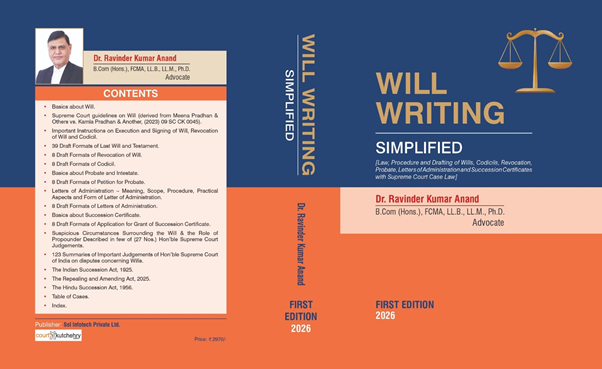
For readers interested in understanding complex legal procedures, succession laws, and Supreme Court case law, the book Will Writing Simplified [Law, Procedure and Drafting of Wills, Codicils, Revocation, Probate, Letters of Administration and Succession Certificates with Supreme Court Case Law] is highly recommended. It provides practical guidance and case references, making it invaluable for lawyers, law students, and researchers.
You can access it here: Amazon | Flipkart
Also Read: Supreme Court Rejects Plea for Re-Evaluation of SSC Exam Answers: No Role for Sympathy or Compassion
Case Background
- The case arose from an incident in Aligarh district where a woman alleged that she was assaulted and subjected to casteist slurs.
- The trial court had summoned nine accused persons under provisions of the Indian Penal Code (IPC) and Section 3(1)(r) of the SC/ST Act.
- The accused challenged the order, claiming that since the woman had married outside her caste, she no longer qualified for protection under the SC/ST Act.
- The High Court dismissed the appeal, holding that marriage does not erase caste identity.
Court’s Key Observations
Also Read: Supreme Court Halts Talaq-e-Hasan Between Couple, Refers Case to Mediation
- Caste by birth is permanent: The Court observed that caste is assigned at birth and remains unchanged even after marriage or conversion.
- No escape from liability: The accused cannot avoid charges under the SC/ST Act by questioning the complainant’s caste status post-marriage.
- Cross-case irrelevant: The existence of a counter-complaint filed by the accused was not sufficient to discard the woman’s allegations.
- Protection under SC/ST Act: The Court reaffirmed that victims retain their caste identity and protection under the Act, regardless of marital status.
Implications of the Judgment
- For Women in Inter-Caste Marriages: Ensures continued protection under the SC/ST Act despite marrying outside their caste.
- For Legal Proceedings: Clarifies that caste identity cannot be challenged based on marriage in criminal cases.
- For Society: Strengthens safeguards against caste-based atrocities and discrimination.
- For Judiciary: Reinforces consistency in interpreting caste identity under constitutional and statutory provisions.
Broader Legal Significance
This ruling aligns with earlier judicial pronouncements that caste identity is immutable by birth. It underscores the judiciary’s role in protecting marginalized communities from attempts to dilute their legal safeguards.
The judgment also highlights the importance of constitutional equality and social justice, ensuring that women who marry outside their caste do not lose statutory protections against caste-based violence.
Also Read: Punjab & Haryana High Court Declines to Entertain Punjab Kesari Hotel Plea
Conclusion
The Allahabad High Court’s ruling that marriage does not change a woman’s caste is a landmark affirmation of caste identity as determined by birth. By dismissing the appeal under the SC/ST Act, the Court has ensured that protections for marginalized communities remain intact, regardless of marital or religious choices.
This judgment strengthens the fight against caste-based discrimination and reinforces the principle that legal safeguards cannot be diluted by personal circumstances such as marriage.
Suggested Keywords for Faster Searches
- Allahabad High Court caste marriage ruling
- Marriage does not change caste SC/ST Act
- Caste identity by birth Allahabad HC judgment
- Inter-caste marriage caste status India
- SC/ST Act protection after marriage ruling
- Allahabad HC caste conversion marriage case
- Caste immutability Indian judiciary
- Scheduled Caste woman marriage legal status
Also Read: Supreme Court Flags Racket of Fake Motor Accident Claims Using Insured Vehicles