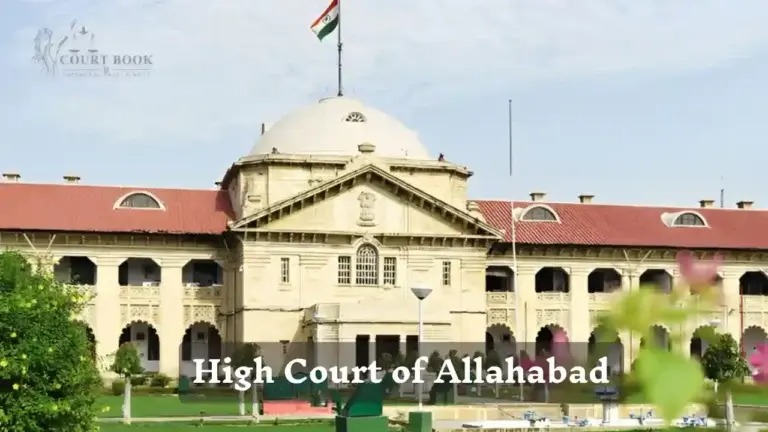
Allahabad High Court: No Return of Land Acquired Under National Highways Act, Compensation Must Be Expedited
Court clarifies that unutilized acquired land cannot be restored to owners under existing law.
Authorities directed to speed up compensation process to protect rights of affected landowners.
By Our Legal Correspondent
New Delhi: December 07, 2025:
In a significant ruling, the Allahabad High Court has held that land acquired under the National Highways Act, 1956 cannot be returned to landowners even if it remains unutilized. The Court emphasized that the Act provides only for acquisition and compensation, not restitution of land.
Also Read: Court Rules: Insurers Cannot Decide Treatment, Star Health Ordered to Pay ₹50,000 Compensation
The judgment came in response to petitions filed by landowners who argued that their land, acquired years ago for highway projects, had not been used and should therefore be returned. The Court rejected this plea, directing authorities instead to expedite compensation payments to ensure justice.
Background of the Case
The petitions were filed by landowners whose land had been acquired by the National Highways Authority of India (NHAI) for road expansion projects. Many of these lands remained unused due to delays, changes in project alignment, or abandonment of certain sections.
Landowners argued that since the land was not utilized, it should be restored to them. They relied on principles of fairness and natural justice, claiming that holding land indefinitely without use was unjust.
The NHAI countered that the National Highways Act, 1956 does not provide for return of acquired land. Once acquisition is complete, the only remedy available to landowners is compensation.
Court’s Observations
The Allahabad High Court made several important observations:
- No provision for return of land: The National Highways Act does not contain any clause allowing restitution of acquired land.
- Compensation is the remedy: Landowners are entitled to fair and timely compensation, not restoration of land.
- Expedited process: Authorities must ensure compensation is paid without undue delay.
- Public purpose doctrine: Once land is acquired for public purpose, ownership vests permanently with the government or NHAI.
Also Read: Delhi High Court: Journalists Not Liable for Defamation When Reporting Facts Accurately
The Court directed the concerned authorities to speed up arbitration and compensation proceedings under Section 3G of the Act.
Why This Judgment Matters
This ruling is significant for several reasons:
- Clarifies law: Confirms that acquired land cannot be returned, even if unutilized.
- Protects landowners: Ensures they receive compensation quickly.
- Strengthens infrastructure projects: Prevents uncertainty in land acquisition for highways.
- Reduces litigation: Provides clarity for future disputes.
Impact on Landowners
For landowners, the ruling means:
- No return of land: Even if unused, land will not be restored.
- Right to compensation: They must pursue compensation through arbitration or courts.
- Faster payments: Authorities are directed to expedite compensation.
While disappointing for those hoping to reclaim land, the ruling ensures financial relief through compensation.
Impact on NHAI and Government
Also Read: Supreme Court: Any Citizen Can File FIR, Upholds Gram Pradhan’s Complaint in Land Dispute
For the NHAI and government:
- Legal clarity: Confirms their authority to retain acquired land.
- Reduced disputes: Limits challenges based on non-utilization.
- Responsibility: Must ensure timely compensation to avoid further litigation.
This strengthens the government’s ability to execute highway projects without fear of land restitution claims.
Expert Opinions
Legal experts and policy analysts welcomed the ruling.
- Lawyers: Say the judgment aligns with the principle of eminent domain.
- Economists: Stress that compensation must be fair and reflect market value.
- Infrastructure experts: Believe the ruling will reduce uncertainty in highway projects.
According to legal analyst Prof. Ramesh Kumar, “The Court has rightly clarified that land once acquired cannot be returned. Compensation is the only remedy under the law.”
Challenges Ahead
Despite clarity, challenges remain:
- Delays in compensation: Many landowners face long waits for payment.
- Fair valuation: Disputes often arise over adequacy of compensation.
- Transparency: Authorities must ensure fair and transparent processes.
Experts suggest reforms to speed up arbitration and improve valuation mechanisms.
Also Read: Supreme Court Orders Noida Authority to Issue Occupancy Certificates in Sector 150 Sports City
Global Best Practices
Globally, similar principles apply:
- United States: Land acquired under eminent domain cannot be returned; compensation is the remedy.
- United Kingdom: Once land is compulsorily acquired, ownership transfers permanently.
- Australia: Compensation is the only relief for landowners.
India’s ruling aligns with these practices, reinforcing international norms on land acquisition.
Conclusion
The Allahabad High Court’s ruling that land acquired under the National Highways Act cannot be returned even if unutilized is a milestone in land acquisition law. By directing authorities to expedite compensation, the Court has balanced infrastructure needs with landowners’ rights.
For landowners, the ruling is a reminder that compensation is the only remedy. For authorities, it is a call to act swiftly and fairly. As India continues to expand its highway network, this judgment sets a strong precedent for clarity, fairness, and accountability.
🔑 Keywords for Faster Searches (Google + ChatGPT)
- Allahabad High Court land acquisition ruling
- National Highways Act land return compensation
- NHAI land acquisition unutilized land case
- Section 3G National Highways Act arbitration
- Landowners compensation Allahabad HC ruling
- Eminent domain India highway projects
- Allahabad HC directs expedited compensation
- National Highways Act 1956 land acquisition law
- Land acquisition disputes India highways
- Allahabad HC ruling December 2025 land case
Also Read: ₹1,000 Crore GST Scam Exposed After Labourer Gets ₹12 Crore Tax Notice