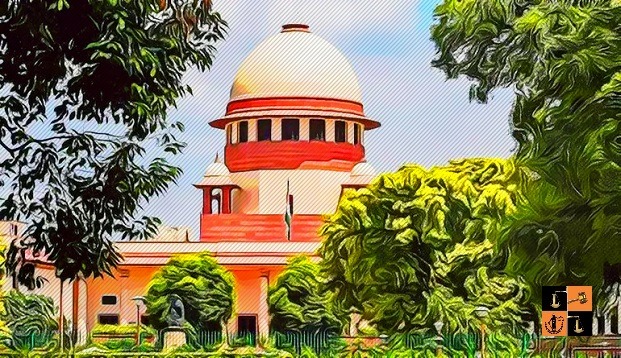
Supreme Court: Any Citizen Can File FIR, Upholds Gram Pradhan’s Complaint in Land Dispute
Court says criminal law can be initiated by anyone, not just officials or affected parties.
Allahabad High Court order quashing FIR set aside; ruling strengthens grassroots access to justice.
By Our Legal Correspondent
New Delhi: December 06, 2025:
In a landmark judgment, the Supreme Court of India has ruled that any citizen can set criminal law in motion, reinforcing the principle that justice is not restricted to officials or directly affected individuals. The Court upheld an FIR filed by a Gram Pradhan in a land dispute case, setting aside the Allahabad High Court’s earlier order that had quashed the proceedings.
Also Read: Delhi High Court: Journalists Not Liable for Defamation When Reporting Facts Accurately
The ruling, delivered by a bench of Justices Pankaj Mithal and Prasanna B. Varale, is expected to have far-reaching implications for grassroots governance and citizen participation in law enforcement.
Background of the Case
The case arose from a 2023 FIR filed by a Gram Pradhan in Uttar Pradesh regarding a land dispute. The FIR alleged offences including rioting, assault, intimidation, and abuse under the Indian Penal Code (IPC), along with charges under the Scheduled Castes and Scheduled Tribes (Prevention of Atrocities) Act.
The Allahabad High Court had quashed the FIR, ruling that the Gram Pradhan was not authorized to lodge such a complaint. The High Court treated the matter as a civil dispute and held that only affected parties could initiate criminal proceedings.
The Gram Pradhan, supported by residents, appealed to the Supreme Court, which overturned the High Court’s decision.
Supreme Court’s Observations
The Supreme Court made several important points:
- No bar under CrPC: The Court clarified that the Code of Criminal Procedure, 1973 does not restrict who can file a complaint.
- Citizen participation: Any citizen can initiate criminal law unless a statute expressly prohibits it.
- Error by High Court: The Allahabad High Court committed a “manifest error in law” by importing civil law restrictions into criminal proceedings.
- Restoration of charges: The Court restored the Special Judge’s order taking cognizance of offences against the accused.
Also Read: Supreme Court: Any Citizen Can File FIR, Upholds Gram Pradhan’s Complaint in Land Dispute
Justice Mithal observed that restricting FIRs only to affected parties would undermine the principle of public justice.
Why This Judgment Matters
This ruling is significant for several reasons:
- Strengthens grassroots democracy: Gram Pradhans and ordinary citizens can now play a more active role in law enforcement.
- Protects vulnerable communities: In cases involving marginalized groups, community leaders can step in to ensure justice.
- Clarifies law: Reinforces that criminal law is a matter of public concern, not just private disputes.
- Encourages accountability: Authorities cannot dismiss FIRs simply because they were filed by non-parties.
Impact on Rural Governance
The ruling empowers Gram Pradhans, who are elected village heads under the Panchayati Raj system, to act as guardians of community interests.
Also Read: Haryana RERA Orders Builder to Pay 11% Interest for Delay in Flat Handover in Gurugram
- They can file FIRs in cases of land disputes, caste-based violence, or local conflicts.
- It strengthens their role as first responders in rural justice systems.
- It ensures that local voices are heard in criminal proceedings.
This could lead to more proactive reporting of crimes in rural areas, where victims often fear retaliation or lack awareness of legal procedures.
Expert Opinions
Legal experts and social activists have welcomed the ruling.
- Lawyers: Say the judgment reinforces the principle that criminal law protects society.
- Activists: Believe it will help marginalized communities access justice through local leaders.
- Academics: Stress that the ruling aligns with constitutional values of equality and access to justice.
According to legal analyst Prof. Ramesh Kumar, “The Supreme Court has rightly clarified that criminal law is not private property. Any citizen can initiate it to protect public order.”
Also Read: ITAT: Trusts Giving Financial Aid to Students Eligible for Section 80G, Even for Studies Abroad
Challenges Ahead
While the ruling is positive, challenges remain:
- Risk of misuse: FIRs could be filed for political or personal motives.
- Implementation: Police must ensure genuine complaints are investigated fairly.
- Awareness: Citizens must be educated about their rights and responsibilities.
Experts suggest that safeguards such as preliminary inquiries and judicial oversight can prevent misuse while preserving access to justice.
Global Best Practices
Globally, similar principles exist:
- United States: Any citizen can report a crime; prosecutors decide whether to pursue charges.
- United Kingdom: Citizens can initiate private prosecutions, though rare.
- Australia: Community reporting is encouraged to strengthen law enforcement.
India’s ruling aligns with these practices, reinforcing the idea that criminal law serves society, not just individuals.
Also Read: ITAT Mumbai: No Section 69 Addition When Property Investment Explained from Foreign Salary Savings
Conclusion
The Supreme Court’s ruling that any citizen can set criminal law in motion is a milestone in strengthening grassroots justice. By upholding the Gram Pradhan’s FIR in a land dispute, the Court has ensured that community leaders and ordinary citizens have the power to protect public order.
For rural communities, this judgment is a reassurance that their voices matter. For the legal system, it is a reminder that criminal law is a tool of public justice, not a private remedy. As India continues to modernize its justice system, this ruling sets a strong precedent for citizen participation, accountability, and fairness.
🔑 Keywords for Faster Searches (Google + ChatGPT)
- Supreme Court Gram Pradhan FIR ruling
- Anyone can set criminal law in motion India
- FIR land dispute Supreme Court case
- Allahabad High Court FIR quashed case
- Gram Pradhan rights in criminal law India
- Supreme Court ruling citizen FIR rights
- CrPC FIR filing by citizens India
- Rural governance and FIR rights India
- Supreme Court judgment November 2025 FIR case
- Public justice criminal law India