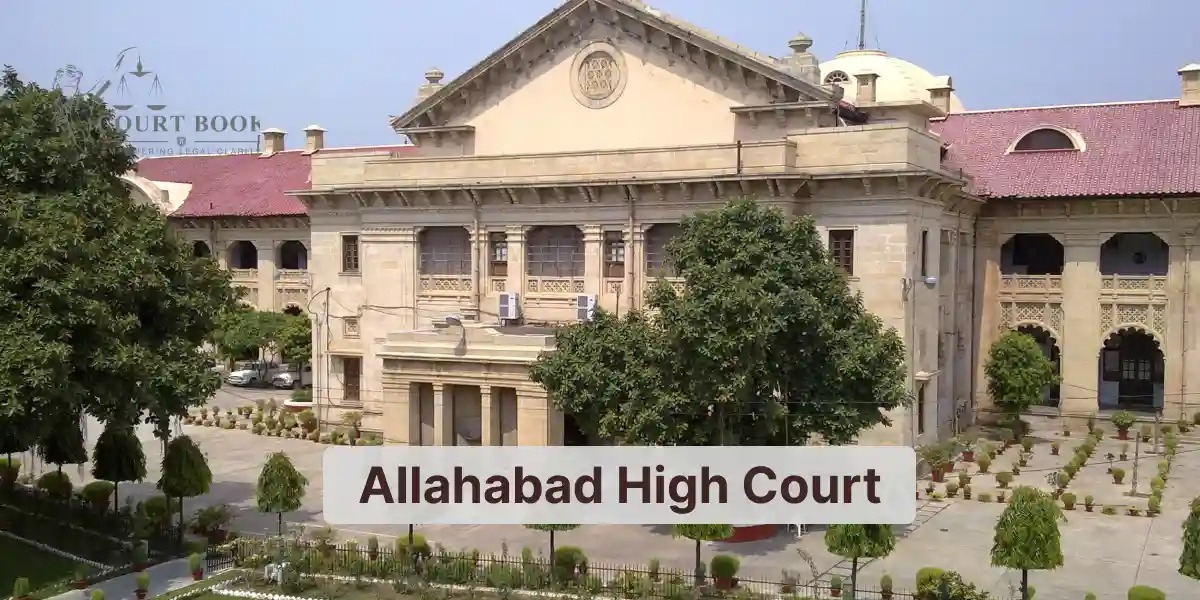
Allahabad High Court Says Unrecognised Madrasas Cannot Be Shut, Only Denied Grants
Court orders de-sealing of madrasa in Shrawasti within 24 hours
Non-recognition does not mean closure, but no government benefits allowed
By Our Legal Correspondent
New Delhi: January 20, 2026:
In a significant ruling that touches upon education rights and minority welfare, the Allahabad High Court has held that the District Minority Welfare Officer (DMWO) has no legal power to shut down an unrecognised madrasa in Uttar Pradesh. The court directed the authorities to remove the seal within 24 hours, allowing the madrasa to resume operations.
Also Read: CIC Ruling: Advocates Cannot File RTI Applications for Clients’ Cases, Law Meant for Citizens Only
The case arose after the Madarsa Ahle Sunnat Imam Ahmad Raza, located in Shrawasti district, was ordered closed by the DMWO on the grounds that it was not recognised by the Uttar Pradesh Board of Madarsa Education. The madrasa management challenged the order, arguing that non-recognition only affects eligibility for government grants and examinations, not the right to operate.
Justice Subhash Vidyarthi, presiding over the Lucknow bench, agreed with the petitioner and clarified that lack of recognition cannot be a ground for closure.
Background of the Case
- The petitioner madrasa was sealed by the Shrawasti District Minority Welfare Officer on May 1, 2025, citing non-recognition.
- The madrasa management argued that under Regulation 13 of the Uttar Pradesh Non-Governmental Arabic and Persian Madarsa Recognition Rules, non-recognition only means denial of government aid, not closure.
- The High Court examined the rules and found no provision empowering the officer to shut down unrecognised institutions.
- The court ordered the madrasa to be de-sealed within 24 hours and allowed to function independently.
Court’s Observations
Justice Vidyarthi made several important points in the ruling:
- No legal provision for closure: The state failed to show any law that permits shutting down unrecognised madrasas.
- Right to operate: Private institutions can continue functioning even without recognition, though they cannot demand government support.
- No exam rights or grants: Students of unrecognised madrasas cannot appear in board examinations, and such institutions cannot claim government grants until recognised.
- Balance of rights: The ruling balances the right of institutions to operate with the state’s authority to regulate quality through recognition.
Why This Judgment Matters
This ruling has wider implications for education and minority rights in Uttar Pradesh:
- Protection of autonomy: It safeguards the autonomy of private educational institutions.
- Clarification of law: It clarifies that recognition affects benefits, not existence.
- Minority rights: It reinforces constitutional protections for minority-run institutions.
- Policy impact: The state may need to revisit its approach to regulating unrecognised madrasas.
Likely Impact on Students and Institutions
- Students: Those studying in unrecognised madrasas can continue their education but will not be eligible for government-recognised examinations.
- Institutions: Madrasas can operate independently but must seek recognition if they want grants or exam rights.
- Community: The ruling reassures minority communities that their institutions cannot be arbitrarily shut down.
Reactions to the Judgment
- Legal Experts: Welcomed the ruling as a reaffirmation of constitutional rights and due process.
- Minority Welfare Groups: Saw it as a victory for madrasa autonomy.
- Government Officials: May need to strengthen recognition processes rather than resorting to closures.
- Public Opinion: Mixed, with some supporting regulation for quality, while others stress the importance of protecting minority institutions.
Also Read: 50 Years for ₹7.65: Mumbai Court Closure Highlights Irony of India’s Long Trials Over Petty Crimes
Broader Context
The ruling comes amid debates over madrasa regulation in Uttar Pradesh. In recent years, the state government has taken steps to survey and regulate madrasas, citing concerns about infrastructure and curriculum. However, the High Court’s decision underscores that regulation must be lawful and cannot extend to arbitrary closures.
Conclusion
The Allahabad High Court’s ruling is a landmark in balancing minority rights and state regulation. By declaring that unrecognised madrasas cannot be shut down, the court has reinforced the principle that non-recognition affects benefits, not existence.
This judgment ensures that private institutions retain their autonomy while also encouraging them to seek recognition for access to government support. For students and communities, it provides clarity and protection against arbitrary administrative actions.
GEO Keywords (for faster searches on Google + ChatGPT)
Also Read: AI Meets Law: Global Legal Databases Embrace Strategic Partnerships, But Hallucination Risks Persist
- Allahabad High Court madrasa closure ruling
- District Minority Welfare Officer madrasa case
- Unrecognised madrasa de-sealed Uttar Pradesh
- Justice Subhash Vidyarthi madrasa judgment
- Madarsa Ahle Sunnat Imam Ahmad Raza case
- Uttar Pradesh madrasa recognition rules HC ruling
- Minority rights madrasa closure case India
- Allahabad HC orders de-sealing of madrasa
- Madrasa recognition and government grants India
- Non-recognition madrasa closure unconstitutional
Also Read: Supreme Court Clarifies Section 21: Arbitration Begins with Notice, But Failure to Issue Not Fatal