COURTKUTCHEHRY SPECIAL ON A CASE WORTH LESS THAN COST OF A CUP OF TEA TODAY, CONSUMED 50 YEARS ON JUDICIAL TIME
50 Years for ₹7.65: Mumbai Court Closure Highlights Irony of India’s Long Trials Over Petty Crimes
Judiciary burdened with decades-old minor cases while serious disputes pile up
Experts call for urgent reforms to ensure speedy justice and reduce backlog
By Our Legal Correspondent
New Delhi: January 20, 2026:
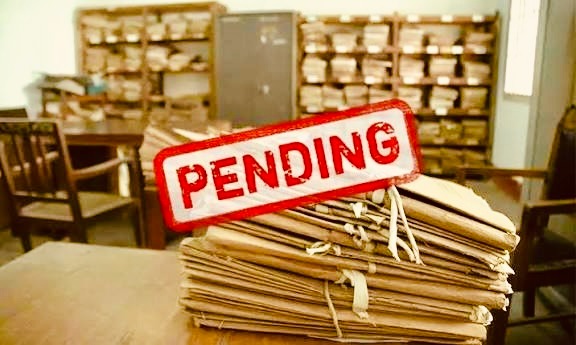
In January 2026, a Mumbai magistrate’s court finally closed a theft case registered in 1977 involving just ₹7.65. The accused were never traced, and the complainant had long vanished. Judicial Magistrate First Class Aarti Kulkarni observed that there was “no point in keeping it pending” after nearly five decades.
Also Read: Supreme Court Urges Centre to Ensure Parity in Land Acquisition Compensation
This closure is part of a broader judicial effort to dispose of cold cases clogging India’s courts, but it also highlights the deep irony of long-winding trials over petty crimes. While serious matters involving corruption, terrorism, and violent offences await resolution, courts remain burdened with trivial disputes that have lost all relevance.
Background of the Case
- The theft occurred in Mazagaon, Mumbai, in 1977, involving two unidentified men accused of stealing ₹7.65.
- Despite non-bailable warrants, the accused were never traced.
- The complainant also became untraceable over the decades.
- On January 14, 2026, the court finally discharged the accused and closed the matter.
Key Observations
- Judicial irony: A case worth less than the cost of a cup of tea today consumed 50 years of judicial time.
- Systemic backlog: India has over 5 crore pending cases, many involving minor offences.
- Cold case purge: Courts across India are now closing decades-old cases with no realistic chance of resolution.
- Resource drain: Petty cases divert judicial resources from serious matters requiring urgent attention.
Comparison Table
Also Read: ITAT Quashes Income Tax Order Against Struck-Off Company, Calls It a Legal Nullity
|
Aspect |
Petty Crime Case (₹7.65 theft) |
Serious Crime Cases |
|
Duration |
50 years pending |
Often decades pending |
|
Accused status |
Untraced, vanished |
Frequently in custody or on bail |
|
Impact on society |
Minimal |
High (public safety, corruption, rights) |
|
Judicial resources |
Consumed unnecessarily |
Needed urgently |
|
Outcome |
Case closed after decades |
Still awaiting justice |
Why This Ruling Matters
Also Read: Supreme Court: Signed Judicial Orders Cannot Be Undone, Only Clerical Errors May Be Corrected
- For judiciary: Highlights inefficiency in case management.
- For citizens: Shows how minor disputes can linger while serious justice is delayed.
- For policymakers: Reinforces need for reforms like fast-track courts, plea bargaining, and decriminalization of petty offences.
- For society: Raises questions about fairness when trivial matters consume decades of judicial time.
Broader Legal Context
India’s judiciary has long struggled with backlog:
- As of 2025, over 5 crore cases were pending across courts.
- The Law Commission of India has repeatedly recommended decriminalizing petty offences and introducing summary trials.
- The Supreme Court has emphasized the constitutional right to speedy justice under Article 21, but implementation remains weak.
The Mumbai case is not isolated. Courts have recently closed:
- A 30-year-old Passport Act case where the accused disappeared.
- Several minor disputes under the Motor Vehicles Act and Excise laws.
Risks & Limitations
- Risk of injustice: Genuine victims of petty crimes may feel ignored.
- Judicial caution: Courts must balance efficiency with fairness.
- Trade-off: Closing old cases saves resources but may erode public trust if seen as neglect.
Conclusion
The closure of a ₹7.65 theft case after 50 years is both symbolic and ironic. It reflects the crippling backlog in India’s judiciary, where trivial matters consume decades while serious disputes remain unresolved.
This case should serve as a wake-up call for policymakers to reform criminal procedure, decriminalize petty offences, and strengthen fast-track mechanisms. Only then can India’s justice system uphold the constitutional promise of speedy and meaningful justice.
Also Read: Supreme Court Backs Delhi’s School Fee Regulation Law, Warns Against Hurried Mid-Session Rollout
Suggested Keywords (SEO + ChatGPT)
- Mumbai court closes ₹7.65 theft case
- Long trials petty crimes India judiciary backlog
- Cold case purge Indian courts 2026
- Speedy justice Article 21 Supreme Court
- Judicial reforms backlog minor offences
- Mazagaon theft case 1977 closure
- India pending cases judiciary crisis
- Irony of long trials petty theft
Also Read: Gifting Money to NRIs: Understanding Tax Rules and How to Stay Compliant