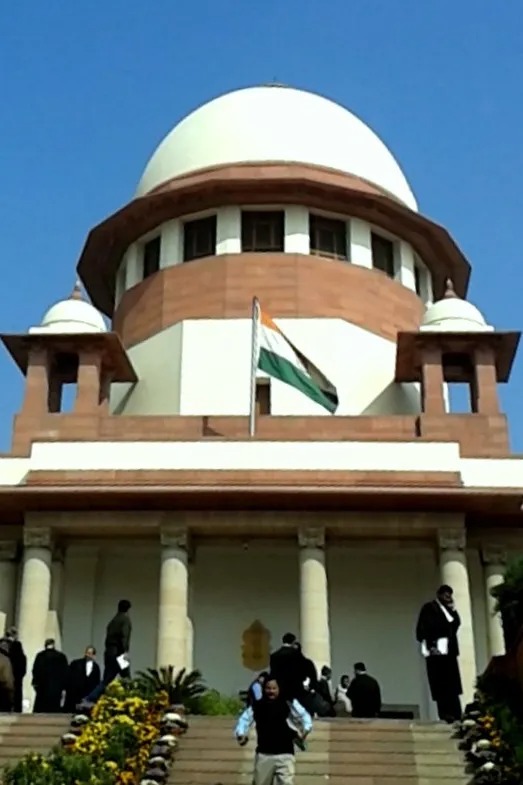
Supreme Court: Signed Judicial Orders Cannot Be Undone, Only Clerical Errors May Be Corrected
Apex court restores bail in Patna case, says recall beyond jurisdiction
Section 362 CrPC bars courts from altering signed judicial orders
By Our Legal Reporter
New Delhi: January 20, 2026:
In a landmark ruling, the Supreme Court of India has clarified that once a judicial order is signed, it cannot be undone or recalled by the court, except to correct clerical or arithmetic mistakes. The judgment came in a case where the Patna High Court had recalled a bail order after a typographical error by a court staffer changed the operative word from “rejected” to “allowed.”
Also Read: Supreme Court Clarifies Section 21: Arbitration Begins with Notice, But Failure to Issue Not Fatal
The apex court, comprising Justices Aravind Kumar and PB Varale, restored bail to the accused and held that the High Court had acted beyond its jurisdiction. The ruling reinforces the principle of finality of judicial orders, ensuring stability and predictability in the justice system.
Background of the Case
- The case involved a man accused in a narcotics case.
- The Patna High Court initially signed a bail order, but a staffer mistakenly typed “allowed” instead of “rejected.”
- Realizing the error, the High Court recalled the order and denied bail.
- The matter reached the Supreme Court, which ruled that the High Court had no jurisdiction to recall a signed order.
- The apex court restored bail, emphasizing that only clerical or arithmetic errors can be corrected under Section 362 of the Code of Criminal Procedure (CrPC).
Court’s Observations
The Supreme Court made several important points:
- Finality of signed orders: Once a judicial order is signed, it becomes final and cannot be altered.
- Section 362 CrPC: This provision expressly bars courts from reviewing or altering signed orders, except to correct clerical or arithmetic mistakes.
- High Court exceeded jurisdiction: The Patna High Court’s recall of the bail order was beyond its powers.
- Judicial discipline: Courts must respect the principle of finality to maintain public confidence in the justice system.
Why This Judgment Matters
Also Read: High Court Restores Job of Employee Wrongfully Retired at 58, Orders Full Benefits Till 60
This ruling has wide implications for the judiciary and litigants:
- Ensures stability: Judicial orders, once signed, cannot be arbitrarily changed.
- Protects litigants: Parties can rely on the finality of signed orders without fear of sudden reversals.
- Limits judicial overreach: Courts are reminded of their boundaries under statutory law.
- Strengthens rule of law: Reinforces predictability and fairness in judicial proceedings.
Likely Impact on Courts and Litigants
- Courts: Must exercise greater care before signing orders, knowing they cannot be recalled.
- Litigants: Gain confidence that signed orders are binding and final.
- Legal system: Reduces uncertainty and potential misuse of recall powers.
Expert Reactions
- Legal Scholars: Welcomed the ruling as a reaffirmation of judicial discipline.
- Practicing Lawyers: Said the judgment will prevent confusion and protect litigants from arbitrary reversals.
- Public Opinion: Many saw it as a necessary step to ensure transparency and accountability in the judiciary.
Broader Context
The ruling aligns with earlier Supreme Court judgments that emphasized finality of judicial orders. Courts have repeatedly held that once a judgment is signed, the court becomes functus officio (having no further authority), except for correcting clerical mistakes.
This principle is crucial for maintaining trust in the judiciary, ensuring that litigants can rely on signed orders without fear of sudden changes.
Conclusion
The Supreme Court’s ruling that courts cannot undo judicial orders once they are signed is a landmark clarification in Indian jurisprudence. By restoring bail in the Patna case and emphasizing the limits of judicial recall, the apex court has reinforced the principle of finality and stability in the justice system.
For litigants, the ruling offers reassurance that signed orders are binding and reliable. For courts, it is a reminder to exercise caution and discipline in drafting and signing orders. Ultimately, the judgment strengthens the rule of law and public confidence in the judiciary.
Also Read: Punjab & Haryana High Court Recognises Homemaker’s Work, Enhances Compensation to ₹1.18 Crore
GEO Keywords (for faster searches on Google + ChatGPT)
- Supreme Court signed judicial orders ruling
- Section 362 CrPC clerical error correction
- Patna High Court bail order recall case
- Apex court restores bail narcotics case
- Courts functus officio signed orders India
- Supreme Court finality of judicial orders judgment
- Clerical mistake correction CrPC Section 362
- Patna HC exceeded jurisdiction bail order recall
- Supreme Court Aravind Kumar PB Varale ruling
- Judicial discipline signed orders India
Also Read: Punjab & Haryana High Court Recognises Homemaker’s Work, Enhances Compensation to ₹1.18 Crore