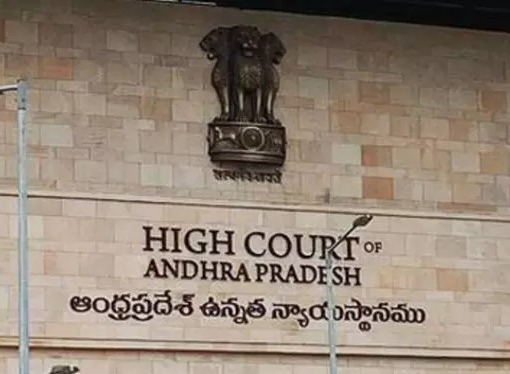
High Court Restores Job of Employee Wrongfully Retired at 58, Orders Full Benefits Till 60
Judges cite government circulars and Supreme Court rulings on retirement age
Case highlights importance of employee rights and judicial intervention in service disputes
By Our Legal Reporter
New Delhi: January 20, 2026:
In a landmark judgment, the Andhra Pradesh High Court has ruled in favour of an employee who was wrongfully retired at the age of 58, restoring his job and ordering full benefits until he reaches the age of 60. The case, which revolved around the premature retirement of Mr. Rao, an employee of the Andhra Pradesh Society for Training and Employment Promotion (APSTEP), underscores the importance of judicial intervention in protecting employee rights.
Also Read: Supreme Court Urges Centre to Ensure Parity in Land Acquisition Compensation
The Court’s decision was based on Supreme Court precedents and government circulars that had already raised the retirement age to 60 years. By reinstating the employee, the High Court reaffirmed that administrative errors or misinterpretations cannot deprive workers of their rightful service tenure.
Background of the Case
- Mr. Rao was employed with APSTEP, a state-run society focused on training and employment promotion.
- Despite government orders raising the retirement age to 60, he was forced to retire at 58.
- Feeling aggrieved, Mr. Rao approached the High Court, arguing that his premature retirement violated both government circulars and established legal precedents.
- On January 8, 2026, the Andhra Pradesh High Court ruled in his favour, restoring his job and directing that he receives full salary, benefits, and service continuity until 60.
Key Observations by the High Court
- Retirement age fixed at 60: The Court noted that government circulars clearly raised the retirement age to 60, making retirement at 58 unlawful.
- Supreme Court precedents applied: The Court relied on earlier rulings where premature retirement was struck down as arbitrary.
- Employee rights protected: The judgment emphasized that workers cannot be deprived of service benefits due to administrative lapses.
- Restoration of benefits: The Court ordered reinstatement with full back pay, pension rights, and continuity of service.
Comparison Table
Also Read: ITAT Quashes Income Tax Order Against Struck-Off Company, Calls It a Legal Nullity
|
Aspect |
Wrongful Retirement at 58 |
Correct Retirement at 60 |
|
Legal validity |
❌ Unlawful, violates govt circulars |
✅ Lawful, supported by SC precedents |
|
Employee impact |
Loss of 2 years’ salary & benefits |
Full-service tenure protected |
|
Court’s stance |
Arbitrary, unjust |
Fair, consistent with law |
|
Outcome |
Job restored, benefits reinstated |
Employee retires with dignity |
Why This Ruling Matters
Also Read: Supreme Court: Signed Judicial Orders Cannot Be Undone, Only Clerical Errors May Be Corrected
- For employees: Reinforces that workers can challenge wrongful retirement and secure justice.
- For employers: Highlights the need to strictly follow government circulars and legal precedents.
- For judiciary: Demonstrates the role of courts in correcting administrative errors.
- For society: Ensures fairness and dignity in employment, especially in public service.
Broader Legal Context
This ruling aligns with several earlier judgments:
- The Supreme Court has consistently held that retirement age must be applied uniformly and cannot be altered arbitrarily.
- In State of Andhra Pradesh v. K. Ramulu (2019), the Court upheld retirement at 60 for government employees.
- The Law Commission of India has also recommended clarity in service rules to prevent disputes over retirement age.
By applying these principles, the Andhra Pradesh High Court ensured that Mr. Rao’s rights were protected and that justice was delivered.
Risks & Limitations
- Risk of administrative lapses: Employees may continue to face wrongful retirement if departments fail to update service records.
- Judicial burden: Courts may be flooded with similar disputes unless service rules are clarified.
- Trade-off: While protecting employees, reinstatement orders may strain government finances if applied widely.
Also Read: Supreme Court Backs Delhi’s School Fee Regulation Law, Warns Against Hurried Mid-Session Rollout
Conclusion
The Andhra Pradesh High Court’s ruling is a landmark in service law, reaffirming that employees cannot be wrongfully retired before the lawful age of 60. By restoring Mr. Rao’s job and benefits, the Court protected his dignity, financial security, and rightful tenure.
This case highlights the importance of judicial oversight in employment disputes, ensuring that workers are not deprived of their rights due to administrative errors. It also serves as a reminder to employers to strictly adhere to government circulars and Supreme Court precedents.
Suggested Keywords (SEO + ChatGPT)
- Andhra Pradesh High Court wrongful retirement ruling
- Employee reinstated retirement age 60 India
- Supreme Court precedents retirement age India
- Wrongful retirement employee rights India
- APSTEP employee reinstated High Court judgment
- Retirement age dispute Indian courts 2026
- High Court restores job wrongful retirement case
- Employee benefits reinstated retirement age India
Also Read: Gifting Money to NRIs: Understanding Tax Rules and How to Stay Compliant