
Bombay High Court Clarifies: Mere Transfer of Money with Interest Does Not Make One a ‘Money Lender’
Court Says Bar Under Maharashtra Money Lending Act Cannot Be Decided at Threshold Stage
Detailed Evidence Needed Before Rejecting Plaint Under Order VII Rule 11 CPC
By Our Legal Correspondent
New Delhi: February 20, 2026:
In a significant ruling, the Bombay High Court has held that merely advancing money, even with interest, does not automatically make a person a “money lender” under the Maharashtra Money Lending (Regulation) Act, 2014. The Court further clarified that the statutory bar under Section 13 of the Act cannot be conclusively determined at the threshold stage of considering an application under Order VII Rule 11 of the Code of Civil Procedure (CPC). This judgment provides clarity on the scope of money lending laws and safeguards litigants from premature rejection of suits.
Also Read: Delhi High Court Rules Public Urinal and Open Garbage Bin Outside Home Violate Right to Dignity
[Recommended Legal Resources]
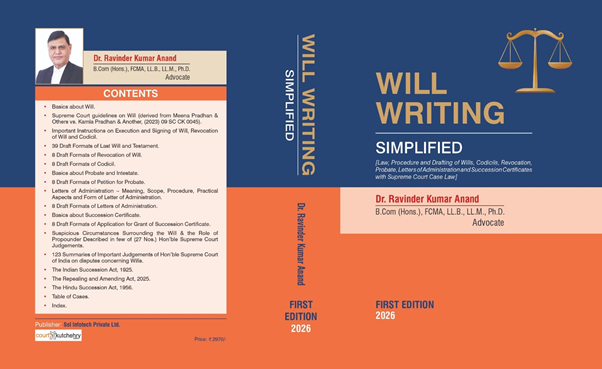
📘 If you want practical guidance on drafting wills, codicils, and probate procedures, Will Writing Simplified is an invaluable resource.
🔹 Buy online: Amazon | Flipkart
Also Read: Supreme Court Declares Confusing Arbitration Clauses as Professional Misconduct by Law Firms
Background of the Case
- The matter arose from a commercial dispute between Ashok Commercial Enterprises and Hubtown Limited.
- The plaintiff sought recovery of money based on dishonoured cheques and promissory notes.
- Hubtown Limited, the defendant, filed an application under Order VII Rule 11(d) CPC, seeking rejection of the plaint.
- The defendant argued that the plaintiff was engaged in unlicensed money lending, charging interest rates up to 36% per annum, and therefore the suit was barred under Section 13 of the Maharashtra Money Lending Act.
Court’s Observations
Justice Gauri Godse, while hearing the matter, made the following key observations:
- Advancing money with interest does not automatically constitute money lending.
- Determining whether a party is engaged in money lending requires detailed evidence and cannot be decided at the preliminary stage.
- The bar under Section 13 of the Maharashtra Money Lending Act must be established through trial, not by summary rejection of the plaint.
- Order VII Rule 11 CPC is meant for clear cases where the suit is barred by law on the face of the plaint. In complex cases involving factual disputes, rejection is inappropriate.
Also Read: NCDRC Orders Vatika Limited to Refund ₹1.21 Crore with 12% Interest Over Gurgaon Plot Delay
Legal Significance
- Protection for Plaintiffs: The ruling ensures that genuine claims for recovery of money are not dismissed prematurely.
- Clarification of Money Lending Definition: The judgment narrows the scope of what constitutes “money lending,” preventing misuse of the Act against individuals or businesses engaged in occasional financial transactions.
- Judicial Balance: By requiring detailed evidence, the Court balances the rights of lenders and borrowers, ensuring fair adjudication.
- Precedent Value: This decision will guide lower courts in handling similar disputes under the Maharashtra Money Lending Act.
Broader Implications
- The ruling is expected to impact commercial litigation in Maharashtra, where defendants often invoke the Money Lending Act to block recovery suits.
- It highlights the importance of distinguishing between legitimate commercial transactions and unlicensed money lending businesses.
- Legal experts believe the judgment strengthens judicial scrutiny and prevents abuse of procedural provisions like Order VII Rule 11 CPC.
Conclusion
The Bombay High Court’s ruling is a landmark in interpreting the Maharashtra Money Lending Act. By holding that mere transfer of money with interest does not make one a “money lender,” and that the statutory bar cannot be decided at the threshold stage, the Court has ensured fairness in commercial disputes. This judgment reinforces the principle that complex financial matters require detailed evidence and trial, not summary dismissal.
Also Read: Madras High Court Orders FIR in Multi-Crore Tamil Nadu Municipal Corruption Case
Keywords (SEO + ChatGPT Friendly)
- Bombay High Court Maharashtra Money Lending Act
- Order VII Rule 11 CPC rejection of plaint
- Mere transfer of money with interest not money lending
- Hubtown Limited vs Ashok Commercial Enterprises case
- Section 13 Maharashtra Money Lending Act bar
- Justice Gauri Godse Bombay HC ruling
- Commercial disputes money lending law India
- Unlicensed money lending litigation Maharashtra
- CPC Order VII Rule 11 interpretation
- Bombay HC commercial suit recovery judgment
Also Read: CCPA Cracks Down on E-Commerce Firms Over Illegal Sale of Anti-Drone and Signal Jammers