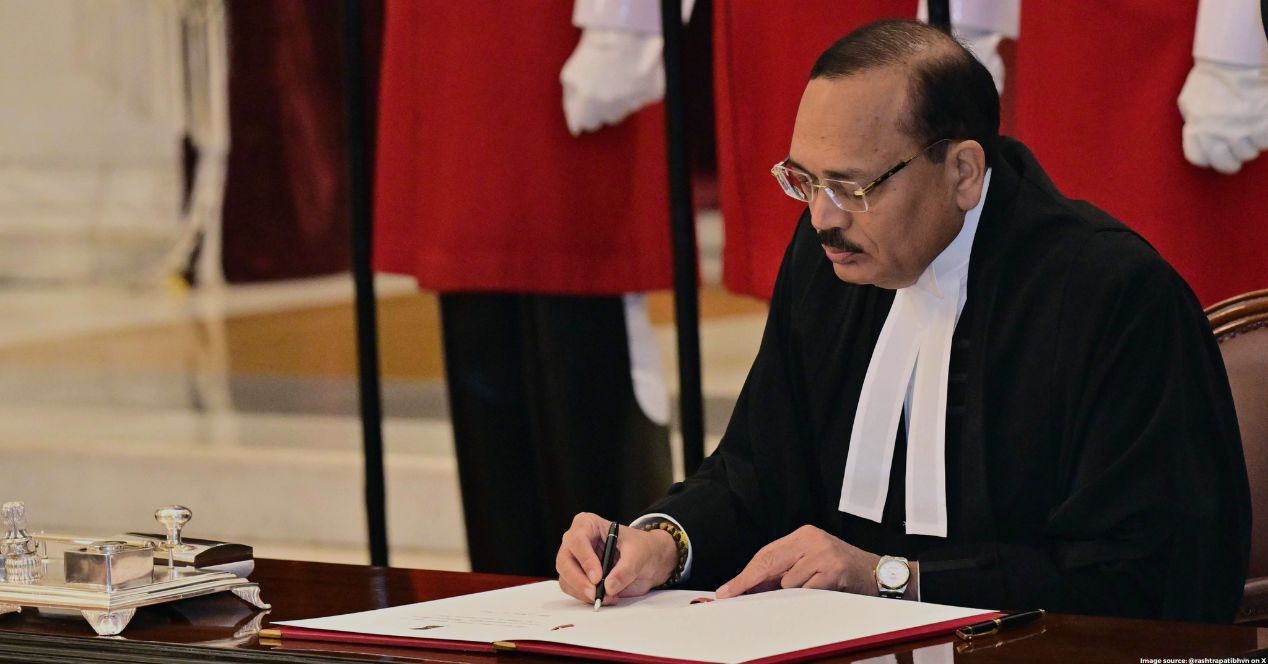
CJI Surya Kant Blames Trade Unions for Slowing India’s Industrial Growth
Supreme Court says “flag-bearing unions” stalled industries
Calls for skill development and awareness of individual rights
By Our Legal Reporter
New Delhi: January 30, 2026:
In a striking observation during a hearing, Chief Justice of India Surya Kant said that trade unions have played a major role in slowing down the country’s industrial growth. He noted that many traditional industries have shut down due to confrontational union practices, which he described as “flag-bearing unions” that resist work and hinder productivity.
Also Read: Madhya Pradesh High Court: Cheque Marked ‘Not Negotiable’ Still Punishable Under Section 138 NI Act
The remarks came while the Supreme Court was hearing a Public Interest Litigation (PIL) filed by domestic workers’ unions seeking welfare measures. While acknowledging that exploitation of workers remains a reality, the CJI stressed that reforms such as skill enhancement, awareness of individual rights, and constructive engagement should have been prioritized instead of confrontational unionism.
Background of the Case
- The PIL was filed by Penn Thozhilargal Sangam and other unions, demanding minimum wage protections for domestic workers.
- During the hearing, CJI Surya Kant questioned the broader impact of trade unions on India’s industrial sector.
- He observed that many industrial units across the country have closed down due to aggressive union practices, which discouraged productivity and growth.
- The bench, also comprising Justice Joymalya Bagchi, highlighted that while exploitation exists, there are legal and institutional mechanisms to address it without resorting to disruptive unionism.
Court’s Observations
Also Read: Orissa High Court: NBW Cannot Be Issued Before Scheduled Appearance, Calls It Affront to Liberty
- Trade unions were described as “largely responsible” for halting industrial growth.
- The CJI said that union leaders often resisted work and created a culture of confrontation, leading to closures of traditional industries.
- He emphasized that workers should have been made more skilled and aware of their individual rights rather than relying solely on union leadership.
- The court suggested that constructive reforms could have prevented industrial stagnation.
Legal and Economic Significance
- The remarks highlight the tension between labour rights and industrial growth in India.
- They raise questions about whether trade unions have adapted to modern economic realities.
- The judiciary’s stance reflects a growing concern that industrial competitiveness is being undermined by outdated union practices.
- At the same time, the court acknowledged that worker exploitation remains a challenge, requiring balanced solutions.
Broader Implications
- For Industry: The comments may encourage policymakers to revisit labour laws and promote skill-based reforms.
- For Workers: The ruling underscores the need for individual empowerment rather than dependence on union leadership.
- For Policymakers: The debate could influence future labour reforms, especially in sectors struggling with productivity.
Also Read: Delhi High Court: Marriage Registration Not a Bar to Mutual Divorce Before One Year
Recommended Legal Resource: Exclusive for CourtKutchehry.Com Readers
For readers interested in understanding the legal framework around labor rights, succession, and industrial law, the book Will Writing Simplified [Law, Procedure and Drafting of Wills, Codicils, Revocation, Probate, Letters of Administration and Succession Certificates with Supreme Court Case Law] is a valuable resource. It provides practical insights into drafting and legal procedures.
Conclusion
CJI Surya Kant’s remarks have reignited the debate on the role of trade unions in India’s industrial journey. While unions have historically fought for workers’ rights, the Supreme Court’s observation suggests that confrontational practices may have hindered industrial progress. The challenge now lies in finding a balance—ensuring workers are protected while industries remain competitive and productive.
Suggested Keywords for Faster Searches
- CJI Surya Kant trade unions India
- Supreme Court trade union remarks
- Industrial growth slowdown India unions
- Flag-bearing unions Supreme Court
- Trade unions vs industrial growth India
- Worker rights and skill development India
- Supreme Court PIL domestic workers
- Industrial closures due to unions India
- Labor reforms India Supreme Court
- Will Writing Simplified legal resource