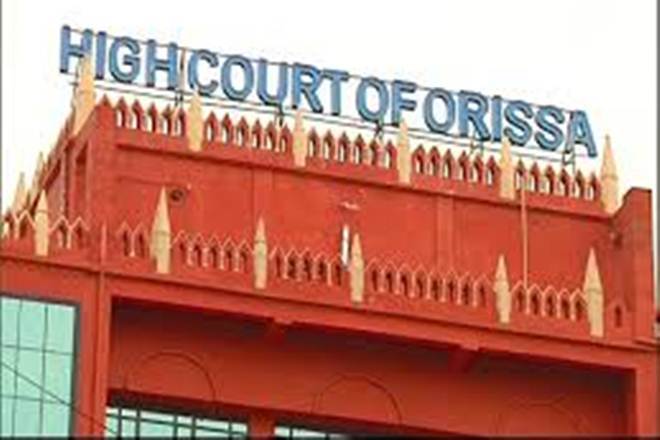
Orissa High Court: NBW Cannot Be Issued Before Scheduled Appearance, Calls It Affront to Liberty
Court Grants Bail, Says NBW Must Be Last Resort
Ruling Reinforces Safeguards Under BNSS for Accused Persons
By Our Legal Correspondent
New Delhi: January 29, 2026:
In a landmark judgment delivered on January 22, 2026, the Orissa High Court strongly criticized the premature issuance of a non-bailable warrant (NBW) against an accused before the scheduled date of appearance. Justice Gourishankar Satapathy observed that such action violates the principle of personal liberty guaranteed under the Constitution and undermines the procedural safeguards of the Bharatiya Nagarik Suraksha Sanhita (BNSS).
Also Read: CJI Surya Kant Blames Trade Unions for Slowing India’s Industrial Growth
The case involved allegations of financial fraud and “digital arrest” threats, where the accused was directed to appear before the police on September 1, 2025. However, the Investigating Officer (IO) sought an NBW just a day after serving notice, without waiting for the scheduled date.
Case Background
- Accused: Srinivaschary K.R. (also known as K.R.S. Achary).
- Charges: Sections 319(2), 318(4), 336(2), 338, 336(3), 340(2) of the Bharatiya Nyaya Sanhita (BNS), along with Sections 66(C) and 66(D) of the Information Technology Act.
- Allegations: Extracting ₹63 lakhs from the complainant by threatening “digital arrest.”
- Notice Issued: Under Section 35(3) BNSS, directing appearance on September 1, 2025.
- IO’s Action: Instead of waiting, the IO sought an NBW on August 14, 2025, leading to the accused’s arrest.
- High Court’s Decision: Declared the NBW illegal, granted bail, and criticized the misuse of coercive powers.
Court’s Observations
Justice Satapathy made several critical remarks:
- NBW as Last Resort: NBWs should only be issued when bailable warrants fail to secure the accused’s presence.
- Violation of Liberty: Issuing NBW before the scheduled date is an “affront to personal liberty.”
- Procedural Safeguards: Section 35(3) BNSS requires police to issue notice first, ensuring voluntary appearance.
- Judicial Oversight: The Magistrate must be fully informed about prior notices before approving coercive measures.
The Court relied on the Supreme Court’s ruling in Directorate of Enforcement v. Subash Sharma (2025), which emphasized that NBWs must be legally justified and not issued mechanically.
Significance of the Judgment
- Protects Accused Rights: Reinforces that liberty cannot be curtailed without due process.
- Clarifies BNSS Procedure: Establishes that notices under Section 35(3) must be respected.
- Deters Misuse of NBWs: Prevents police from bypassing safeguards to secure arrests.
- Strengthens Rule of Law: Ensures balance between investigation needs and constitutional rights.
Broader Implications
This ruling has wider consequences for India’s criminal justice system:
- Police Accountability: Investigating officers must follow procedure strictly.
- Judicial Vigilance: Courts must scrutinize coercive actions carefully.
- Public Confidence: Reinforces trust in BNSS as a safeguard against arbitrary arrests.
- Legal Precedent: Will guide future cases involving premature warrants.
Expert Commentary
Legal experts have welcomed the ruling, noting that it strengthens procedural fairness. They argue that NBWs, if misused, can lead to harassment and wrongful detention. The judgment ensures that personal liberty remains central to criminal justice.
Conclusion
The Orissa High Court’s ruling that NBWs cannot be issued before the scheduled date of appearance under Section 35(3) BNSS is a landmark in protecting personal liberty. By granting bail and criticizing the misuse of coercive powers, the Court has reaffirmed that due process and constitutional safeguards must always prevail over expediency.
This judgment strengthens the principle that NBWs are a last resort, not a shortcut, in India’s criminal justice system.
BOOK ON SALE:
For readers interested in deeper insights into drafting wills, succession certificates, and related legal matters, a recommended resource is the book Will Writing Simplified [Law, Procedure and Drafting of Wills, Codicils, Revocation, Probate, Letters of Administration and Succession Certificates with Supreme Court Case Law], available on Amazon and Flipkart.
Suggested Keywords for Faster Searches
Also Read: Supreme Court Clarifies: Only Civil Courts Can Extend Arbitration Timelines Under Section 29A
- Orissa High Court NBW ruling 2026
- Section 35(3) BNSS accused appearance
- Justice Gourishankar Satapathy NBW judgment
- Personal liberty NBW Orissa High Court
- Non-bailable warrant misuse India
- BNSS safeguards for accused rights
- Supreme Court Subash Sharma NBW precedent
- Criminal justice reforms India 2026
Also Read: ITAT Ahmedabad Rules: No Deemed Rent for Vacant Flats if Genuine Efforts Made