COURTKUTCHEHRY SPECIAL ON SC LANDMARK VERDICT ON ARBITRATION LAWS
Supreme Court Clarifies: Only Civil Courts Can Extend Arbitration Timelines Under Section 29A
Apex Court says High Courts and Supreme Court lack continuing jurisdiction
Ruling ensures clarity and consistency in arbitration proceedings
By Our Legal Reporter
New Delhi: January 30, 2026:
In a landmark judgment, the Supreme Court of India has ruled that civil courts with original jurisdiction are the only courts empowered to extend arbitral timelines under Section 29A of the Arbitration and Conciliation Act, 1996. The decision came in the case of Jagdeep Chowgule vs Sheela Chowgule, where the apex court clarified that neither the High Court nor the Supreme Court retains supervisory jurisdiction over arbitral proceedings merely because they appointed the arbitrator under Section 11.
Also Read: Madhya Pradesh High Court: Cheque Marked ‘Not Negotiable’ Still Punishable Under Section 138 NI Act
This ruling is expected to bring much-needed clarity to arbitration law in India, ensuring consistency in how arbitral timelines are extended and reducing confusion for litigants and practitioners.
Background of Section 29A
- Section 29A was introduced through the 2015 amendment to the Arbitration Act.
- It mandates that arbitral awards must be delivered within 12 months from the date of reference, extendable by six months with party consent.
- If the award is not delivered within this period, the arbitrator’s mandate automatically terminates unless extended by a court.
- The provision was designed to speed up arbitration proceedings and prevent unnecessary delays.
Supreme Court’s Observations
- The bench of Justices P.S. Narasimha and R. Mahadevan held that applications for extension must be filed before civil courts with original jurisdiction.
- The court emphasized that the High Court or Supreme Court does not retain continuing jurisdiction simply because they appointed the arbitrator under Section 11.
- This interpretation ensures that arbitral proceedings remain independent and free from unnecessary judicial interference.
- The ruling also aligns with the principle of minimal court intervention in arbitration, a cornerstone of the Arbitration Act.
Also Read: Orissa High Court: NBW Cannot Be Issued Before Scheduled Appearance, Calls It Affront to Liberty
(While You Enjoy Reading This Article, Spare Your Time To Chek Out This Highly Recommended Legal Resource.
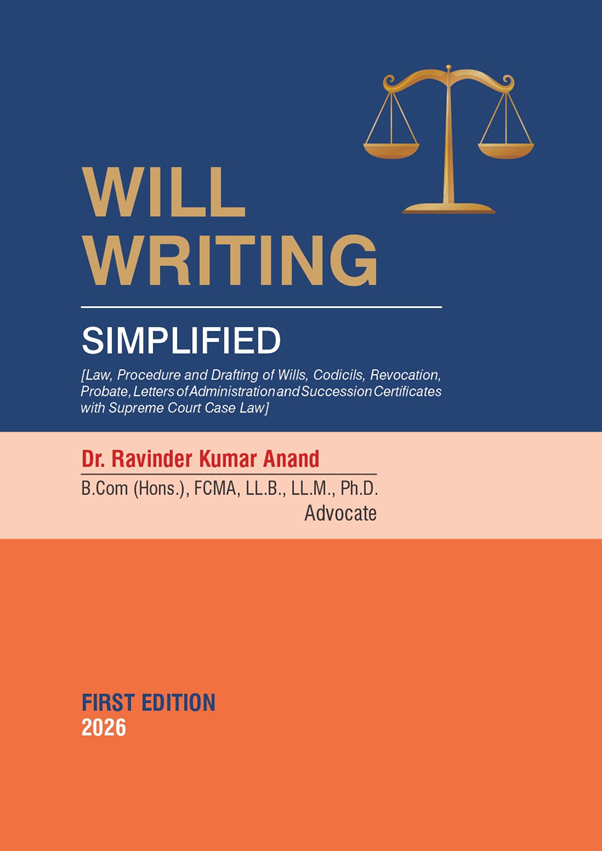
For readers interested in understanding succession law and related legal procedures, the book Will Writing Simplified [Law, Procedure and Drafting of Wills, Codicils, Revocation, Probate, Letters of Administration and Succession Certificates with Supreme Court Case Law] is a valuable resource. It offers practical insights into drafting and legal processes.
Also Read: Delhi High Court: Marriage Registration Not a Bar to Mutual Divorce Before One Year
Legal Significance
This judgment is significant for several reasons:
- It removes ambiguity about which court can extend arbitral timelines.
- It strengthens the principle of party autonomy and limited judicial intervention.
- It ensures that arbitration remains a speedy and efficient dispute resolution mechanism.
- It provides a clear procedural roadmap for litigants and lawyers dealing with delayed arbitration proceedings.
Broader Implications
- For Arbitrators: They must be mindful of strict timelines and cannot rely on High Courts or Supreme Court for extensions.
- For Litigants: Parties must approach the civil court with original jurisdiction for extensions, reducing forum-shopping.
- For Legal Practitioners: The ruling provides clarity and consistency, making arbitration practice more predictable.
- For Businesses: The decision reinforces arbitration as a reliable dispute resolution mechanism, encouraging commercial parties to opt for it.
Conclusion
The Supreme Court’s ruling on Section 29A marks a turning point in arbitration law in India. By clarifying that only civil courts with original jurisdiction can extend arbitral timelines, the apex court has ensured greater consistency, reduced confusion, and reinforced the principle of limited judicial intervention. This judgment will likely shape arbitration practice for years to come, making dispute resolution more efficient and predictable.
Suggested Keywords for Faster Searches
- Supreme Court Section 29A Arbitration Act
- Arbitral timeline extension India
- Jagdeep Chowgule vs Sheela Chowgule case
- Arbitration timeline Supreme Court ruling
- Civil court jurisdiction arbitration India
- Arbitration Act 1996 Section 29A explained
- Arbitration delay extension India
- Supreme Court arbitration law clarity
- Arbitration proceedings timeline India
- Will Writing Simplified legal resource