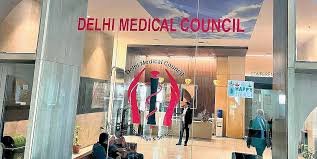
Delhi High Court: DMC Disciplinary Committee Orders Not Binding on Courts
Judgment Reinforces Judicial Supremacy in Medico-Legal Cases
Medical Council’s Role Limited to Professional Discipline, Not Legal Determination
By Our Legal Reporter
New Delhi: January 23, 2026:
In a significant medico-legal ruling, the Delhi High Court has held that disciplinary committee orders issued by the Delhi Medical Council (DMC) are not binding on Delhi courts. The Court clarified that while the Council has the authority to regulate professional conduct and discipline doctors, its findings cannot dictate or control judicial proceedings.
Also Read: HG Infra Engineering Stock Crashes After CBI, ACB Raids Over Corruption Allegations
This judgment has wide implications for the medical profession, patients, and the legal system, as it draws a clear line between professional regulation and judicial authority.
Background of the Case
- The matter arose when a disciplinary committee of the DMC passed an order against a doctor in connection with alleged medical negligence.
- The doctor challenged the order, arguing that courts should not treat the committee’s findings as binding.
- The Delhi High Court examined the scope of the DMC’s powers under the Delhi Medical Council Act, 1997.
- The Court ruled that while the Council can regulate professional ethics, its disciplinary orders cannot override judicial determinations in medico-legal disputes.
Key Observations of the Delhi High Court
1. Courts Are Supreme
The Court emphasized that judicial authority cannot be subordinated to professional bodies. Courts must independently assess evidence and determine liability in medico-legal cases.
2. Role of Medical Council
The DMC’s role is limited to professional regulation and discipline. It can suspend, warn, or remove doctors from the register, but its findings are not binding on courts.
Also Read: Supreme Court Rules NCLT Cannot Decide Trademark Ownership During Insolvency
3. Separation of Powers
The Court highlighted the principle of separation of powers, noting that regulatory bodies cannot usurp judicial functions.
Why This Matters
For Doctors
- Provides clarity that disciplinary orders of the DMC do not automatically translate into legal liability.
- Ensures that doctors have the right to contest allegations in court.
For Patients
- Reinforces that courts remain the ultimate authority in medical negligence cases.
- Protects patients’ rights by ensuring independent judicial review.
For the Legal System
- Strengthens judicial supremacy in medico-legal disputes.
- Prevents regulatory overreach by professional councils.
Expert Opinions
- Legal Experts: Say the ruling restores balance between professional regulation and judicial authority.
- Medical Associations: Welcome the clarity, noting that doctors often face parallel proceedings in councils and courts.
- Patient Advocacy Groups: Stress that while councils play a role in discipline, courts must decide compensation and liability.
Also Read: Karnataka High Court Lifts Ban on Bike Taxis, Orders State to Issue Permits
Broader Context
The ruling comes amid growing concerns about medical negligence cases in India. Patients often approach both medical councils and courts, leading to overlapping proceedings.
The Supreme Court has previously held that medical councils cannot replace judicial processes. The Delhi High Court’s ruling reinforces this principle, ensuring that councils remain regulatory bodies, not judicial authorities.
Practical Examples
- Case 1: A doctor suspended by the DMC for negligence can still contest liability in court.
- Case 2: A patient awarded relief by a court cannot be denied justice simply because the council found no negligence.
- Case 3: Courts may consider council findings as evidence but are not bound by them.
Challenges Ahead
- Coordination: Ensuring better coordination between medical councils and courts to avoid conflicting outcomes.
- Awareness: Doctors and patients must understand the distinction between disciplinary and judicial proceedings.
- Implementation: Courts must consistently apply the principle to prevent misuse of council orders.
Also Read: Delhi High Court Slams Newslaundry Journalist for Indecent Language Against TV Today Content
Conclusion
The Delhi High Court’s ruling that DMC disciplinary committee orders are not binding on courts is a landmark judgment in medico-legal jurisprudence. It reinforces judicial supremacy, clarifies the role of medical councils, and ensures fairness in disputes involving doctors and patients.
By drawing a clear line between professional regulation and judicial authority, the Court has strengthened both the medical profession and the justice system. This ruling will serve as a guiding precedent for future medico-legal cases across India.
Suggested Keywords for Faster Searches
- Delhi High Court DMC disciplinary committee ruling
- Medical Council orders not binding on courts India
- Delhi Medical Council Act 1997 judgment
- Medico-legal disputes Delhi High Court ruling
- Doctors disciplinary action Delhi HC case
- Medical negligence court vs council India
- Judicial supremacy medico-legal cases Delhi HC
- DMC disciplinary powers clarified High Court
- Delhi HC ruling medical council authority
- Landmark medico-legal judgment India
Also Read: Madhya Pradesh High Court Allows DNA Test of Child to Prove Wife’s Adultery