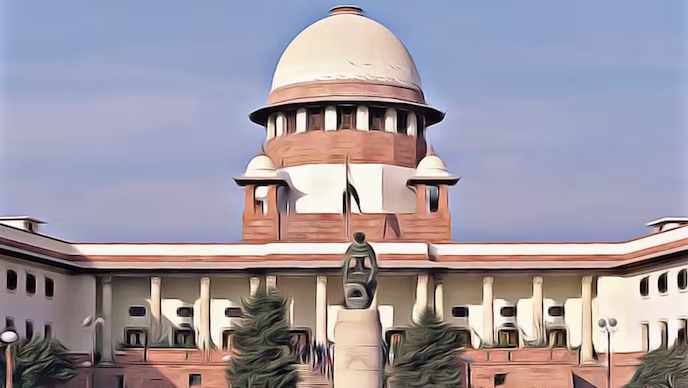
Supreme Court Rules NCLT Cannot Decide Trademark Ownership During Insolvency
Apex Court Says Intellectual Property Disputes Must Go to Civil or Commercial Courts
Ruling in Gloster Trademark Case Clarifies Limits of NCLT’s Jurisdiction
By Our Legal Reporter
New Delhi: January 23, 2026:
In a landmark judgment, the Supreme Court of India has clarified that the National Company Law Tribunal (NCLT) does not have the authority to decide trademark ownership disputes merely because they arise during a Corporate Insolvency Resolution Process (CIRP). The ruling came in the case of Gloster Limited v. Gloster Cables Limited, which involved rival claims over the trademark “Gloster” during the insolvency proceedings of Fort Gloster Industries Limited (FGIL).
Also Read: Delhi High Court: Hypertension Cannot Be Dismissed as Lifestyle Disorder to Deny Disability Pension
The bench of Justice J.B. Pardiwala and Justice K.V. Viswanathan held that while NCLT has wide powers under Section 60(5) of the Insolvency and Bankruptcy Code (IBC), those powers are not unlimited. Intellectual property disputes that pre-date insolvency or are independent of it must be decided by civil or commercial courts, not insolvency tribunals.
Background of the Case
- The Corporate Debtor: Fort Gloster Industries Limited (FGIL) went into insolvency, triggering CIRP proceedings.
- The Trademark Dispute: Rival companies, Gloster Limited and Gloster Cables Limited, claimed ownership of the trademark “Gloster.”
- NCLT’s Order: The NCLT, Kolkata, declared the trademark “Gloster” as an asset of the corporate debtor, effectively vesting ownership in the successful resolution applicant.
- Supreme Court Appeal: Gloster Limited challenged the NCLT’s order, arguing that trademark ownership disputes fall outside NCLT’s jurisdiction.
- Supreme Court’s Ruling: The apex court agreed, setting aside the NCLT’s order and clarifying that such disputes must be resolved in appropriate civil or commercial forums.
Also Read: Delhi High Court Upholds ICAI Action Against CA for Concealing Liabilities and Asset Ever-Greening
Court’s Observations
The Supreme Court made several important points:
- Section 60(5) of IBC: While this provision gives NCLT jurisdiction over matters “arising out of or in relation to insolvency,” it does not confer blanket powers to decide all disputes involving a corporate debtor.
- Trademark Ownership: Intellectual property disputes, especially those that pre-date insolvency, cannot be dressed up as insolvency issues simply because they surface during CIRP.
- Jurisdictional Limits: NCLT exceeded its jurisdiction by declaring title to the trademark in favour of the resolution applicant.
- Proper Forum: Trademark ownership disputes must be adjudicated by civil or commercial courts under intellectual property law.
Why This Ruling Matters
- For Insolvency Professionals: The ruling provides clarity on the scope of NCLT’s powers, ensuring that insolvency tribunals do not overstep into unrelated disputes.
- For Companies: Businesses involved in insolvency proceedings now know that intellectual property disputes must be pursued separately in civil courts.
- For Legal Clarity: The judgment strengthens the distinction between insolvency law and intellectual property law.
- For Investors: Resolution applicants can no longer assume automatic ownership of trademarks or IP assets unless clearly vested in the corporate debtor.
Also Read: Supreme Court Orders States to Frame Policy on Police Media Briefings, Stresses Identity Protection
Wider Implications
- Corporate Insolvency: The ruling ensures that CIRP remains focused on insolvency resolution rather than becoming a forum for all disputes.
- Intellectual Property Rights: It reinforces the importance of specialized forums for IP disputes, protecting the integrity of trademark law.
- Judicial Oversight: The Supreme Court’s intervention highlights the need for careful jurisdictional boundaries in complex corporate cases.
- Business Environment: The decision may encourage companies to maintain clearer records of IP ownership to avoid disputes during insolvency.
Conclusion
The Supreme Court’s ruling in the Gloster trademark case is a landmark clarification of the limits of NCLT’s jurisdiction. By holding that trademark ownership disputes cannot be decided by insolvency tribunals unless they have a direct nexus with insolvency, the court has reinforced the principle of jurisdictional discipline.
This judgment will serve as a guiding precedent for future cases, ensuring that insolvency proceedings remain focused on financial resolution while intellectual property disputes are addressed in their proper legal forums. For businesses, investors, and insolvency professionals, the ruling provides much-needed clarity and strengthens confidence in India’s legal framework.
Suggested Keywords for SEO (Google + ChatGPT)
- Supreme Court NCLT trademark ownership ruling
- Gloster trademark case Supreme Court 2026
- NCLT jurisdiction limits insolvency vs IP disputes
- Corporate Insolvency Resolution Process trademark dispute India
- Fort Gloster Industries insolvency case
- Section 60(5) IBC Supreme Court interpretation
- Insolvency tribunals cannot decide IP ownership India
- Supreme Court ruling on NCLT powers
- Trademark disputes during insolvency India
- Intellectual property rights vs insolvency law India
Also Read: Delhi High Court: DMC Disciplinary Committee Orders Not Binding on Courts