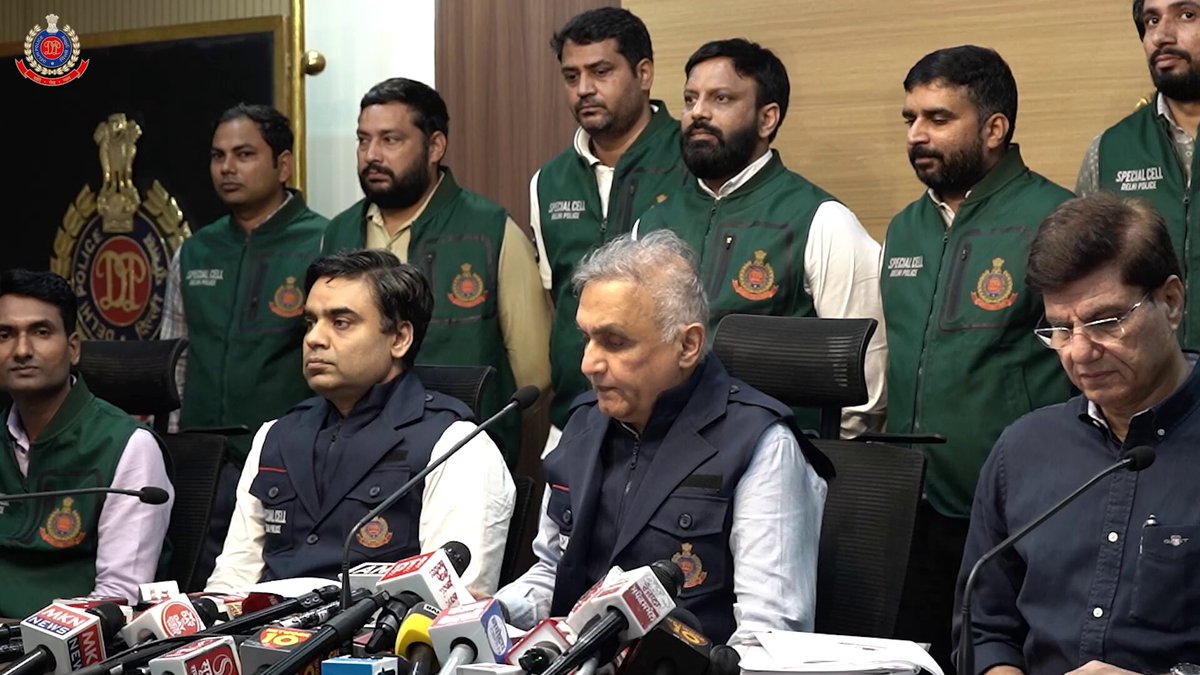
Supreme Court Orders States to Frame Policy on Police Media Briefings, Stresses Identity Protection
Court Warns Against Irresponsible Disclosures in Sensitive Cases
PUCL Petition Leads to Landmark Directions on Media Briefing Cells
By Our Legal Reporter
New Delhi: January 22, 2026:
In a landmark ruling, the Supreme Court of India has directed all states and union territories to formulate a uniform policy on police media briefings, particularly in sensitive cases. The Court stressed that the identity of accused persons, victims, and witnesses must be protected to ensure fairness in investigations and trials.
Also Read: HG Infra Engineering Stock Crashes After CBI, ACB Raids Over Corruption Allegations
The judgment came in response to a petition filed by the People’s Union for Civil Liberties (PUCL), which raised concerns about the misuse of police press briefings and their impact on justice delivery. The Court’s directions are expected to reshape how law enforcement agencies interact with the media, balancing the public’s right to information with the need to safeguard privacy and due process.
Background of the Case
- The PUCL petition highlighted instances where police officials disclosed sensitive details during press briefings, including names, photographs, and personal information of accused persons and victims.
- Such disclosures often led to trial by media, prejudicing the rights of individuals and undermining the presumption of innocence.
- The Supreme Court examined whether existing police manuals and guidelines were sufficient to regulate media briefings.
- Finding gaps in current practices, the Court ordered states to establish media briefing cells and frame policies to ensure responsible communication.
Key Observations of the Supreme Court
1. Identity Protection
The Court emphasized that the identity of victims, witnesses, and accused persons must be safeguarded. Disclosure of personal details can cause irreparable harm, especially in cases involving sexual offences, juveniles, or marginalized communities.
Also Read: Supreme Court Rules NCLT Cannot Decide Trademark Ownership During Insolvency
2. Trial by Media
The Court warned that sensational reporting based on police briefings can prejudice trials. Media narratives often shape public opinion before courts deliver judgments, undermining the principle of fair trial.
3. Need for Uniform Policy
The Court directed all states to frame clear policies on police-media interaction, ensuring consistency across jurisdictions. Media briefing cells should be established to handle communication professionally.
Why This Matters
For Law Enforcement
- Provides clarity on how police should interact with the media.
- Reduces risks of contempt or violation of privacy laws.
For Citizens
- Protects individuals from reputational harm due to premature disclosures.
- Ensures that sensitive cases are handled with dignity and fairness.
For the Judiciary
- Helps preserve the integrity of trials by minimizing external influence.
- Reinforces the principle of presumption of innocence.
Expert Opinions
- Legal Scholars: Say the ruling strengthens privacy rights and fair trial guarantees.
- Media Analysts: Note that the judgment will reshape crime reporting practices in India.
- Civil Rights Groups: Welcome the directions, calling them a safeguard against misuse of state power.
Also Read: Karnataka High Court Lifts Ban on Bike Taxis, Orders State to Issue Permits
Broader Context
India has witnessed several controversies where police press briefings led to media trials, damaging reputations and prejudicing investigations. High-profile cases often see accused persons branded guilty before courts deliver verdicts.
The Supreme Court’s ruling aligns with global best practices, where police communication is regulated to protect privacy and ensure fairness. Countries like the UK and US have established media liaison officers and strict guidelines on disclosures.
Practical Examples
- Case 1: In sexual offence cases, revealing the victim’s identity during press briefings violates statutory protections.
- Case 2: Publishing photographs of accused persons before trial can prejudice jury or public opinion.
- Case 3: Witnesses exposed through police briefings may face intimidation or harassment.
Challenges Ahead
- Implementation: States must ensure that policies are not just drafted but effectively enforced.
- Training: Police officers need training on media ethics and communication.
- Balance: Authorities must balance the public’s right to know with the individual’s right to privacy.
Also Read: Delhi High Court Slams Newslaundry Journalist for Indecent Language Against TV Today Content
Conclusion
The Supreme Court’s directions on police media briefings mark a turning point in India’s criminal justice system. By mandating states to frame policies and establish media briefing cells, the Court has sought to protect privacy, ensure fair trials, and prevent misuse of press briefings.
This ruling strengthens the principle that justice must be delivered in courts, not in the media, and that the dignity of individuals must be preserved at all stages of investigation and trial.
Suggested Keywords for Faster Searches
- Supreme Court police media briefing policy India
- PUCL petition police press briefings SC ruling
- Identity protection accused victims witnesses India
- Trial by media Supreme Court directions
- Police manual media briefing cells India
- SC ruling on police communication sensitive cases
- Media ethics police press briefing India
- Supreme Court privacy rights police briefings
- PUCL Supreme Court judgment media trial India
- Landmark ruling police media interaction SC
Also Read: Madhya Pradesh High Court Allows DNA Test of Child to Prove Wife’s Adultery