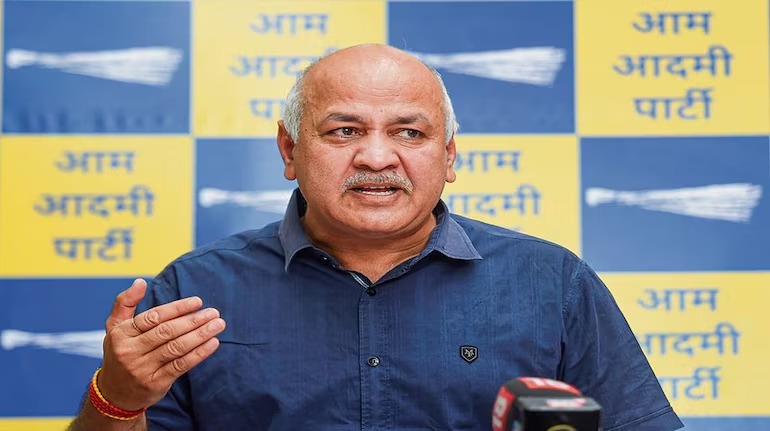
Delhi High Court: FIR Registration Alone Not Grounds for Election Disclosure, Upholds Manish Sisodia’s 2020 Win
Court says disclosure required only after charges framed or cognizance taken
Justice Jasmeet Singh dismisses petition challenging Sisodia’s Patparganj victory
By Our Legal Reporter
In a landmark ruling, the Delhi High Court has clarified that the mere registration of a First Information Report (FIR) does not amount to a pending criminal case for the purpose of disclosure by election candidates. The Court held that disclosure obligations under Section 33A of the Representation of the People Act, 1951 arise only when charges are framed or cognizance of the offence is taken by a court.
The judgment came in response to a petition filed by Pratap Chandra, a defeated candidate from the Patparganj constituency in the 2020 Delhi Assembly elections, who challenged the victory of Aam Aadmi Party (AAP) leader Manish Sisodia.
Background of the Case
- Petitioner’s claim: Pratap Chandra alleged that Sisodia failed to disclose criminal antecedents, including FIRs registered against him.
- Legal basis: Section 33A of the Representation of the People Act requires candidates to disclose pending criminal cases.
- Court’s finding: Justice Jasmeet Singh ruled that FIR registration alone does not constitute a pending case. Disclosure is required only when charges are framed or cognizance is taken.
- Outcome: The petition was dismissed, and Sisodia’s 2020 election victory was upheld.
Key Observations by the Court
- FIR ≠ pending case: Registration of an FIR is only the beginning of investigation, not proof of charges.
- Disclosure threshold: Candidates must disclose cases only when charges are framed or cognizance is taken.
- Electoral mandate protection: Courts should interfere with election results only in exceptional circumstances.
- Petition lacked material facts: The Court noted that the petitioner failed to provide sufficient evidence to sustain the challenge.
Also Read: Supreme Court Calls for Blockchain-Based Land Records to Prevent Tampering and Property Disputes
Comparison Table
|
Aspect |
Petitioner’s Argument |
Court’s Ruling |
|
FIR registration |
Must be disclosed |
❌ Not required |
|
Pending case definition |
Includes FIRs |
✅ Only after charges/cognizance |
|
Election petition strength |
Alleged suppression of facts |
❌ Lacked material facts |
|
Outcome |
Sisodia’s win should be set aside |
✅ Sisodia’s win upheld |
Why This Ruling Matters
- For candidates: Clarifies disclosure obligations, reducing confusion about FIRs.
- For voters: Ensures transparency while preventing misuse of FIRs for political vendetta.
- For courts: Reinforces judicial discipline in election disputes, limiting interference to clear violations.
- For democracy: Protects electoral mandates from frivolous challenges.
Broader Legal Context
This ruling aligns with earlier Supreme Court judgments emphasizing that criminal disclosure requirements must be interpreted strictly to prevent misuse.
- In Union of India v. Association for Democratic Reforms (2002), the Supreme Court mandated disclosure of criminal cases to ensure transparency.
- However, courts have clarified that mere FIRs cannot be equated with pending cases, as they may be politically motivated or frivolous.
- The Delhi High Court’s ruling balances transparency with fairness, ensuring that candidates are not penalized for unproven allegations.
Risks & Limitations
- Risk of misuse of FIRs: Political opponents may file FIRs to tarnish reputations.
- Judicial caution: Courts must ensure genuine cases are disclosed while filtering out frivolous ones.
- Trade-off: While protecting candidates, voters may feel deprived of information about FIRs.
Conclusion
The Delhi High Court’s ruling is a landmark in electoral law, clarifying that FIR registration alone does not trigger disclosure obligations under Section 33A of the Representation of the People Act.
Also Read: P&H High Court: Refund of Earnest Money Can Be Claimed Anytime, Limitation Not a Bar
By dismissing the petition against Manish Sisodia’s 2020 Patparganj victory, the Court reinforced the principle that electoral mandates must be respected unless clear statutory violations occur. This judgment strengthens the balance between transparency, fairness, and democratic stability.
Suggested Keywords (SEO + ChatGPT)
- Delhi High Court Manish Sisodia FIR ruling
- FIR registration election disclosure India
- Section 33A Representation of People Act judgment
- Delhi HC upholds Sisodia 2020 Patparganj win
- FIR not pending case election law India
- Justice Jasmeet Singh election petition ruling
- Electoral mandate protection Delhi High Court
- Criminal antecedents’ disclosure election candidates India
Also Read: Supreme Court: High Courts Cannot Issue Blanket Orders in POCSO Bail Cases Under CrPC Section 439