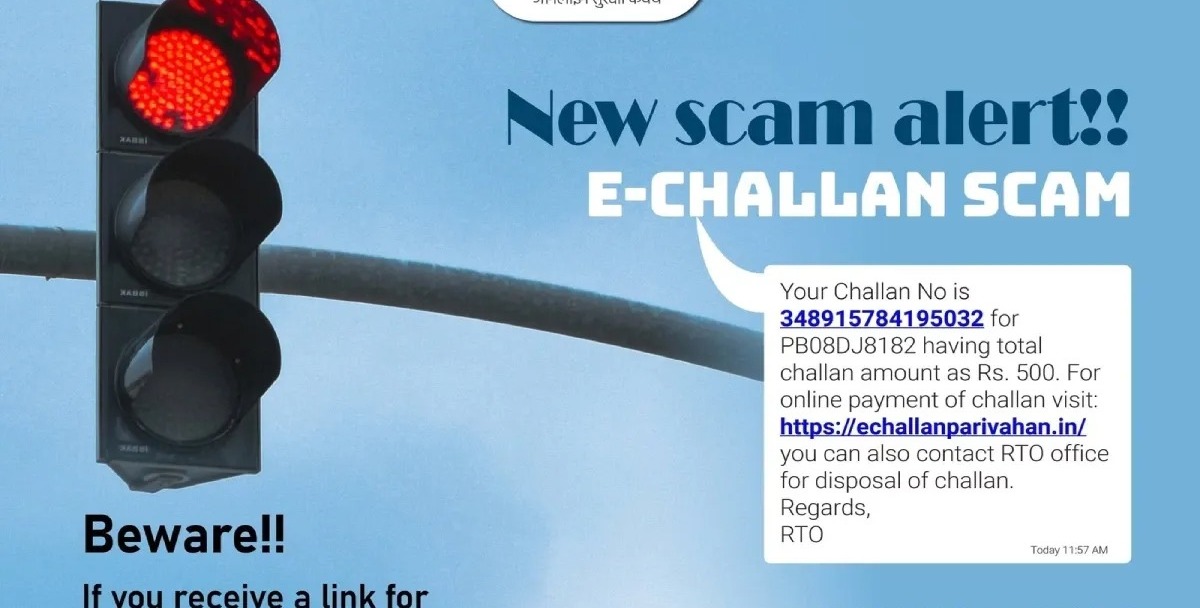
COURTKUTCHEHRY SPECIAL ALERT ON NEW CYBER CRIMES MISUISNG FAKE “RTO-E CHALLAN” ON WHATSAPP
Fake RTO Challan Scam on WhatsApp: How Cybercriminals Steal Money and What Indian Laws Say
Victims Lose Lakhs by Clicking Malicious Links Disguised as Traffic Challans
IT Act and IPC Provide Remedies, But Awareness Is Key to Prevention
By Our Legal Reporter
New Delhi: January 9, 2026
A shocking case emerged from Dehradun, Uttarakhand, where a 54-year-old man lost ₹3.6 lakh after opening a fake “RTO challan” sent to him on WhatsApp. The message looked authentic, claiming he had pending traffic fines. When he clicked the link, malware was installed on his phone, giving cybercriminals access to his banking apps.
Also Read: Supreme Court: Relative Working in Court or Police Not Valid Ground to Transfer Criminal Case
This incident is part of a new wave of cyber frauds in India, where scammers disguise malicious files as official government documents—such as traffic challans, KYC updates, or courier notices—to trick unsuspecting users.
How This New Cybercrime Works
Cyber experts explain that fraudsters use malicious APK files (Android Package Kits) disguised as legitimate documents.
- Step 1: Fake Message
Victim receives a WhatsApp message claiming to be from RTO or traffic police. - Step 2: Malicious File
The message contains a link or file labelled “pending challan” or “e-RTO challan.” - Step 3: Malware Installation
Once opened, the file installs spyware that captures keystrokes, OTPs, and banking credentials. - Step 4: Money Theft
Fraudsters gain remote access to the victim’s phone and transfer money instantly.
Similar scams have been reported in Mumbai, Delhi, and Bengaluru, with victims losing lakhs of rupees within minutes.
Also Read: India Regulates AI Cancer Detection Tools: New Norms Ensure Patient Safety and Global Alignment
How to Cross-Check Such Information on WhatsApp
To avoid falling prey to these scams, experts recommend:
- Verify on Official Websites:
- Check challans only on the Parivahan portal (https://parivahan.gov.in) or state RTO websites.
- Avoid Clicking Unknown Links:
- Never open files or links received from unknown numbers.
- Check Sender Details:
- Government agencies do not send challans via WhatsApp.
- Use Cybersecurity Apps:
- Install antivirus and keep phones updated.
- Report Suspicious Messages:
- Forward scam messages to cybercrime.gov.in or local police.
What Indian Laws Say About These Frauds
India’s legal framework provides remedies under multiple laws:
- Information Technology Act, 2000 (IT Act):
- Section 66C: Identity theft.
- Section 66D: Cheating by personation using computer resources.
- Section 43: Unauthorized access to computer systems.
- Indian Penal Code (IPC):
- Section 420: Cheating and dishonestly inducing delivery of property.
- Section 468: Forgery for the purpose of cheating.
- Section 379: Theft, applicable to digital assets.
- Consumer Protection Act, 2019:
- Victims can seek compensation if fraud occurs through service providers.
Victims are advised to file FIRs with local police or report to the National Cyber Crime Reporting Portal.
Also Read: India Plans Tax Exemption on Equity Gains for Sovereign Wealth Funds to Boost Foreign Investment
Impact on Society
- Rising Cybercrime: India reported over 1.6 lakh cyber fraud cases in 2025, with WhatsApp scams among the fastest growing.
- Trust Deficit: Such scams erode public trust in digital governance initiatives.
- Financial Losses: Victims often lose life savings, with little chance of recovery.
Expert Opinions
- Cybersecurity Analysts: Warn that fraudsters are exploiting public ignorance about digital challan systems.
- Legal Experts: Stress the need for stricter enforcement and awareness campaigns.
- Police Officials: Urge citizens to rely only on official portals for challan verification.
Also Read: Karnataka High Court: Neighbour Not ‘Relative’ Under Section 498A, Cruelty Case Quashed
Conclusion
The Dehradun case is a wake-up call for India’s digital society. As cybercriminals innovate with scams like fake RTO challans, citizens must stay vigilant. The law provides remedies, but prevention through awareness, verification, and caution is the best defence.
India’s push for Digital India must go together with stronger cybersecurity education, ensuring that technology empowers citizens rather than exposing them to fraud.
Suggested Keywords for SEO & Faster Searches
- WhatsApp RTO challan scam India 2026
- Fake traffic challan cybercrime India
- Dehradun man loses ₹3.6 lakh WhatsApp fraud
- IT Act cybercrime remedies India
- IPC cheating forgery cyber fraud India
- How to check RTO challan online India
- Cybercrime reporting portal India
- WhatsApp malware APK scam India
- Traffic challan fraud awareness India
- Supreme Court cybercrime regulation India