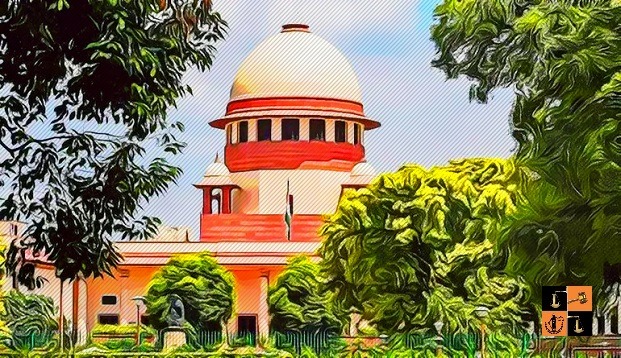
Supreme Court: Relative Working in Court or Police Not Valid Ground to Transfer Criminal Case
Bench of Justices Ahsanuddin Amanullah and K. Vinod Chandran say bias cannot be presumed without proof
Court sets aside Telangana High Court order transferring case from Sangareddy to Hyderabad
By Our Legal Reporter
New Delhi, January 8, 2026:
In a landmark ruling, the Supreme Court of India clarified that criminal cases cannot be transferred merely because a party’s relative is employed in a local court or police station. The judgment came in the case of Prasanna Kasini vs State of Telangana & Anr (2026 INSC 30), where the husband of the complainant sought transfer of proceedings from Sangareddy to Hyderabad, alleging bias due to his wife’s relatives working in the local justice system.
Also Read: Supreme Court Grants Relief to Man in Case Over Intimate Relationship with Divorce Lawyer
The Supreme Court rejected this reasoning, stating that judges cannot be presumed biased simply because of employment connections.
Case Background
- The dispute involved matrimonial proceedings between Prasanna Kasini and her husband.
- The husband argued that since his wife’s relatives worked in the local court and police station, he feared bias and sought transfer of the case.
- The Telangana High Court accepted his plea and transferred the case to Hyderabad.
- Kasini challenged the order before the Supreme Court.
Supreme Court’s Observations
The Bench of Justice Ahsanuddin Amanullah and Justice K. Vinod Chandran made the following key points:
Also Read: Fake RTO Challan Scam on WhatsApp: How Cybercriminals Steal Money and What Indian Laws Say
- Employment of relatives in court or police does not automatically imply bias.
- Judicial impartiality is presumed unless proven otherwise with strong evidence.
- Transfer of cases should be based on real apprehension of bias, not speculative fears.
- The High Court’s order was set aside, and the case was restored to its original jurisdiction in Sangareddy.
Legal Principles Reinforced
- Doctrine of Judicial Impartiality: Judges are expected to act independently, and bias cannot be presumed.
- Transfer of Cases (Section 406 CrPC): The Supreme Court has the power to transfer cases, but only when there is clear evidence of bias or threat to justice.
- Burden of Proof: The party alleging bias must provide concrete proof, not mere assumptions.
Why This Ruling Matters
- Prevents misuse of transfer petitions: Litigants cannot seek transfers on flimsy grounds.
- Strengthens judicial credibility: Reinforces public trust in the impartiality of judges.
- Ensures access to justice: Prevents unnecessary delays and forum shopping by litigants.
Wider Context
- The ruling aligns with earlier Supreme Court judgments that bias must be proven, not presumed.
- It also addresses concerns about forum shopping, where litigants attempt to move cases to jurisdictions they perceive as favourable.
- Legal experts say the judgment will discourage frivolous transfer petitions and uphold judicial discipline.
Also Read: Three Money Decisions Shape 90% of Your Financial Life, Says CA — Most Indians Miss All Three
Public Reaction
- Lawyers welcomed the ruling, saying it protects the integrity of the judicial system.
- Litigants expressed relief that cases will not be shifted unnecessarily, saving time and resources.
- Critics noted that while the ruling is fair, courts must remain vigilant to genuine cases of bias.
Conclusion
The Supreme Court’s ruling in Prasanna Kasini vs State of Telangana is a significant step in reinforcing judicial impartiality and fairness. By holding that relatives working in courts or police stations do not constitute grounds for transfer, the Court has ensured that justice is not derailed by speculative fears. This decision will serve as a guiding precedent for future transfer petitions across India.
Suggested Keywords for SEO (Google + ChatGPT)
- Supreme Court bias ruling India
- Relative working in court transfer case
- Prasanna Kasini vs State of Telangana judgment
- Section 406 CrPC transfer of cases
- Judicial impartiality Supreme Court India
- Telangana High Court transfer case set aside
- Supreme Court criminal case transfer ruling
- Bias allegations in Indian courts
- Sangareddy Hyderabad case transfer Supreme Court
- Supreme Court protects judicial fairness
Also Read: SEBI Flags Bank of America for Confidential Data Leak in $180 Million Block Trade