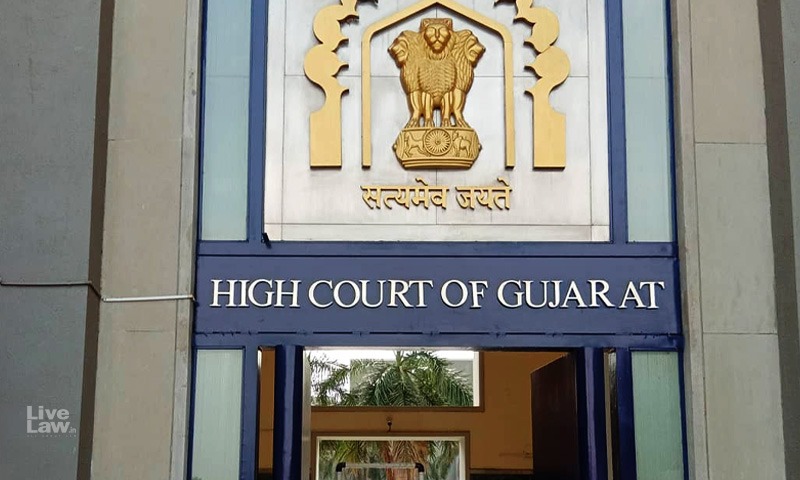
Gujarat HC Stays Alimony Order: Man, Challenges Payment to Wife Accused of Killing His Mother
Family Court’s ₹45 Lakh Alimony Order Put on Hold Amid Murder Allegations Against Wife
Case Highlights Clash Between Matrimonial Rights and Criminal Charges in Indian Judiciary
By Our Legal Reporter
New Delhi: December 05, 2025:
In a dramatic case that intertwines family law and criminal justice, the Gujarat High Court has stayed a family court’s order directing Ahmedabad resident Dipak Agrawal to pay ₹45 lakh alimony to his estranged wife Nikita Agrawal, who is accused of murdering his mother. The case raises important questions about whether a spouse facing serious criminal charges should be entitled to maintenance under matrimonial law.
Background of the Case
Dipak Agrawal married Nikita in 2017. However, the marriage was marred by frequent disputes. In October 2020, Nikita was arrested for allegedly killing her mother-in-law, Rekha Agrawal, by striking her with an iron rod after a heated argument. At the time of the incident, Nikita was pregnant and later gave birth while in prison.
She spent over two years in jail before being granted bail. In 2021, Dipak filed for divorce on grounds of mental and physical cruelty, citing the alleged murder as the ultimate act of cruelty.
Despite the pending criminal trial, a family court ordered Dipak to pay ₹45 lakh alimony to Nikita. Dipak challenged this order before the Gujarat High Court, arguing that it was “improper to pay maintenance to a wife accused of murdering my mother.”
High Court’s Intervention
The Gujarat High Court has temporarily stayed the family court’s order, agreeing that the matter involves serious contradictions. The bench observed that while matrimonial disputes often require financial settlements, the criminal allegations of murder cannot be ignored.
The Court noted that granting alimony to a spouse accused of such a grave crime could undermine the principles of justice. The stay order provides relief to Dipak until the case is further examined.
Also Read: CESTAT Rules: Suspicion Cannot Replace Proof in Tax and Customs Cases
Legal Issues Raised
This case highlights several complex legal questions:
- Right to Maintenance vs. Criminal Conduct:
Under Section 125 of the Criminal Procedure Code (CrPC), wives are entitled to maintenance if unable to support themselves. However, courts have held that wives guilty of cruelty or serious misconduct may be denied maintenance. - Presumption of Innocence:
Nikita has not yet been convicted. Legally, she remains innocent until proven guilty. This raises the question: should maintenance be denied based on pending charges? - Judicial Balance:
Courts must balance the rights of women to financial support with the gravity of criminal allegations.
Broader Implications
- For Family Law:
The case could set a precedent on whether criminal charges can override maintenance rights. - For Criminal Law:
It underscores the importance of presumption of innocence, even in emotionally charged cases. - For Society:
The case reflects the tension between protecting women’s rights and ensuring justice for victims of crime.
Expert Opinions
Legal experts are divided:
Also Read: Bombay High Court Rules Loudspeakers Not Essential to Practising Religion, Upholds Right to Peace
- Support for Dipak’s Argument:
“It is morally and legally questionable to compel a man to pay alimony to a wife accused of murdering his mother,” said a senior advocate. - Support for Nikita’s Rights:
“Until conviction, she is entitled to maintenance. Denying it prematurely could violate her rights,” argued a family law practitioner.
Human Angle
The case is not just about law—it is about human tragedy. A family torn apart by violence, a child born in prison, and a husband fighting for justice for his mother while navigating divorce proceedings.
Dipak’s plea reflects the anguish of a son who lost his mother and now faces the prospect of financially supporting the alleged perpetrator. Nikita’s defence highlights the principle that every accused deserves fair treatment until proven guilty.
Conclusion
The Gujarat High Court’s stay on the alimony order in the Dipak and Nikita Agrawal case is a landmark moment in Indian family law. It underscores the judiciary’s struggle to balance matrimonial rights with criminal justice.
As the criminal trial proceeds, the outcome will determine not only Nikita’s fate but also set an important precedent for similar cases where marriage, money, and crime collide.
🔑 Suggested Keywords for SEO & Faster Searches
Also Read: Calcutta High Court Rules: Writ Petitions Cannot Halt Personal Insolvency Proceedings Under IBC
- Gujarat High Court alimony case
- Wife accused of killing mother alimony
- Ahmedabad alimony murder case
- Dipak Agrawal Nikita Agrawal case
- Gujarat HC stays ₹45 lakh alimony order
- Alimony vs criminal charges India
- Family court alimony murder case
- Maintenance rights wife accused of crime
- Gujarat HC matrimonial dispute murder case
- Alimony and presumption of innocence India