
New Income Tax Draft Rules: No PAN Needed for Property Deals Below ₹20 Lakh from April 1
CBDT proposes raising PAN threshold to ease compliance
Draft rules part of new Income Tax Act framework effective April 2026
By Business Reporter
New Delhi: February 26, 2026:
The Central Board of Direct Taxes (CBDT) has released the Draft Income Tax Rules, 2026, introducing major changes to compliance requirements for property transactions and financial dealings. One of the most notable proposals is that Permanent Account Number (PAN) will no longer be mandatory for property deals below ₹20 lakh, effective from April 1, 2026, if the rules are notified.
Also Read: Taj Mahal and Connaught Hotels Challenge ₹46 Crore Licence Fee in Delhi High Court
This move, part of the transition to the new Income Tax Act, 2025, aims to simplify compliance, reduce paperwork, and focus regulatory oversight on high-value transactions.
[Additional Research Resource]
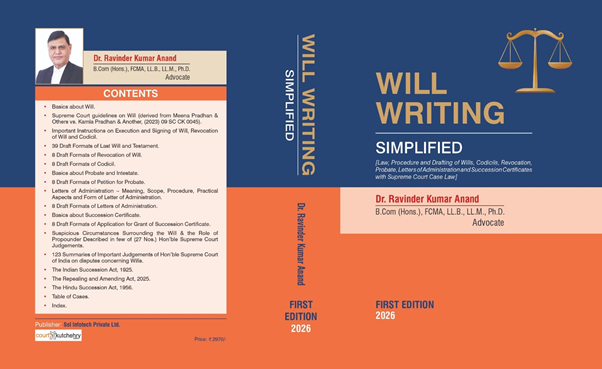
If you want practical guidance on drafting wills, codicils, and probate procedures, Will Writing Simplified is an invaluable resource. BUY NOW: Amazon 🔹 Flipkart
Also Read: Madras High Court Orders CBI Probe into Madurai Kamaraj University Corruption Allegations
Background of the Draft Rules
- Currently, PAN must be quoted for property transactions exceeding ₹10 lakh.
- The new draft rules propose raising this threshold to ₹20 lakh, covering purchase, sale, and certain agreements such as joint development agreements and gifts of immovable property.
- The draft rules also revise PAN requirements for cash deposits, withdrawals, vehicle purchases, and insurance transactions, shifting focus from small transactions to higher-value financial activity.
- The government has invited public feedback before finalizing the rules.
Key Changes Proposed
- Property transactions: PAN quoting mandatory only for deals above ₹20 lakh.
- Cash deposits/withdrawals: Revised thresholds to reduce compliance burden for small transactions.
- Vehicles and insurance: PAN requirements streamlined for high-value purchases.
- Audit trail focus: The government aims to strengthen monitoring of large financial flows while easing rules for everyday citizens.
Expert Views
- Tax professionals believe the move will ease compliance for middle-class taxpayers and small property buyers.
- Financial analysts note that raising the threshold aligns with inflation and rising property values, making the rules more practical.
- Legal experts caution that while compliance is simplified, taxpayers must remain vigilant about reporting obligations under other provisions of the Income Tax Act.
Also Read: Gurugram Surpasses Mumbai as India’s Ultra-Luxury Housing Capital
Why This Matters
- For taxpayers: Reduced paperwork and easier compliance for small property deals.
- For real estate sector: Encourages smoother transactions in the affordable housing segment.
- For government: Focuses enforcement on high-value transactions, improving efficiency in tax administration.
Broader Implications
- Digital compliance push: The draft rules reflect India’s move toward technology-driven tax monitoring.
- Reduced litigation: Clear thresholds will minimize disputes over PAN requirements.
- Public confidence: Simplified rules may improve taxpayer trust in the system.
Conclusion
The Draft Income Tax Rules, 2026 mark a significant step in modernizing India’s tax framework. By raising the PAN threshold for property transactions to ₹20 lakh, the government aims to strike a balance between compliance ease and financial transparency.
If implemented, these rules will benefit millions of taxpayers, especially those engaged in small property deals, while ensuring that high-value transactions remain under strict scrutiny.
Also Read: ED Attaches ₹598 Crore Assets in Ansal Properties Case
Keywords for SEO & Faster Searches
- Income Tax Draft Rules 2026 PAN
- PAN requirement property deals India
- CBDT draft rules April 2026
- No PAN needed below ₹20 lakh property
- New Income Tax Act 2025 rules
- PAN threshold property transactions India
- Income tax compliance simplified 2026
- Property deals PAN exemption India