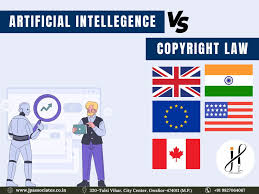
India Plans New AI Copyright Law: One Nation, One Licence, One Payment Model
Mandatory Licensing Framework to Ensure Royalties for Creators in AI Training
Proposed Law Balances Innovation, Transparency, and Copyright Protection
By Our Legal Reporter
New Delhi: December 10, 2025:
India is preparing a sweeping overhaul of copyright laws to address the challenges posed by artificial intelligence (AI). The proposed framework, titled “One Nation, One Licence, One Payment”, is being developed by the Department for Promotion of Industry and Internal Trade (DPIIT). It seeks to balance the interests of AI startups, large technology firms, and content creators by introducing a mandatory licensing and royalty system for copyrighted works used in AI training.
Also Read: CCPA Fines Meesho ₹10 Lakh for Selling Uncertified Walkie-Talkies Without Mandatory Disclosures
This marks India’s first formal attempt to regulate how AI companies use creative content, a move that could set a precedent globally.
Key Proposals in the Draft Law
- Mandatory Licensing for AI Developers
- AI companies will need a statutory licence to use copyrighted material for training models.
- This licence will cover all “lawfully accessed” content, including text, images, music, and videos available online.
- The system will simplify compliance by replacing multiple permissions with a single national licence.
- Royalty Payments to Creators
- AI firms, including global players like OpenAI, Google, and Anthropic, will be required to pay royalties for using Indian copyrighted works.
- Royalties will apply not only to future training cycles but also to past uses of copyrighted material.
- This ensures a steady revenue stream for artists, writers, musicians, and India’s vast informal creative sector.
- Transparency and Disclosure
- Large AI model developers must disclose the datasets used for training.
- This measure aims to increase accountability and help creators track how their works are being used.
- Treatment of Online Content
- The draft suggests that any content lawfully accessible online can be used for AI training unless platforms restrict access through paywalls, rate limits, or anti-scraping technologies.
- This shifts the burden onto platforms to protect their content if they do not want it used.
- Level Playing Field for Startups
- By reducing litigation risks and compliance costs, the framework aims to support AI startups and prevent monopolization by large tech firms.
Also Read: Supreme Court: Compromise Cannot Erase Corruption, Restores ₹52.5 Crore Loan Fraud Case
Global Context
India’s move comes amid global debates on AI and copyright:
- In the United States, lawsuits have been filed against AI firms for unauthorized use of copyrighted books and images.
- The European Union is considering stricter rules on transparency and licensing.
- Countries like Japan and Singapore have introduced exceptions for text and data mining.
India’s proposal is unique because it combines compulsory licensing with royalty payments, making it one of the first major economies to propose such a hybrid model.
Benefits of the Proposed Law
- For Creators: Guaranteed income from royalties, recognition of their work in the AI ecosystem.
- For Startups: Simplified compliance through a single licence, reduced risk of lawsuits.
- For Consumers: More diverse and legally compliant AI products.
- For Government: Strengthened control over India’s creative economy and digital content market.
Challenges and Concerns
- Implementation: Setting royalty rates fairly across diverse creative sectors may be complex.
- Global Compliance: International AI firms may resist compulsory licensing, leading to disputes.
- Access vs. Protection: Treating all online content as training data unless restricted could raise privacy and ownership concerns.
- Innovation Balance: Over-regulation may slow down AI innovation if costs become too high for startups.
Also Read: Noida Accountant Arrested in ₹11 Crore Fake GST Invoice Scam
Conclusion
India’s proposed AI copyright law under the “One Nation, One Licence, One Payment” framework is a landmark step in regulating the intersection of technology and intellectual property. By mandating licensing, royalties, and transparency, the government aims to protect creators while fostering innovation.
If enacted, this law could position India as a global leader in AI regulation, offering a model for other countries grappling with similar challenges. The coming months will be crucial as stakeholders debate the fine print and the government moves toward formal legislation.
Suggested Keywords for Faster Searches
- India AI copyright law proposal
- One Nation One Licence One Payment AI
- DPIIT AI copyright framework India
- AI training data copyright India
- AI royalties for creators India
- India AI regulation 2025
- AI copyright overhaul India startups
- AI transparency law India
- AI copyright global comparison India
- India compulsory licence AI models