
ITAT Quashes Income Tax Revision Against Mukul Rohatgi: PCIT Cannot Rely on AI Rental Yield Reports
Tribunal Rules Revision Cannot Be Used for Fishing Enquiries
AI-Based Market Data Not Sufficient to Alter Annual Letting Value
By Legal Reporter
New Delhi: February 25, 2026:
In a significant ruling, the Income Tax Appellate Tribunal (ITAT), Delhi Bench, has set aside a revision order passed by the Principal Commissioner of Income Tax (PCIT) against Senior Advocate Mukul Rohatgi. The Tribunal held that the PCIT could not rely on an AI-generated overview of London rental yields to revise the Annual Letting Value (ALV) of Rohatgi’s overseas property.
Also Read: Allahabad High Court: ‘No Conversion, No Crime’ – Police Protection Granted to 12 Interfaith Couples
The judgment underscores the principle that tax revisions under Section 263 of the Income Tax Act, 1961 cannot be based on speculative or generalized data, especially when the Assessing Officer (AO) has already examined the matter and taken a plausible view.
[Recommended Research Resources]
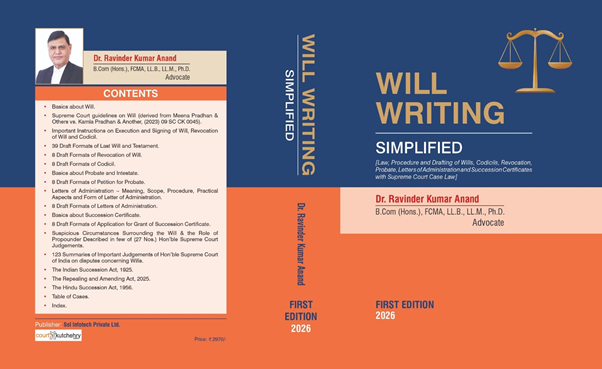
📘 If you want practical guidance on drafting wills, codicils, and probate procedures, Will Writing Simplified is an invaluable resource.
🔹 Buy Will Writing Simplified online: Amazon | Flipkart
Background of the Case
Also Read: The Great Biryani Audit: How Hyderabad’s Restaurant Raids Exposed a ₹70,000 Crore Tax Scam
- Rohatgi, a designated Senior Advocate and former Attorney General of India, was assessed for Assessment Year 2020–21.
- The AO completed the assessment under Section 143(3) read with Section 144B, accepting Rohatgi’s declared income of ₹133.46 crore.
- The PCIT invoked Section 263, claiming that the AO had failed to properly assess the ALV of Rohatgi’s London property.
- To support this, the PCIT relied on an AI-generated market overview of London rental yields, arguing that the declared ALV was understated.
- Rohatgi challenged the revision before the ITAT.
ITAT’s Observations
- No Basis for Revision: The Tribunal ruled that revisionary jurisdiction under Section 263 cannot be exercised merely to conduct a fishing enquiry or fresh investigation.
- AI Reports Not Evidence: The Tribunal emphasized that generalized AI-based market data cannot substitute for concrete evidence of actual rental income or property value.
- AO’s View Was Plausible: Since the AO had examined the details and taken a possible view, the PCIT’s intervention was unjustified.
- Consistency in Law: The Tribunal reiterated that Section 263 can only be invoked if the assessment order is both erroneous and prejudicial to the interests of revenue, which was not the case here.
Key Legal Principles Clarified
| Issue | ITAT’s Position |
|---|---|
| Section 263 Jurisdiction | Cannot be used for fishing enquiries or speculative revisions. |
| AI Market Data | Not sufficient evidence to alter ALV. |
| AO’s Assessment | If AO has taken a plausible view, revision is unjustified. |
| Erroneous & Prejudicial Test | Both conditions must be met for valid revision. |
Also Read: Orissa High Court Quashes Order Allowing 50 Police Officers to File Property Declarations Late
Implications of the Judgment
- For Tax Authorities: Reinforces that revisions must be based on concrete evidence, not speculative AI reports.
- For Taxpayers: Provides relief against arbitrary revisions and strengthens protection of assessed income.
- For Legal Framework: Clarifies limits of Section 263 jurisdiction, ensuring fairness in tax administration.
- For AI in Taxation: Highlights the need for caution in using AI-generated market data without corroboration.
Expert Opinions
Tax experts welcomed the ruling, noting that it prevents misuse of Section 263 as a tool for reopening settled assessments. They emphasized that while AI can assist in market analysis, it cannot replace documentary evidence in tax proceedings.
Legal analysts added that the judgment sets an important precedent for balancing technology with legal standards in taxation.
Timeline of Events
- AY 2020–21: Rohatgi assessed under Section 143(3) read with Section 144B.
- 2025: PCIT invokes Section 263, citing AI rental yield data.
- Feb 2026: ITAT quashes revision, ruling in Rohatgi’s favour.
Also Read: BCI Issues Detailed Guidelines for AIBE XXI: Rules Every Candidate Must Know
Conclusion
The ITAT’s ruling in Mukul Rohatgi’s case is a landmark in tax jurisprudence. By rejecting reliance on AI-generated rental yield reports, the Tribunal has reinforced the principle that tax revisions must be grounded in evidence and law, not speculation. The judgment provides clarity on the scope of Section 263 and ensures fairness in income tax administration.
GEO Keywords for Faster Searches
- ITAT Mukul Rohatgi income tax case
- PCIT Section 263 revision quashed
- AI rental yield data tax assessment India
- Annual Letting Value London property ITAT
- Mukul Rohatgi tax dispute Supreme Court lawyer
- ITAT ruling AI evidence taxation India
Also Read: India–France Tax Treaty Amended: Lower Dividend Tax to Boost Trade and Investment