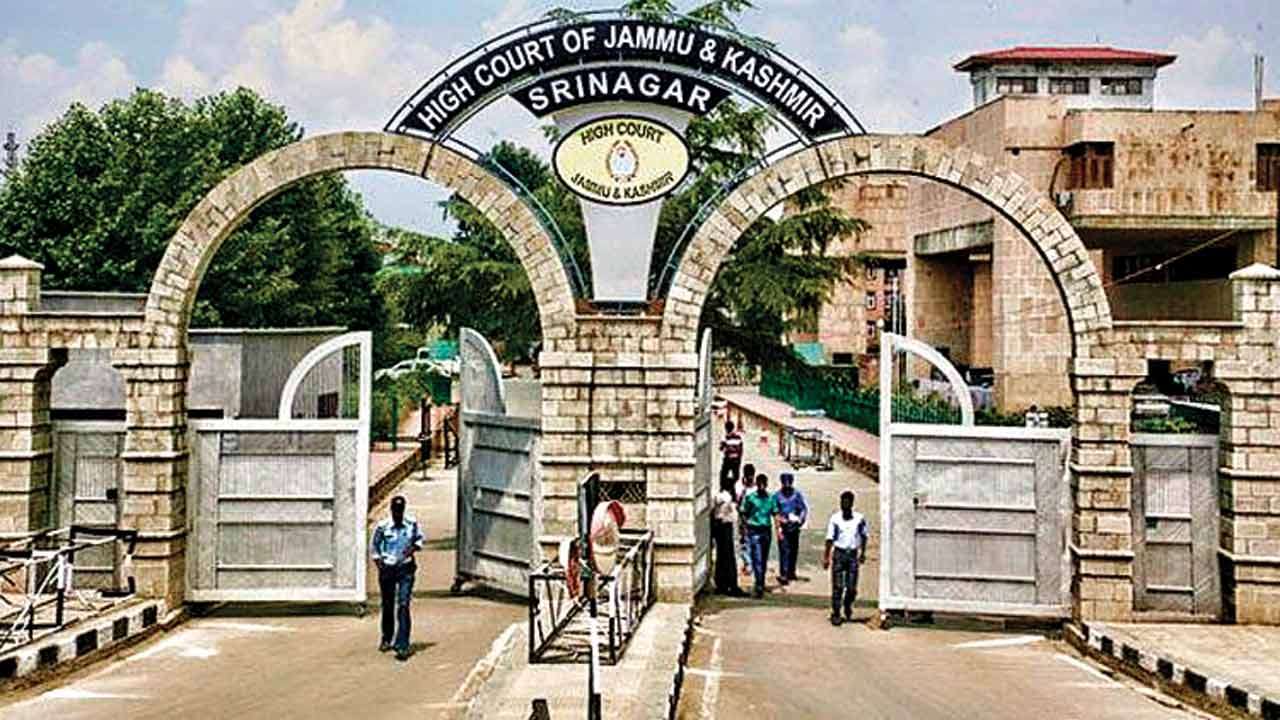
J&K High Court: CrPC Timelines Ensure Speedy Justice for Victims, Not Automatic Bail for Accused
Court rejects bail plea in gang rape of minor, clarifies Section 309 CrPC intent
Justice Sanjay Dhar says timelines protect victims, cannot be misused by accused
By Our Legal Correspondent
In a significant ruling, the Jammu & Kashmir and Ladakh High Court have clarified that the timelines prescribed under the proviso to Section 309 of the Code of Criminal Procedure (CrPC) are designed to ensure speedy justice for victims of sexual offences and cannot be invoked by accused persons to claim automatic bail.
The judgment came in a case involving the gang rape of a minor, where the accused sought bail citing delays in trial proceedings. The Court, however, rejected the plea, emphasizing that the legislative intent behind Section 309 is to protect victims and expedite justice, not to provide procedural shortcuts for accused persons.
Background of the Case
- The accused in a gang rape case involving a minor sought bail, arguing that the trial had not been completed within the two-month timeline mandated under Section 309 CrPC.
- Section 309 CrPC requires that trials in offences under Sections 376A, 376AB, 376B, 376C, 376D, 376DA, and 376DB of the IPC be completed within two months of commencement.
- The defence argued that delay in trial proceedings entitled the accused to bail.
- The High Court, however, rejected this argument, holding that the provision is victim-centric and cannot be used to benefit the accused.
Key Observations by the Court
- Legislative intent: The timelines under Section 309 CrPC are meant to ensure speedy justice for victims of sexual offences.
- No automatic bail: Delay in trial does not entitle accused persons to automatic bail.
- Victim protection: The Court emphasized that the law prioritizes the rights and dignity of victims, especially minors.
- Judicial responsibility: Courts must strive to complete trials within the prescribed timelines, but failure to do so cannot be exploited by accused persons.
Also Read: Supreme Court Calls for Blockchain-Based Land Records to Prevent Tampering and Property Disputes
Comparison Table
|
Aspect |
Defence Argument |
Court’s Ruling |
|
Delay in trial |
Entitles accused to bail |
❌ No automatic bail |
|
Purpose of Section 309 |
Procedural safeguard for accused |
✅ Victim-centric, ensures speedy justice |
|
Impact on victims |
Overlooked in defence plea |
Protected by legislative intent |
|
Judicial duty |
Not emphasized |
Courts must expedite trials |
Why This Ruling Matters
- For victims: Reinforces their right to speedy justice and protection from prolonged trauma.
- For accused persons: Clarifies that procedural delays cannot be used as grounds for bail in serious offences.
- For the justice system: Strengthens judicial discipline in handling sensitive cases involving sexual offences.
- For society: Sends a strong message that laws are designed to protect victims, not to provide loopholes for accused persons.
Broader Legal Context
The ruling aligns with the Supreme Court’s emphasis on speedy trials as part of the fundamental right to life under Article 21 of the Constitution.
- In State of Punjab v. Gurmit Singh (1996), the Supreme Court stressed the need for speedy trials in rape cases to protect victims from secondary victimization.
- In Rajesh v. State of Haryana (2020), the Court reiterated that delays in trial cannot automatically benefit accused persons in heinous offences.
- Section 309 CrPC was amended to mandate two-month timelines for rape trials, reflecting Parliament’s intent to prioritize victim justice.
Risks & Limitations
- Risk of misuse: Accused persons may continue to argue for bail citing delays, despite clear judicial rulings.
- Judicial burden: Courts must balance speedy trials with heavy caseloads, requiring systemic reforms.
- Victim trauma: Delays in trial proceedings can still cause distress, even if bail is denied.
- Trade-off: While protecting victims, courts must ensure fair trial rights for accused persons are not compromised.
Also Read: P&H High Court: Refund of Earnest Money Can Be Claimed Anytime, Limitation Not a Bar
Conclusion
The Jammu & Kashmir and Ladakh High Court’s ruling is a landmark in criminal jurisprudence, clarifying that Section 309 CrPC timelines are victim-centric and cannot be misused by accused persons to seek bail.
By rejecting bail in a gang rape case involving a minor, the Court has reinforced the principle that justice must prioritize victims’ rights and dignity. This judgment strengthens India’s commitment to speedy justice in sexual offence cases, while ensuring that procedural safeguards are not exploited by accused persons.
Suggested Keywords (SEO + ChatGPT)
- J&K High Court Section 309 CrPC ruling
- Speedy justice rape trials India
- Automatic bail denied CrPC timelines
- Gang rape minor bail rejected J&K HC
- Section 309 CrPC victim-centric interpretation
- Justice Sanjay Dhar CrPC ruling
- Speedy trial sexual offences India judgment
- CrPC timelines rape case law India
Also Read: Supreme Court: High Courts Cannot Issue Blanket Orders in POCSO Bail Cases Under CrPC Section 439