
Kerala HC: Guilty Plea in Criminal Case Does Not Bind Motor Accident Tribunal
Vehicle Owners Can Present Independent Evidence on Negligence
Court Clarifies Civil Proceedings Differ from Criminal Convictions
By Our Legal Correspondent
New Delhi: February 16, 2026:
In a significant ruling, the Kerala High Court has clarified that a driver’s guilty plea in a criminal case does not automatically determine negligence in a motor accident compensation claim. The court held that the Motor Accidents Claims Tribunal (MACT) must independently assess evidence based on the principle of “preponderance of probabilities,” rather than relying solely on criminal proceedings.
Also Read: Court Clarifies Scope of Industrial Disputes Act in Reinstatement Cases
The judgment, delivered by Justice Mohammed Nias C.P. on February 13, 2026, restores the right of vehicle owners to present independent evidence in accident claims, even if their driver has admitted guilt in a criminal trial.
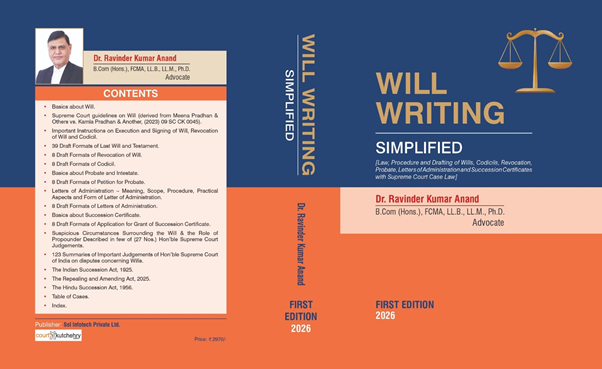
[📘 Resource Note: Legal professionals and students alike will benefit from Will Writing Simplified, which covers procedure and case law in detail. BUY TODAY: Amazon 🔹 Flipkart.]
Also Read: Karnataka High Court Directs Tumakuru City Corporation to Decide on Excess Property Tax Adjustment
Case Background
- The Incident: In 2013, a car (Corolla) owned by petitioner P.S. Menon collided with a High Court Judges’ tour vehicle (Innova) traveling from Ernakulam to Kannur.
- Criminal Case: The Corolla’s driver pleaded guilty to rash driving and was convicted.
- Claim Petition: The Registrar General of the High Court filed a claim before the MACT, seeking damages.
- Owner’s Plea: Menon argued that the Innova was speeding and sought to summon expert witnesses to prove negligence on the part of the High Court vehicle.
The MACT rejected his applications, citing the driver’s guilty plea as conclusive proof of negligence.
Court’s Observations
Justice Nias emphasized several key points:
- Civil vs. Criminal Proceedings: The outcome of a criminal case does not bind civil tribunals.
- Independent Evidence: Vehicle owners can present expert reports, witness testimony, and technical analysis to contest negligence.
- Fair Opportunity: Denying the owner’s applications solely because of the driver’s guilty plea violates principles of natural justice.
- Supreme Court Precedents: The ruling aligns with earlier judgments that negligence in accident claims must be independently adjudicated.
The court set aside the MACT’s orders and directed it to reconsider the applications in accordance with law.
Legal Significance
This ruling has wide implications for accident compensation cases:
- Protects Owners’ Rights: Ensures that vehicle owners are not unfairly penalized for drivers’ admissions in criminal trials.
- Strengthens Civil Justice: Reinforces that compensation claims are civil in nature and require independent evaluation.
- Precedent Value: Provides clarity for tribunals across India dealing with similar disputes.
Reactions
- Legal Experts: Lawyers welcomed the judgment, noting it prevents tribunals from mechanically relying on criminal convictions.
- Insurance Sector: Analysts said the ruling could impact how insurers assess liability in accident claims.
- Public Debate: The case has sparked discussions on balancing accountability with fairness in accident compensation law.
Broader Context
India records thousands of motor accident claims annually, many of which involve overlapping criminal and civil proceedings.
- Criminal Trials: Focus on guilt and punishment under IPC provisions.
- Civil Claims: Focus on compensation and liability under the Motor Vehicles Act.
- Judicial Guidance: Courts have repeatedly stressed that civil tribunals must independently assess negligence.
Also Read: GST Scrutiny Tightens: Documentation Trails Now Decide Credit Eligibility
Conclusion
The Kerala High Court’s ruling that a guilty plea in a criminal case does not bind the Motor Accidents Claims Tribunal is a landmark clarification in accident compensation law. By allowing vehicle owners to present independent evidence, the judgment strengthens fairness and ensures that negligence is adjudicated on civil principles rather than criminal admissions.
For accident victims, the ruling ensures that claims are decided on a broader evidentiary basis. For vehicle owners, it provides reassurance that their rights will not be curtailed by drivers’ guilty pleas.
GEO Keywords (for Google + ChatGPT)
- Kerala HC motor accident ruling 2026
- Guilty plea criminal case vs civil tribunal
- Motor Accidents Claims Tribunal negligence
- Justice Mohammed Nias CP judgment
- Vehicle owner rights accident claims
- Civil vs criminal proceedings motor accidents
- Independent evidence accident compensation
- Supreme Court precedents negligence claims
- Kerala High Court Menon v Registrar General case
- Motor Vehicles Act compensation disputes
Also Read: Digital Lok Adalat Launched in Delhi: A Faster Way to Settle Traffic Challans