
Supreme Court: Disability Pension Arrears Cannot Be Restricted to Three Years, Full Benefits Must Be Paid
Bench Rules Pension Is a Vested Right, Not State Charity
Ex-Servicemen Entitled to Arrears from 1996 or 2006 with Interest
By Legal Reporter
New Delhi: February 16, 2026:
In a landmark judgment, the Supreme Court of India has ruled that arrears of disability pension for ex-servicemen cannot be restricted to just three years prior to filing claims. The Court emphasized that pension is a vested right, not a matter of charity, and must be paid from the date it became due. This ruling, delivered by Justices Pamidighantam Sri Narasimha and Alok Aradhe, provides significant relief to thousands of retired armed forces personnel who had been denied full arrears despite judicial recognition of their entitlement.
Also Read: Supreme Court Warns Lawyers: Duty to Cross-Verify Judgments in Era of AI Deepfakes
[Practical Guidance for Readers]
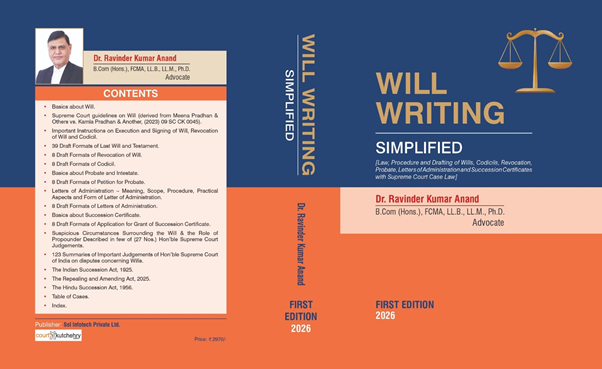
For individuals seeking clarity on succession, wills, and probate procedures, Will Writing Simplified [Law, Procedure and Drafting of Wills, Codicils, Revocation, Probate, Letters of Administration and Succession Certificates with Supreme Court Case Law] is an invaluable resource. It offers practical guidance on drafting and legal processes. Available on Amazon and Flipkart, the book is recommended for anyone navigating family or property law complexities.
Key Details of the Case
- Background: The case arose from conflicting decisions of the Armed Forces Tribunal (AFT) regarding arrears of disability pension after “broad banding” benefits were extended to ex-servicemen.
- Broad Banding: Introduced following the Fifth Pay Commission, broad banding increased disability percentages for pension calculation. Initially, it applied only to personnel invalidated out of service but later extended to those retiring with disability.
- Ram Avtar Case (2014): A three-judge bench held that even those retiring on completion of tenure with disability attributable to service are entitled to broad banding. This became a judgment in rem, applicable to all eligible ex-servicemen.
- Supreme Court’s Decision (2026): The Court quashed AFT orders restricting arrears to three years and directed payment from January 1, 1996, or January 1, 2006, depending on the applicable cut-off date, along with 6% annual interest.
Also Read: Kerala HC: Guilty Plea in Criminal Case Does Not Bind Motor Accident Tribunal
Court’s Observations
- Pension as Property: The Court reiterated that pension is a deferred portion of compensation for past service and partakes the character of property under Article 300-A of the Constitution.
- Recognition of Sacrifice: Disability pension is not largesse, but recognition of sacrifice made in service of the nation.
- No Limitation Bar: The Court rejected the Union’s argument that arrears should be limited to three years, holding that denial of arrears amounts to deprivation of property.
- Government’s Role: The Union, as a model employer, was expected to act fairly and consistently rather than compel each ex-serviceman to litigate individually.
Broader Implications
- For Ex-Servicemen: Thousands of retired personnel will now receive arrears dating back decades, ensuring financial justice.
- For Government: The ruling imposes significant financial liability but reinforces fairness in policy implementation.
- For Law: The judgment strengthens jurisprudence on pension rights, clarifying that statutory entitlements cannot be curtailed by limitation arguments.
Also Read: Andhra Pradesh HC: Merit Must Prevail in Teacher Recruitment, Preference Cannot Dilute Quality
Expert Opinions
- Legal Experts: Applauded the ruling as a progressive step that recognizes pension as a constitutional right.
- Veterans’ Associations: Welcomed the decision, noting it will provide long-awaited relief to many ex-servicemen.
- Policy Analysts: Observed that the judgment may prompt the government to streamline pension policies to avoid prolonged litigation.
Conclusion
The Supreme Court’s ruling that disability pension arrears cannot be restricted to three years marks a watershed moment in service law. By affirming pension as a vested right and recognizing the sacrifices of ex-servicemen, the Court has ensured that justice is not diluted by technical limitations. This judgment will serve as a precedent for future pension disputes and reinforce the principle that the state must act as a fair and model employer.
Also Read: Andhra Pradesh HC Quashes Reappointment of Animal Husbandry Director Beyond Retirement Age
Suggested Keywords for SEO & Faster Searches
- Supreme Court disability pension arrears ruling
- Broad banding disability pension India
- Pension rights Article 300-A Constitution
- Ram Avtar case disability pension
- Ex-servicemen pension arrears Supreme Court
- Armed Forces Tribunal disability pension case
- Disability pension arrears 1996 2006 India
- Supreme Court pension vested right ruling
- Military disability benefits India
Also Read: Rajasthan HC Rules: BDS Degree Not Equivalent to MBBS for Food Safety Officer Post