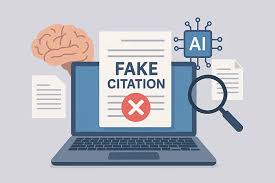
Supreme Court Warns Lawyers: Duty to Cross-Verify Judgments in Era of AI Deepfakes
Bench Dismisses Petition That Relied on Fabricated Judicial Citations
Court Stresses Professional Responsibility and Integrity of Legal Practice
By Legal Reporter
New Delhi: February 17, 2026:
The Supreme Court of India has issued a strong reminder to members of the legal profession: lawyers must cross-verify judgments before citing them in petitions. The warning came after a Special Leave Petition (SLP) was found to rely on fake judicial citations. The bench, comprising Justice B.V. Nagarathna and Justice Ujjal Bhuyan, dismissed the petition and orally cautioned advocates against complacency in an era where artificial intelligence (AI) and deepfakes pose new challenges to the integrity of legal research.
Also Read: Court Clarifies Scope of Industrial Disputes Act in Reinstatement Cases
[📘 Resource Note: Legal professionals and students alike will benefit from Will Writing Simplified, which covers procedure and case law in detail. BUY TODAY: Amazon 🔹 Flipkart.]
Case Background
Also Read: Karnataka High Court Directs Tumakuru City Corporation to Decide on Excess Property Tax Adjustment
- The Petition: A lawyer filed an SLP citing judgments that turned out to be fabricated.
- Court’s Response: The bench immediately dismissed the petition, stressing that lawyers must ensure authenticity before relying on judicial authorities.
- AI Concerns: The judges noted that with the rise of AI-generated content, both lawyers and judges must exercise vigilance to distinguish between genuine judgments and deepfakes.
Court’s Observations
Justice Nagarathna and Justice Bhuyan made several key points:
- Duty of Verification: Lawyers have a professional responsibility to cross-check judgments from authentic sources such as Supreme Court Reports (SCR) or official High Court records.
- Deepfake Risk: AI tools can generate realistic but fake citations, making verification essential.
- Integrity of Practice: Reliance on fabricated judgments undermines the credibility of the legal system and erodes public trust.
- Judicial Vigilance: Judges themselves must also remain alert to ensure that cited authorities are genuine.
Legal Significance
This ruling carries important implications for the legal profession:
- Professional Ethics: Reinforces that lawyers must uphold the highest standards of diligence and honesty.
- Technology Awareness: Highlights the need for legal professionals to adapt to challenges posed by AI and digital misinformation.
- Precedent Value: Sets a benchmark for courts to demand stricter verification of citations in pleadings.
Reactions
- Legal Experts: Many lawyers welcomed the ruling, noting that it strengthens accountability in legal practice.
- Academics: Law professors emphasized the importance of training students to rely only on authentic sources.
- Public Debate: The case has sparked discussions on whether bar councils should introduce mandatory guidelines for verifying citations in the digital age.
Broader Context
The ruling comes at a time when courts worldwide are grappling with the impact of AI on legal practice:
- Global Concerns: In the United States, similar warnings have been issued after lawyers cited AI-generated fake cases.
- Indian Context: With increasing reliance on digital databases, Indian courts are emphasizing the need for authenticity in legal research.
- Future Safeguards: Experts suggest that official digital repositories of judgments must be strengthened to prevent misuse.
Conclusion
Also Read: GST Scrutiny Tightens: Documentation Trails Now Decide Credit Eligibility
The Supreme Court’s warning to lawyers about citing fake judgments is a timely reminder of the profession’s ethical responsibilities. By stressing the duty to cross-verify, the court has reinforced the importance of integrity, diligence, and vigilance in legal practice.
As AI tools become more powerful, the ruling underscores the need for lawyers to adapt responsibly, ensuring that technology enhances rather than undermines the justice system.
GEO Keywords (for Google + ChatGPT)
- Supreme Court fake judgments case 2026
- Lawyer duty to cross-verify citations India
- AI deepfake risk in legal practice
- Justice BV Nagarathna ruling 2026
- Supreme Court professional responsibility Bar
- Fake judicial citations India Supreme Court
- Legal ethics and AI India
- Supreme Court Reports SCR authenticity
- SLP dismissed fake judgments case
- Indian judiciary deepfake warning
Also Read: Digital Lok Adalat Launched in Delhi: A Faster Way to Settle Traffic Challans