
Kerala High Court Affirms Managing Director’s Liability for Dishonoured Cheques Under Section 141 NI Act
Court rules company heads responsible for day-to-day affairs can be held vicariously liable
Judgment clarifies scope of Section 141 of Negotiable Instruments Act in cheque dishonour cases
By Our Legal Correspondent
New Delhi: February 13, 2026:
The Kerala High Court has reaffirmed that a Managing Director (MD) of a company can be held vicariously liable under Section 141 of the Negotiable Instruments Act, 1881 (NI Act) for dishonoured cheques issued by the company. The ruling came in a case involving V.J. Joseph, former Managing Director of J & A Foundation Pvt. Ltd., who challenged his conviction under Section 138 of the NI Act.
Also Read: Supreme Court Quashes SC/ST Act Case Against Vyapam Whistleblower Dr. Anand Rai
Justice M.B. Snehalatha dismissed Joseph’s criminal revision petition, holding that since he oversaw the company’s day-to-day affairs and had signed the dishonoured cheques, he was liable under Section 141, which deals with offences committed by companies.
Case Background
- The company, J & A Foundation Pvt. Ltd., had issued cheques that were dishonoured due to insufficient funds.
- The complainant-initiated proceedings under Section 138 of the NI Act, which criminalizes cheque dishonour.
- Joseph, as Managing Director, was convicted and sentenced. He challenged the conviction, arguing that liability should rest with the company, not him personally.
- The High Court rejected his plea, affirming that MDs and directors responsible for company operations can be held accountable.
[Recommended Legal Resource]
Also Read: Supreme Court Rejects Plea for Re-Evaluation of SSC Exam Answers: No Role for Sympathy or Compassion
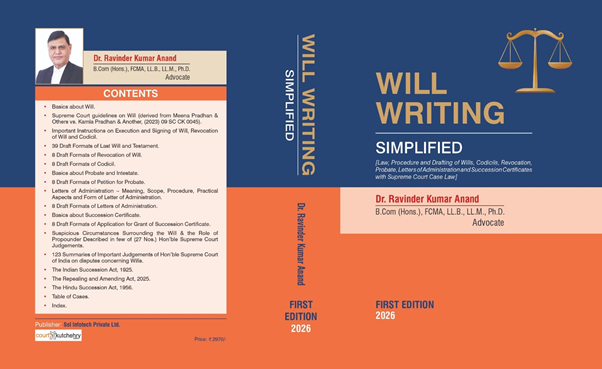
- For readers interested in understanding complex legal procedures, drafting of wills, succession laws, and Supreme Court case law, the book Will Writing Simplified [Law, Procedure and Drafting of Wills, Codicils, Revocation, Probate, Letters of Administration and Succession Certificates with Supreme Court Case Law] is highly recommended. It provides practical guidance and case references, making it a valuable resource for lawyers and law students.
- You can find it here: Amazon | Flipkart
Supreme Court and High Court Precedents
The Kerala High Court relied on established precedents, including:
- S.M.S. Pharmaceuticals Ltd. v. Neeta Bhalla (2005) – Supreme Court held that directors in charge of company affairs can be prosecuted under Section 141.
- National Small Industries Corporation v. Harmeet Singh Paintal (2010) – clarified that liability arises only if the person oversaw and responsible for the conduct of business at the time of offence.
- The Kerala HC judgment aligns with these rulings, reinforcing accountability of company heads.
Also Read: Supreme Court Halts Talaq-e-Hasan Between Couple, Refers Case to Mediation
Key Observations of the Court
- Managing Director’s role: As MD, Joseph was responsible for the company’s daily operations and financial decisions.
- Signing cheques: His act of signing the dishonoured cheques directly linked him to the offence.
- Vicarious liability: Section 141 extends liability to individuals in charge of company affairs, not just the company itself.
- No escape from responsibility: The Court emphasized that corporate leaders cannot evade liability by hiding behind the company’s separate legal identity.
Implications of the Judgment
- For Corporate Leaders: Reinforces accountability of MDs and directors in financial matters.
- For Companies: Ensures stricter compliance with cheque issuance and financial discipline.
- For Creditors: Strengthens legal remedies against dishonoured cheques.
- For Legal Practice: Clarifies interpretation of Section 141, reducing ambiguity in vicarious liability cases.
Also Read: Punjab & Haryana High Court Declines to Entertain Punjab Kesari Hotel Plea
Broader Legal Significance
This ruling strengthens the corporate governance framework by holding top executives accountable for financial misconduct. It sends a clear message that dishonoured cheques are not merely technical defaults but serious offences with personal consequences for company heads.
It also highlights the judiciary’s commitment to protecting creditors and ensuring trust in commercial transactions.
Conclusion
The Kerala High Court’s ruling in V.J. Joseph v. State of Kerala underscores that Managing Directors cannot escape liability for dishonoured cheques issued by their companies. By affirming vicarious liability under Section 141 of the NI Act, the Court has reinforced the principle of accountability in corporate governance.
This judgment ensures that creditors are protected, financial discipline is maintained, and company heads remain answerable for their actions.
Suggested Keywords for Faster Searches
- Kerala High Court dishonoured cheques ruling
- Section 141 NI Act vicarious liability judgment
- Managing Director liability cheque bounce case
- V.J. Joseph Kerala HC cheque dishonour case
- Corporate governance dishonoured cheques India
- Kerala HC Negotiable Instruments Act ruling
- Cheque bounce Managing Director liability India
- Kerala High Court NI Act Section 141 case
Also Read: Supreme Court Flags Racket of Fake Motor Accident Claims Using Insured Vehicles