
Madras High Court: Gold Medal Not a Student’s Legal Right, Eligibility Lies with Academic Authorities
Court Says Academic Honours Are Motivational, Not Enforceable by Law
Petition by Puducherry Student Seeking Gold Medal Dismissed
By Our Legal Correspondent
New Delhi: February 02, 2026:
In a ruling that clarifies the scope of academic honours, the Madras High Court has held that the conferment of a gold medal is not a statutory or enforceable right of a student. The Court stated that such awards are part of academic schemes designed to recognize and motivate excellence, but they cannot be claimed through writ petitions under Article 226 of the Constitution.
The judgment was delivered by Justice D. Bharatha Chakravarthy in the case of Vennila vs State of Puducherry & Others, where a student sought a direction to Pondicherry University to award her a gold medal for her performance in the 2015–2018 B. Com (Corporate Secretaryship) course.
(Note for Readers)
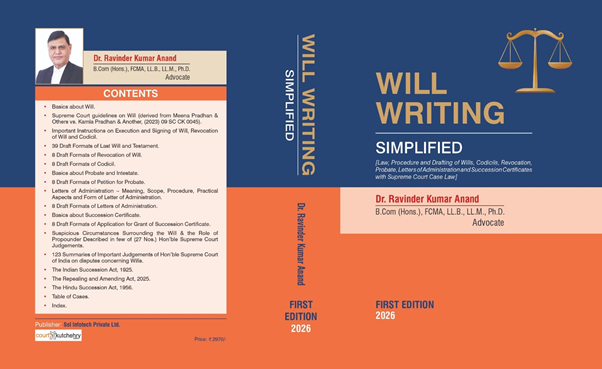
If you want practical guidance on drafting wills, codicils, and probate procedures, Will Writing Simplified is an invaluable resource. BUY HERE: Amazon 🔹 Flipkart.
Background of the Case
- Petitioner: Vennila, a student of Bharathidasan Government College for Women, Puducherry.
- Claim: She secured 2014 out of 2600 marks, topping her batch, and argued she was entitled to the gold medal.
- University’s Stand: Pondicherry University denied the medal, citing eligibility rules and academic discretion.
- Legal Question: Whether a student can enforce the right to a gold medal through court intervention.
Court’s Observations
- No Legal Right: The Court ruled that a gold medal is not a legal entitlement but an academic recognition.
- Academic Autonomy: Decisions on eligibility must be left to academic authorities, not courts.
- Motivational Purpose: Gold medals are meant to inspire students, not create enforceable rights.
- Comparison with Delhi HC: The Madras High Court respectfully disagreed with a Delhi High Court ruling that had taken a broader view of student rights in similar matters.
Key Directions
Also Read: Budget 2026: Interest Deduction on Dividend Income Withdrawn, Self-Funded Investors Stand to Benefit
- The Court dismissed the petition, holding that academic honours cannot be claimed as a matter of right.
- It emphasized that competition among students and academic discretion are integral to such awards.
- However, the Court acknowledged the petitioner’s performance and directed the university to issue a special merit certificate recognizing her excellence.
Why This Judgment Matters
- For Students: Clarifies that medals and honours are discretionary, not enforceable.
- For Universities: Reinforces academic autonomy in deciding eligibility for awards.
- For Judiciary: Sets precedent that courts should not interfere in academic recognition unless statutory rights are violated.
- For Policy: Encourages institutions to maintain transparent criteria for awards to avoid disputes.
Broader Implications
Also Read: Budget 2026: Tax Holiday for Foreign Firms Using Indian Data Centres, Investment Boom Expected
- Academic Governance: Strengthens the principle that universities have the final say in honours.
- Legal Clarity: Prevents misuse of writ petitions for academic awards.
- Student Motivation: Ensures medals remain motivational tools rather than legal entitlements.
- Public Awareness: Highlights the distinction between statutory rights (like admission or reservation) and discretionary honours.
Human Angle
The case reflects the emotional importance of recognition for students. While Vennila’s disappointment is understandable, the Court balanced fairness by directing issuance of a merit certificate. This ensures her achievement is acknowledged without undermining academic autonomy.
Conclusion
The Madras High Court’s ruling in Vennila vs State of Puducherry is a landmark in academic law. By holding that gold medals are not legal rights, the Court has reinforced the autonomy of universities while ensuring fairness through merit certificates. The judgment sets a precedent for future disputes over academic honours, emphasizing that motivation, not litigation, should drive recognition in education.
Also Read: ITAT Delhi Restricts Profit Estimate in Milk Trading Case to 5%, Rejects Arbitrary 20% Addition
Keywords for Faster Searches
- Madras High Court gold medal case
- Vennila vs State of Puducherry judgment
- Gold medal eligibility academic authorities India
- Student rights vs academic autonomy Madras HC
- Pondicherry University gold medal dispute
- Merit certificate Madras High Court ruling
- Academic honours legal rights India
Also Read: Budget 2026 Customs & Excise Reforms: Tariff Simplification, Green Energy Boost, Consumer Relief