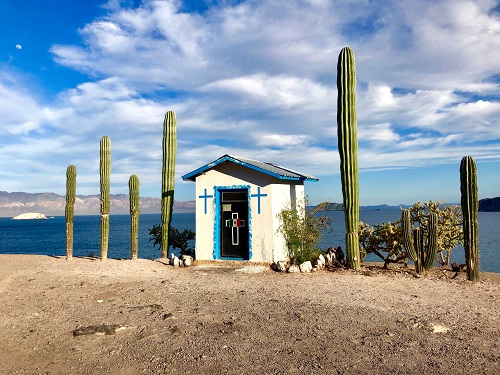
Madras High Court: Roads Have No Religious Character, Orders Removal of Pavement Shrine
Court Says Encroachments Must Be Cleared Irrespective of Religious Nature
Greater Chennai Corporation Directed to Act Against Illegal Shrine
By Our Legal Correspondent
New Delhi: January 25, 2026:
In a significant ruling that underscores the secular nature of public spaces, the Madras High Court has ordered the removal of a Christian shrine set up on a pavement in Chennai. The court observed that roads and streets cannot have any religious character, and encroachments on public land must be cleared regardless of whether they are religious or non-religious structures.
Also Read: Delhi High Court Allows Cash Transfer for EWS Students Instead of Physical Uniforms
The judgment, delivered by Justice V. Lakshminarayanan, came in response to a petition filed by a resident, A. Sarath, who complained that the shrine obstructed access to his house and pedestrian movement. The case has sparked wider debate on the misuse of public spaces and the balance between religious freedom and civic order.
Background of the Case
- The shrine dedicated to Mother Velankanni was reportedly established in 1995 on a public road.
- The petitioner argued that the structure blocked the entrance to his house and created inconvenience for pedestrians.
- The court noted that the shrine was built on “Sarkar Poramboke” land, which is classified as government property meant for public use.
- The Greater Chennai Corporation had initiated proceedings but failed to conclude them, prompting judicial intervention.
Court’s Observations
Also Read: Supreme Court: Magistrate Cannot Be Judge in His Own Cause
Justice Lakshminarayanan made several important points:
- Encroachments are illegal: Every moment an illegal structure remains on a public street gives rise to a fresh cause of action.
- Statutory duty: Municipal authorities are bound under Section 128 of the Tamil Nadu Urban Local Bodies Act to remove encroachments.
- Secular principle: Roads and streets do not have any religious character; they are meant for public use.
- Equal treatment: Whether the structure is religious or otherwise, it must be removed if it encroaches on public land.
Implications of the Ruling
- Strengthening civic order: The judgment reinforces the idea that public spaces cannot be monopolized by religious groups.
- Legal precedent: It sets a precedent for similar cases across India where shrines, temples, or mosques are built on pavements or roads.
- Municipal accountability: The ruling puts pressure on local bodies to act against encroachments without delay.
- Public convenience: Clearing encroachments ensures smoother pedestrian movement and access to residential properties.
Wider Context
This is not the first time the Madras High Court has dealt with issues of religious encroachments:
- In November 2025, the court ruled that public grounds cannot belong to one faith, allowing a Hindu petitioner to hold a food distribution event despite opposition from another community.
- The judiciary has consistently emphasized that fundamental rights and civic duties must coexist, and no religious group can claim exclusive rights over public property.
Also Read: Off-Duty Soldier’s Rescue of Civilians Is True Military Ethos, Rules Armed Forces Tribunal
Public and Expert Reactions
- Legal experts welcomed the ruling, noting that it strengthens secular governance and protects civic rights.
- Residents expressed relief, saying that encroachments often cause daily inconvenience.
- Religious groups have urged sensitivity in enforcement, arguing that shrines often hold sentimental value for communities.
Conclusion
The Madras High Court’s ruling that roads have no religious character is a landmark in reinforcing the secular nature of public spaces in India. By directing the removal of a Christian shrine from a pavement, the court has sent a strong message that public property cannot be encroached upon, regardless of religious sentiment.
As India continues to grapple with balancing religious freedom and civic order, this judgment provides clarity: public spaces belong to all citizens equally, and encroachments must be removed to protect accessibility and fairness.
Also Read: Madras High Court Slams Police Inaction: Abuse of Former Judge “Not Just Law and Order”
Keywords for SEO & Faster Searches
- Madras High Court pavement shrine ruling
- Roads have no religious character judgment
- Chennai Christian shrine encroachment case
- Tamil Nadu Urban Local Bodies Act Section 128
- Public land encroachment religious structures India
- Mother Velankanni shrine Chennai case
- Madras HC encroachment removal order
Also Read: Supreme Court Upholds Salary Rights of Odisha Block Grant Teachers