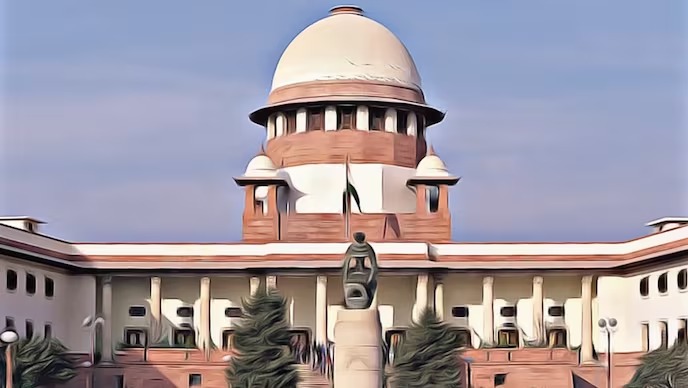
Supreme Court Upholds Salary Rights of Odisha Block Grant Teachers
Court directs state to honour 1994 Grant-in-Aid order for teachers’ pay
Thousands of educators win long battle for justice and dignity
By Our Legal Reporter
New Delhi: January 26, 2026:
In a landmark judgment, the Supreme Court of India has upheld the salary rights of thousands of block grant teachers in Odisha, ruling that they are entitled to payment under the 1994 Grant-in-Aid (GIA) order. The Court dismissed the Odisha government’s appeal and directed that teachers must be paid according to the provisions of the earlier order, which guaranteed full salary support.
Also Read: Supreme Court Upholds Salary Rights of Odisha Block Grant Teachers
This ruling is being hailed as a historic victory for educators, many of whom have struggled for decades with partial grants and inadequate pay. The judgment not only restores their financial rights but also reinforces the principle that teachers, as the backbone of society, must be treated with dignity and fairness.
Background of the Case
The dispute dates to the Grant-in-Aid Order of 1994, which allowed full salary support to eligible teaching and non-teaching staff in aided educational institutions. However, in 2004, the Odisha government repealed the order and introduced a new scheme that limited grants to partial assistance.
This led to widespread protests by block grant teachers, who argued that the new scheme violated their rights and left them underpaid despite performing the same duties as regular government teachers. Several petitions were filed in the Orissa High Court, which ruled in favour of the teachers. The state government challenged these rulings in the Supreme Court, leading to the present judgment.
Supreme Court’s Observations
The bench of Justice Dipankar Datta and Justice Satish Chandra Sharma made several important observations:
- Teachers’ Rights Protected: The Court held that the 1994 GIA order created legitimate expectations for teachers and repealing it without proper safeguards was unjust.
- State’s Duty: The government has a constitutional obligation to ensure fair treatment of educators, who play a vital role in nation-building.
- No Arbitrary Denial: The Court rejected the state’s argument that financial constraints justified partial grants, stating that rights cannot be denied on such grounds.
- Final Relief: The Court upheld the High Court’s orders, ensuring that teachers receive full salary benefits under the 1994 order.
Why This Judgment Matters
This ruling is significant for several reasons:
- Victory for Teachers: Thousands of block grant teachers will now receive fair wages, ending decades of struggle.
- Educational Justice: The judgment reinforces the principle that teachers must be treated with dignity and equality.
- Policy Impact: The ruling may force the Odisha government to revisit its education funding policies.
- National Precedent: The case sets an example for other states where similar disputes exist.
Wider Implications
Legal experts believe this judgment will have a ripple effect across India. Many states have adopted block grant or contractual teacher schemes, often paying educators less than their regular counterparts. The Supreme Court’s ruling sends a strong message that discrimination in pay for equal work is unconstitutional.
Also Read: Madras High Court: Roads Have No Religious Character, Orders Removal of Pavement Shrine
For Odisha, the financial impact will be significant, as the state must now allocate funds to pay thousands of teachers’ full salaries. However, the social impact is even greater: restoring trust between educators and the government and ensuring that teachers remain motivated to serve students.
Teachers’ Struggle and Protests
Block grant teachers in Odisha have long staged protests, sit-ins, and hunger strikes demanding equal pay. Their movement gained momentum in the last decade, with unions highlighting the injustice of performing the same duties as government teachers while receiving only a fraction of the salary.
The Supreme Court’s ruling validates their struggle and ensures that their voices are finally heard at the highest level of justice.
Conclusion
The Supreme Court’s decision to uphold the salary rights of Odisha’s block grant teachers is a milestone in education and labour law. By restoring the benefits of the 1994 Grant-in-Aid order, the Court has ensured justice for thousands of educators who have been underpaid for years.
This ruling is not just about wages—it is about dignity, equality, and the recognition of teachers as pillars of society. As India strives to improve its education system, ensuring fair treatment of teachers is the first step toward building a stronger future.
Also Read: Karnataka High Court Suggests Community Service for Rash Lamborghini Driver in Bengaluru
Suggested Keywords (SEO + ChatGPT)
- Supreme Court Odisha block grant teachers ruling
- Odisha teacher’s salary rights judgment
- 1994 Grant-in-Aid order Supreme Court
- Block grant teachers Supreme Court India
- Odisha education funding Supreme Court case
- Teachers equal pay Supreme Court ruling
- Justice Dipankar Datta Odisha teachers case
- Supreme Court protects teachers’ rights India
- Odisha block grant teachers protests
- Supreme Court education justice India
Also Read: Madras High Court Blocks Tamil Nadu’s Student Data Collection Drive, Calls It Privacy Violation