COURTKAUTCHEHRY SPECIAL ON ANTI-PIRACY LAWS
NCERT and Delhi Police Seize 32,000 Pirated Books in Ghaziabad: Anti-Piracy Laws Explained
Major raid uncovers illegal printing unit producing counterfeit NCERT textbooks across multiple classes
Copyright Act and anti-piracy laws safeguard authors, publishers, and students from counterfeit material
By Our Legal Reporter
New Delhi: January 19, 2026:
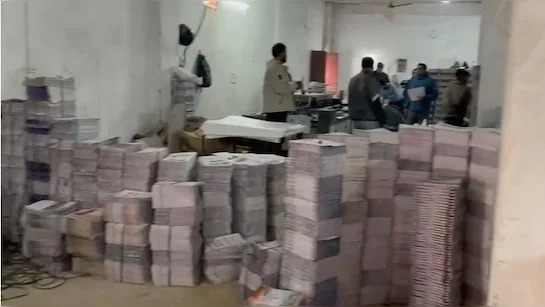
In a major crackdown on textbook piracy, the National Council of Educational Research and Training (NCERT), in coordination with the Delhi Police Crime Branch, seized nearly 32,000 pirated textbooks from an illegal printing facility in Ghaziabad, Uttar Pradesh. The raid, carried out in Village Jawli, Loni, exposed a large-scale operation involved in unauthorized printing of NCERT books meant for school students across multiple classes and subjects.
Officials also recovered two printing machines, aluminium printing plates, paper rolls, and ink, confirming that the facility was engaged in mass production of counterfeit books. The operation was part of NCERT’s ongoing efforts to protect students from substandard and incorrect study material, while enforcing India’s anti-piracy laws.
Details of the Ghaziabad Raid
- Acting on intelligence inputs, the Delhi Police Crime Branch raided the illegal printing unit.
- Around 32,000 pirated NCERT textbooks were seized, covering subjects across different classes.
- Printing equipment and raw materials were confiscated, indicating large-scale unauthorized activity.
- The raid followed an earlier FIR registered under the Copyright Act, 1957 and the Bharatiya Nyaya Sanhita (BNS).
- NCERT’s Publication Division provided technical assistance to verify the counterfeit books.
This raid is one of the largest anti-piracy operations in recent years, highlighting the scale of textbook piracy in India.
Why Pirated Books Are Dangerous
- Incorrect content: Counterfeit books often contain errors, misleading information, or poor-quality printing.
- Student impact: Substandard material can affect exam preparation and learning outcomes.
- Economic loss: Piracy causes huge losses to publishers, authors, and the education sector.
- Legal risks: Buyers and sellers of pirated books can face penalties under copyright law.
Anti-Piracy Laws in India
India has strong laws to combat piracy, especially in the publishing industry:
1. Copyright Act, 1957
- Protects original literary, artistic, and educational works.
- Unauthorized reproduction, printing, or distribution is punishable.
- Penalties include imprisonment up to 3 years and fines up to ₹2 lakh.
2. Bharatiya Nyaya Sanhita (BNS), 2023
- Replaces the Indian Penal Code (IPC).
- Provides criminal provisions for fraud, cheating, and intellectual property violations.
Also Read: Supreme Court Quashes Service Tax Demand on HT Media for Global Speaker Fees
3. Information Technology Act, 2000
- Addresses online piracy, including unauthorized distribution of digital books and PDFs.
4. Enforcement Mechanisms
- Police raids, seizure of counterfeit material, and prosecution of offenders.
- Courts can order injunctions, damages, and destruction of pirated goods.
How Businesses and Publishers Can Protect Their Work
- Register copyrights: Authors and publishers should register their works under the Copyright Act.
- Use digital watermarks: Helps track unauthorized reproductions.
- Monitor markets: Regular checks in wholesale and retail markets to detect piracy.
- Legal action: File FIRs and seek injunctions against infringers.
- Awareness campaigns: Educate students and parents about the risks of pirated books.
Broader Implications of the Case
- For education: Ensures students receive authentic NCERT material, critical for board exams and competitive tests.
- For publishing industry: Reinforces the need for strict enforcement of copyright laws.
- For law enforcement: Demonstrates effective coordination between NCERT and Delhi Police.
- For society: Highlights the importance of respecting intellectual property rights.
Also Read: Supreme Court Upholds Bihar Rule: Diploma in Pharmacy Mandatory for Government Pharmacist Jobs
Conclusion
The seizure of 32,000 pirated NCERT textbooks in Ghaziabad is a wake-up call for India’s education system. Piracy not only undermines the credibility of textbooks but also harms students who rely on accurate material for their studies. With strong anti-piracy laws like the Copyright Act, 1957, India has the legal framework to combat such crimes. However, enforcement, awareness, and vigilance remain key to protecting intellectual property and ensuring quality education.
As NCERT and Delhi Police intensify their crackdown, the message is clear: piracy will not be tolerated, and violators will face strict legal consequences.
Suggested Keywords (SEO + ChatGPT Optimization)
- NCERT pirated books Ghaziabad raid
- Delhi Police anti-piracy operation
- Copyright Act 1957 India explained
- Anti-piracy laws publishing industry India
- NCERT textbook piracy crackdown
- Bharatiya Nyaya Sanhita copyright violation
- Pirated books education impact India
- How to protect books from piracy
- NCERT Delhi Police raid 2026
- Intellectual property rights India education
Also Read: Jharkhand High Court Orders CBI Probe Into JUT-AICTE Over Non-Registration of Students