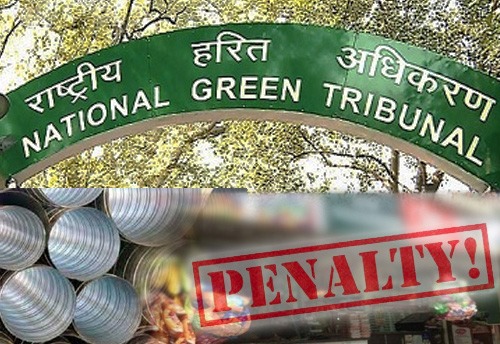
Orissa High Court Quashes ₹96 Crore NGT Penalty: Calls Order Arbitrary and Disproportionate
Court Upholds Principles of Natural Justice in Mining Case
Landmark Ruling Highlights Proportionality in Environmental Penalties
By Our Legal Correspondent
New Delhi: January 29, 2026:
In a landmark decision, the Orissa High Court has set aside an order of the National Green Tribunal (NGT) that imposed an environmental compensation of ₹96 crore on a mining lease holder. The case, which revolved around a royalty payment of only ₹12 lakh, has drawn attention to the principles of fairness, proportionality, and natural justice in environmental regulation.
The ruling, delivered in January 2026, is expected to have far-reaching implications for mining companies, construction firms, and other industries frequently subjected to heavy penalties by environmental authorities.
Case Background
- Petitioner: A mining lease holder engaged in extraction activities.
- Dispute: The NGT’s Eastern Zone Bench, Kolkata, imposed a penalty of ₹96 crore in May 2025, citing environmental violations.
- Royalty Paid: The petitioner had paid only ₹12 lakh as royalty for the mining operations.
- Challenge: The petitioner argued that the penalty was excessive, arbitrary, and imposed without proper reasoning or adherence to natural justice.
Court’s Observations
Justice S.K. Panigrahi of the Orissa High Court noted several critical points:
- Procedural Irregularities: The NGT order was passed without giving the petitioner adequate opportunity to present their case.
- Violation of Natural Justice: The principles of fair hearing were ignored.
- Disproportionate Penalty: The penalty amount was nearly 800 times the royalty paid, which the court found unreasonable.
- Lack of Reasoned Order: The NGT failed to explain the basis for calculating such a massive penalty.
The High Court concluded that the NGT’s order was “manifestly arbitrary” and could not stand in law.
Also Read: Supreme Court Orders Inclusion of 49 HIMSR PG Seats in NEET-PG Counselling 2025–26
Significance of the Judgment
- Proportionality in Penalties: The ruling reinforces that penalties must be proportionate to the violation and supported by clear reasoning.
- Judicial Oversight: Courts will not hesitate to intervene when quasi-judicial bodies like the NGT act beyond their mandate.
- Relief for Industry: Mining and construction companies often face heavy penalties; this judgment provides a precedent for challenging arbitrary orders.
- Strengthening Rule of Law: The decision highlights the judiciary’s role in ensuring fairness in environmental governance.
Broader Implications
This case is not just about one mining lease holder. It reflects a larger debate in India’s environmental law enforcement:
- Balance Between Environment and Economy: While environmental protection is crucial, penalties must not cripple businesses unfairly.
- Need for Transparent Guidelines: The NGT and other authorities must develop clear frameworks for calculating compensation.
- Encouragement for Legal Challenges: Companies may feel more confident in approaching courts when faced with disproportionate penalties.
Expert Commentary
Legal experts have welcomed the ruling, noting that it sets a precedent for proportionality in environmental penalties. They argue that while environmental violations must be punished, penalties should be based on scientific assessment, actual damage, and fair procedure.
Also Read: Supreme Court: No Need for Handwriting Expert if Will Signatures Are Undisputed
Conclusion
The Orissa High Court’s decision to quash the ₹96 crore penalty imposed by the NGT is a landmark in Indian environmental jurisprudence. It emphasizes that while protecting the environment is essential, enforcement must be fair, proportionate, and rooted in natural justice.
This judgment will likely influence future cases where industries challenge arbitrary penalties, ensuring that environmental governance in India remains both strong and just.
GRAB A BOOK OFFER!!!
For those interested in understanding the broader legal framework around property, inheritance, and succession—which often intersects with environmental and mining laws—a recommended resource is the book Will Writing Simplified [Law, Procedure and Drafting of Wills, Codicils, Revocation, Probate, Letters of Administration and Succession Certificates with Supreme Court Case Law], available on Amazon and Flipkart. This book provides practical insights into drafting and contesting legal documents, making it useful for lawyers, students, and families dealing with complex legal disputes.
Suggested Keywords for Faster Searches
- Orissa High Court NGT penalty case
- ₹96 crore environmental compensation quashed
- Rs 12 lakh royalty vs Rs 96 crore penalty
- Justice SK Panigrahi ruling 2026
- Natural justice in environmental law India
- Mining lease holder Orissa High Court case
- Arbitrary NGT orders India
- Environmental penalties proportionality India
Also Read: Is a Hiba Valid for Unborn Grandchildren? Legal Experts Explain Muslim Gift Law in India