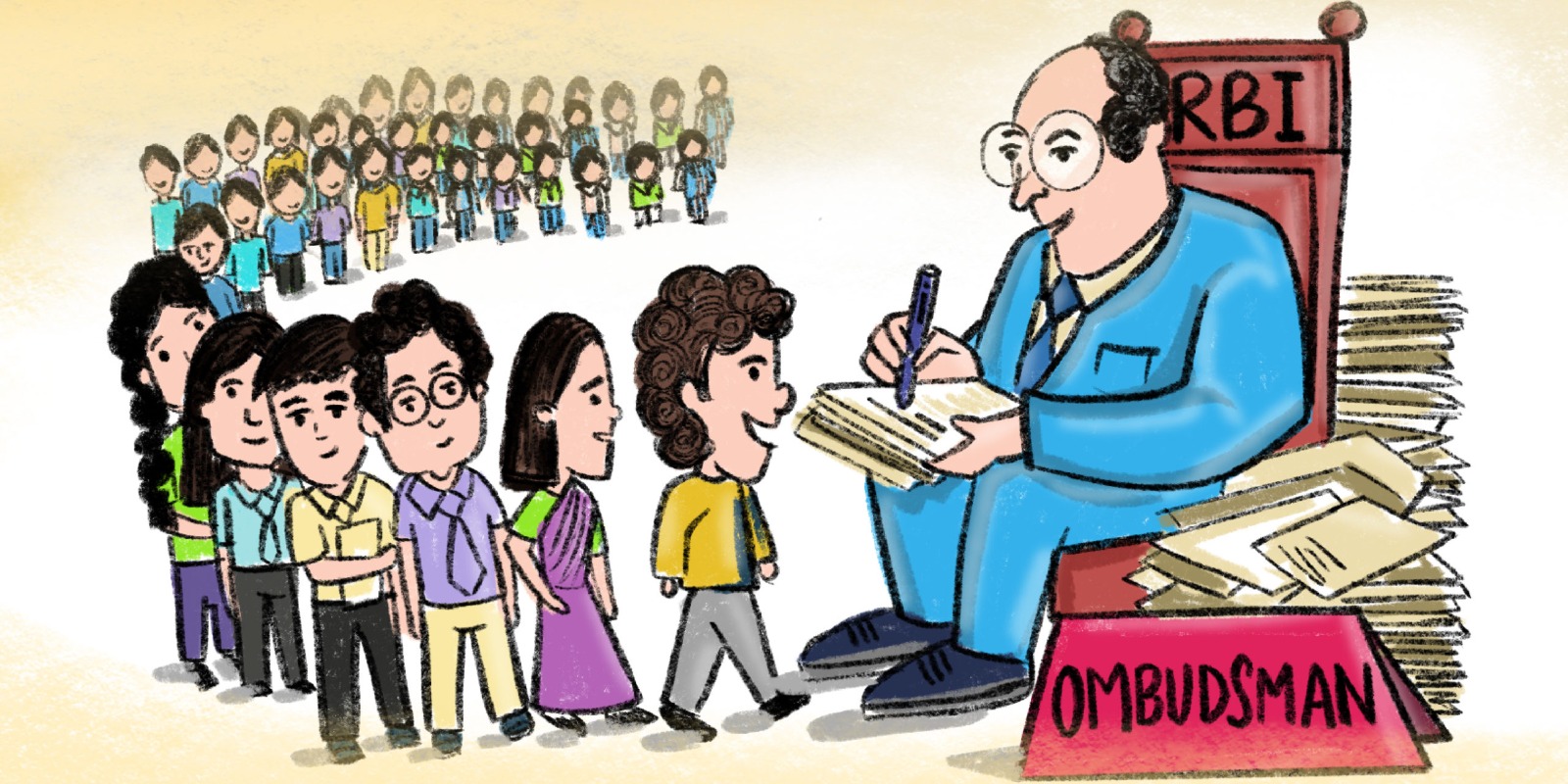
Complaints Against Banks Rise: Understanding Common Issues, RBI Redressal System, and When to Go to Court
Credit card, loan, and digital banking grievances dominate complaints under RBI Ombudsman Scheme
Customers advised to use RBI redressal channels before escalating disputes to civil courts
By Our Legal Correspondent
New Delhi: December 05, 2025:
The Reserve Bank of India (RBI) has reported a sharp rise in consumer complaints against private banks in FY25, even as grievances against public sector banks declined. According to the RBI’s Integrated Ombudsman Scheme (RB-IOS), over 13.34 lakh complaints were received in FY25, up 13.5% from the previous year.
Also Read: Madras High Court Protects Cognizant: IPLC Payments Shielded from TDS Under India–US DTAA
This surge highlights growing dissatisfaction with banking services, particularly in areas such as credit cards, loans, charges, and digital transactions. At the same time, it reflects increased awareness among customers about their rights and the availability of grievance redressal mechanisms.
Common Types of Complaints
Based on RBI’s Ombudsman report, the most frequent complaints include:
- Loans and advances: Delays in loan disbursement, wrongful recovery practices, and misrepresentation of terms.
- Credit cards: Unauthorized charges, hidden fees, and aggressive recovery agents.
- Digital banking: Failed transactions, double debits, and poor resolution of online payment issues.
- Service charges: Excessive or hidden fees deducted without customer consent.
- Customer service: Lack of timely response to grievances or misbehaviour by staff.
These issues reflect both operational lapses and aggressive expansion strategies by banks in retail lending and digital services.
Also Read: ICAI Clears Chartered Accountants in ₹849 Crore Remittance Case: No Lapse in Form 15CB Certification
The Redressal System: RBI Integrated Ombudsman Scheme
The RB-IOS, launched in 2021, merged earlier ombudsman schemes for banks, NBFCs, and digital payment providers into a single framework. Key features include:
- Single portal: Customers can file complaints online, via email, or in writing.
- Coverage: All RBI-regulated entities, including banks, NBFCs, and payment system operators.
- Timeline: Banks must resolve complaints within 30 days before escalation to RBI Ombudsman.
- Resolution: Ombudsman can order compensation, refund of charges, or corrective action.
In FY25, 66% of complaints were filed online, showing growing reliance on digital grievance channels.
How to Raise a Complaint
- Approach the bank first: File a written complaint with the bank’s grievance redressal cell.
- Wait for resolution: Banks have 30 days to respond.
- Escalate to RBI Ombudsman: If unsatisfied, file a complaint under RB-IOS through the RBI portal.
- Provide documentation: Include account details, transaction records, and correspondence.
- Track progress: RBI provides complaint tracking and resolution updates online.
Also Read: Ignored in a Family Will? How Indian Inheritance Law Balances Rights and Last Wishes
When to Escalate to Court
While RBI Ombudsman offers a strong redressal mechanism, some cases may require escalation to civil courts:
- Large compensation claims: When financial loss is substantial and beyond Ombudsman’s jurisdiction.
- Complex fraud cases: Involving multiple parties or criminal elements.
- Persistent non-compliance: If banks fail to implement Ombudsman’s orders.
- Constitutional issues: Cases involving violation of fundamental rights or systemic discrimination.
Courts are generally the last resort, as litigation is costly and time-consuming compared to regulatory remedies.
Expert Opinions
- Legal experts say the rise in complaints reflects both customer awareness and gaps in service quality.
- Consumer rights activists emphasize that RBI Ombudsman is effective but needs stronger enforcement powers.
- Banking professionals argue that digital expansion has increased transaction volumes, leading to more disputes.
Conclusion
The rise in complaints against private banks in FY25 underscores the importance of robust grievance redressal systems. Credit card, loan, and digital banking issues dominate customer grievances, while the RBI Integrated Ombudsman Scheme provides a structured mechanism for resolution.
Customers should first approach their bank, then escalate to RBI Ombudsman if unresolved. Courts should be approached only when regulatory remedies fail or when compensation claims are large and complex.
This layered approach ensures faster resolution, reduces litigation, and strengthens trust in India’s banking system.
Suggested Keywords for Faster Searches
- RBI Ombudsman complaints FY25
- Common complaints against banks India
- Credit card grievances RBI Ombudsman
- Loan disputes RBI redressal system
- Digital banking complaints India FY25
- RBI Integrated Ombudsman Scheme explained
- How to file complaint against bank RBI
- When to escalate bank dispute to court
- Banking consumer rights India
- PSU vs private banks complaints RBI
Also Read: Paradiso Homebuyer Wins ₹1.7 Crore Refund: RERA Orders Developer to Pay for Unsafe Flat in Gurgaon