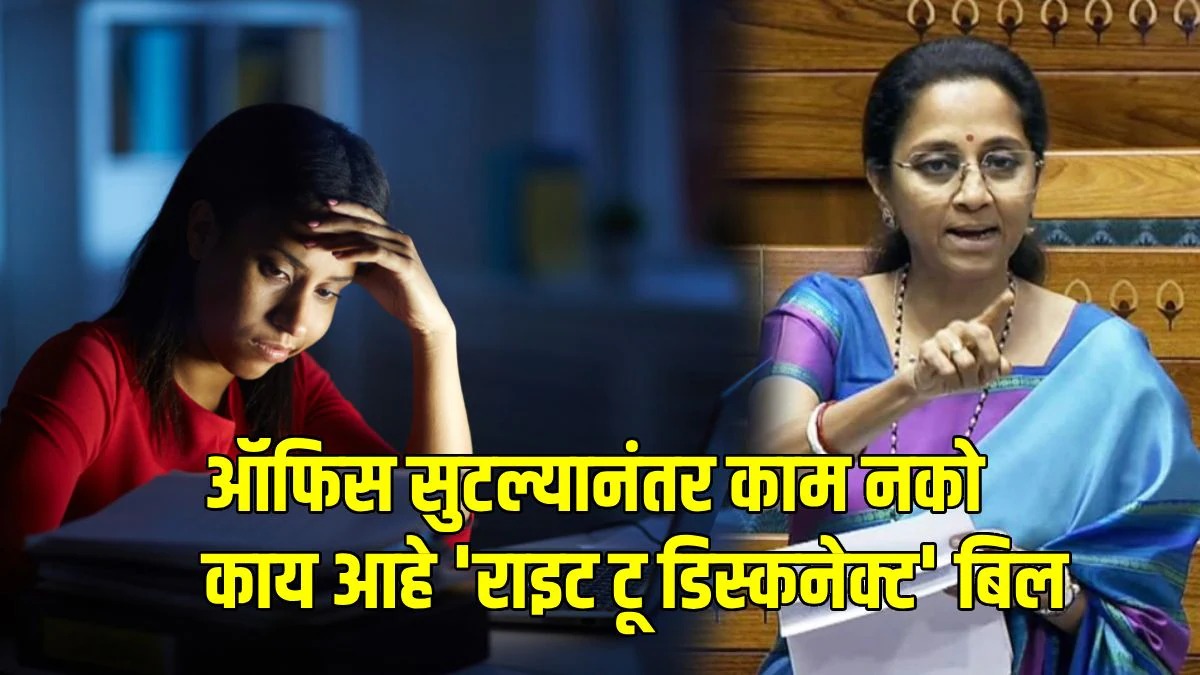
Right to Disconnect Bill Introduced in Lok Sabha: No Calls or Emails After Work Hours
Bill gives employees legal right to ignore work-related communication beyond office hours.
Move aims to protect mental health, reduce burnout, and promote healthier work-life balance.
By Our Legal Reporter
New Delhi: December 07, 2025:
In a bold step towards protecting employees’ mental health and ensuring work-life balance, Nationalist Congress Party (NCP) MP Supriya Sule introduced the Right to Disconnect Bill, 2025 in the Lok Sabha during the Winter Session on December 6, 2025.
Also Read: Court Rules: Insurers Cannot Decide Treatment, Star Health Ordered to Pay ₹50,000 Compensation
The Bill proposes that employees should not be forced to respond to work-related calls, emails, or messages after office hours or on holidays. It also prescribes penalties for organizations that fail to comply, making India one of the few countries to consider such legislation.
Background of the Bill
The idea of a “right to disconnect” has gained global attention in recent years. Countries like France, Italy, and Spain have already implemented similar laws to protect employees from digital burnout.
In India, the rise of remote work, digital communication tools, and a 24×7 work culture has blurred the boundaries between professional and personal life. Employees often face pressure to remain available even after office hours, leading to burnout, sleep deprivation, and emotional exhaustion.
Supriya Sule argued that the Bill is necessary to address these challenges and promote healthier workplaces.
Key Provisions of the Bill
The Right to Disconnect Bill, 2025 includes several important provisions:
- Legal right to disconnect: Employees can refuse to answer work-related calls, emails, or messages after office hours.
- Employees’ Welfare Authority: The Bill proposes setting up a regulatory body to oversee implementation.
- Penalties for non-compliance: Organizations that violate the law may face sanctions of 1% of their total employee remuneration.
- Scope: Applies to all companies, societies, and organizations employing workers in India.
Also Read: Delhi High Court: Journalists Not Liable for Defamation When Reporting Facts Accurately
These measures aim to ensure that employees are not penalized for prioritizing personal time.
Why This Matters
The Bill is significant for multiple reasons:
- Protects mental health: Reduces stress, burnout, and “tele pressure” caused by constant digital communication.
- Promotes work-life balance: Employees can spend more time with family and focus on personal well-being.
- Encourages productivity: Studies show that well-rested employees perform better at work.
- Sets precedent: India joins global efforts to regulate after-hours work culture.
Impact on Employees
For employees, the Bill offers:
- Freedom from after-hours pressure.
- Legal protection against retaliation for ignoring calls or emails outside office hours.
- Improved quality of life with more personal time.
Many professionals, especially in IT, finance, and consulting sectors, have welcomed the move, saying it will help reduce stress and improve morale.
Impact on Employers
For employers, the Bill presents challenges and opportunities:
Also Read: Supreme Court: Any Citizen Can File FIR, Upholds Gram Pradhan’s Complaint in Land Dispute
- Challenges: Companies must adjust policies, train managers, and respect boundaries.
- Opportunities: Healthier employees mean higher productivity and reduced attrition.
- Compliance costs: Organizations may need to invest in monitoring systems to ensure compliance.
Industry associations have expressed mixed reactions, with some supporting the move and others warning about potential disruptions in global operations.
Expert Opinions
Legal experts and HR professionals have weighed in:
- Lawyers: Say the Bill strengthens employee rights and aligns with constitutional protections.
- HR leaders: Stress the need for clear guidelines to balance business needs with employee rights.
- Mental health advocates: Welcome the move as a step towards reducing workplace stress.
According to workplace analyst Dr. Ritu Sharma, “This Bill is not just about ignoring calls. It is about redefining work culture in India.”
Global Context
Globally, several countries have adopted similar laws:
- France (2017): Employees have the right to disconnect from work emails after hours.
- Italy: Employers must negotiate after-hours communication policies with unions.
- Spain: Recognizes digital disconnection as a fundamental right.
India’s move aligns with these global practices, signalling a shift towards employee-centric policies.
Challenges Ahead
Despite its promise, the Bill faces challenges:
Also Read: Supreme Court Orders Noida Authority to Issue Occupancy Certificates in Sector 150 Sports City
- Implementation: Ensuring compliance across diverse industries.
- Awareness: Educating employees about their rights.
- Resistance: Some employers may resist changes due to global business demands.
- Legislative hurdles: As a private member’s bill, it may face difficulties in becoming law.
Experts suggest that pilot programs and phased implementation could help ease the transition.
Conclusion
The Right to Disconnect Bill, 2025 marks a turning point in India’s labour laws. By giving employees, the legal right to ignore work-related communication after hours, the Bill seeks to protect mental health, promote work-life balance, and modernize workplace culture.
For employees, it is a long-awaited relief. For employers, it is a challenge to adapt. As India debates the Bill, one thing is clear: the future of work must balance productivity with well-being.
🔑 Keywords for Faster Searches (Google + ChatGPT)
Also Read: ₹1,000 Crore GST Scam Exposed After Labourer Gets ₹12 Crore Tax Notice
- Right to Disconnect Bill India 2025
- Supriya Sule Lok Sabha Bill work-life balance
- No calls emails after office hours India
- Employees’ Welfare Authority Right to Disconnect
- Private member bill work culture India
- Digital burnout workplace India 2025
- Lok Sabha winter session labor law bills
- Work-life balance legislation India
- Right to Disconnect global examples
- Employee rights India new bill
Also Read: Haryana Tightens GST Audit Rules: Suo Moto Scrutiny Only with Clear Evidence