
Supreme Court Rules Rooh Afza is a Fruit Drink, Attracts Only 4% VAT
Allahabad High Court Judgment Set Aside
Consistent Classification Across States Strengthened Hamdard’s Case
By Legal Reporter
New Delhi: February 25, 2026:
In a landmark tax ruling, the Supreme Court of India has held that Sharbat Rooh Afza, the iconic drink concentrate manufactured by Hamdard (Wakf) Laboratories, qualifies as a fruit drink/processed fruit product under the Uttar Pradesh Value Added Tax Act, 2008 (UP VAT Act). Consequently, it will attract only 4% VAT instead of the higher 12.5% VAT previously imposed.
Also Read: Visa-Free Travel Explained: Why It Doesn’t Always Guarantee Entry
The judgment, delivered by a bench of Justices BV Nagarathna and R Mahadevan, set aside the Allahabad High Court’s earlier ruling that had classified Rooh Afza as a non-fruit drink. The Court emphasized that consistent concessional classification across several states supported Hamdard’s position and showed that its interpretation was neither artificial nor unreasonable.
Background of the Case
- Hamdard (Wakf) Laboratories challenged the higher VAT rate imposed by the Uttar Pradesh tax authorities.
- The Allahabad High Court had earlier ruled that Rooh Afza was not a fruit drink, thereby subjecting it to 12.5% VAT.
- Hamdard appealed to the Supreme Court, arguing that Rooh Afza contains fruit extracts and has historically been classified as a fruit-based product in other states.
- The Supreme Court allowed Hamdard’s appeals, ruling in its favour.
[Recommended Resources]
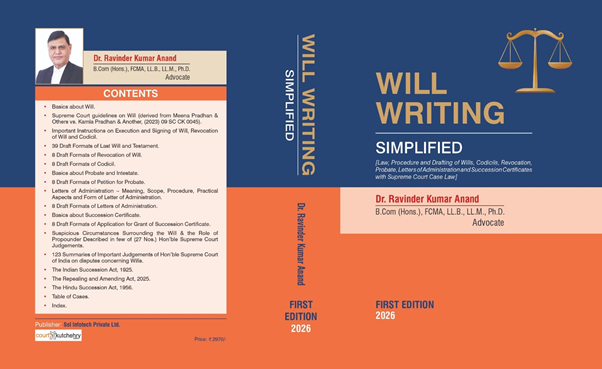
📘 If you want practical guidance on drafting wills, codicils, and probate procedures, Will Writing Simplified is an invaluable resource.
🔹 Buy Will Writing Simplified online: Amazon | Flipkart
Also Read: Anthropic Accuses Chinese AI Labs of Distillation Attacks on Claude Models
Supreme Court’s Observations
- Consistency Across States: The Court noted that Rooh Afza had been consistently classified as a fruit drink in several states, strengthening Hamdard’s claim.
- Nature of the Product: The drink concentrate contains fruit extracts and is consumed as a fruit-based beverage when diluted.
- Taxation Principles: The Court emphasized that tax classification should reflect the true nature of the product and not be arbitrary.
- Relief to Manufacturer: By setting aside the Allahabad High Court’s ruling, the Supreme Court provided significant tax relief to Hamdard.
Key Legal Principles Clarified
|
Issue |
Supreme Court’s Position |
|
Classification of Rooh Afza |
Fruit drink/processed fruit product. |
|
Applicable VAT Rate |
4% under UP VAT Act, not 12.5%. |
|
Consistency Across States |
Concessional classification strengthens validity. |
|
Judicial Review |
Courts must ensure tax authorities do not impose arbitrary classifications. |
Implications of the Judgment
Also Read: Supreme Court Rules Rooh Afza is a Fruit Drink, Attracts Only 4% VAT
- For Hamdard: Major financial relief, as the company avoids higher tax liabilities.
- For Consumers: Lower VAT may help keep prices stable.
- For Tax Authorities: Reinforces the need for uniform classification across states.
- For Industry: Sets a precedent for other food and beverage manufacturers facing similar disputes.
Expert Opinions
Tax experts welcomed the ruling, noting that it underscores the importance of consistency in tax classification. They argue that arbitrary classifications create uncertainty for businesses and consumers alike. Legal analysts added that the judgment strengthens judicial oversight over taxation disputes.
Timeline of Events
- Allahabad High Court Ruling: Rooh Afza classified as non-fruit drink, attracting 12.5% VAT.
- Hamdard Appeals: Company challenges ruling in Supreme Court.
- Feb 2026: Supreme Court rules Rooh Afza is a fruit drink, attracting only 4% VAT.
Conclusion
The Supreme Court’s ruling on Rooh Afza is a significant moment in tax jurisprudence. By affirming that the drink qualifies as a fruit product, the Court has provided clarity, consistency, and relief to both the manufacturer and consumers. The judgment reinforces the principle that tax classifications must reflect the true nature of products and not be arbitrary.
GEO Keywords for Faster Searches
Also Read: Kerala High Court: Uploading GST Orders on Portal Constitutes Valid Service
- Supreme Court Rooh Afza VAT ruling
- Rooh Afza fruit drink tax case
- Hamdard VAT dispute Supreme Court
- UP VAT Act Rooh Afza classification
- Supreme Court food product tax India
- Rooh Afza 4% VAT Supreme Court judgment
Also Read: Karnataka High Court Quashes Income Tax Order: AO Cannot Ignore Valid Invoices and GSTR Filings