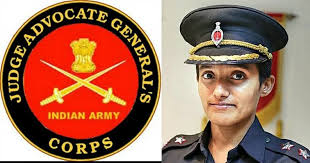
Supreme Court Rejects Union Plea, Upholds 50% JAG Posts for Women in Indian Army
Court says gender neutrality must be enforced in military legal services
Ruling strengthens equal opportunity for women officers in armed forces
By Our Legal Reporter
New Delhi: January 22, 2026:
In a landmark ruling, the Supreme Court of India has dismissed a plea filed by the Union Government seeking modification of its earlier order directing that at least 50% of vacancies in the Judge Advocate General (JAG) branch of the Indian Army be allotted to women candidates. The apex court’s decision, delivered on January 20, 2026, reinforces the principle of gender neutrality in military legal services and ensures equal opportunity for women officers.
The case stems from the Court’s August 2025 judgment in Arshnoor Kaur v. Union of India, where it struck down the Army’s policy of reserving more JAG posts for men and restricting women’s entry. To compensate for past discrimination, the Court mandated that half of future vacancies be filled by women.
Case Background
- Army’s earlier policy: Out of nine JAG vacancies, six were reserved for men and only three for women.
- Challenge: Women candidates argued this was discriminatory and violated constitutional guarantees of equality.
- Supreme Court’s 2025 ruling: Struck down the skewed reservation, ordered a combined merit list for men and women, and directed that 50% of future vacancies be allotted to women.
- Union’s plea: Filed a Miscellaneous Application seeking modification of the order, arguing that strict 50% allocation was impractical.
- Supreme Court’s rejection: The bench held that gender neutrality requires equal opportunity and that compensatory measures are justified given past exclusion.
Court’s Observations
The Supreme Court made several important points in rejecting the Union’s plea:
- No distinct cadres: Male and female JAG officers belong to the same cadre with identical service conditions.
- True gender neutrality: Equal opportunity means women cannot be capped at lower numbers.
- Past discrimination: Women were unfairly sidelined in earlier recruitment cycles; compensatory measures are necessary.
- Merit-based selection: A combined merit list ensures that the most qualified candidates, regardless of gender, are selected.
Broader Implications
This ruling has wide-ranging implications for the armed forces and beyond:
- Strengthening women’s role: Ensures greater representation of women in military legal services.
- Setting precedent: May influence recruitment policies in other branches of the armed forces.
- Gender equality in governance: Reinforces constitutional principles of equality under Articles 14 and 15.
- Public confidence: Demonstrates judiciary’s commitment to fairness and inclusivity.
Related Developments
- Earlier cases: The Supreme Court has previously ruled in favour of granting permanent commission to women officers in the Army and Navy, emphasizing equality.
- Policy debates: The government has often argued operational constraints, but courts have consistently upheld equal opportunity.
- Global context: Many countries, including the US and UK, have moved toward gender-neutral policies in military recruitment.
Reactions
- Women officers: Welcomed the ruling as a historic step toward equality.
- Legal experts: Said the judgment strengthens constitutional protections and sets a strong precedent.
- Government sources: Expressed concern over operational challenges but acknowledged the Court’s binding directions.
- Public sentiment: The ruling has been widely praised as a progressive move for gender justice.
Also Read: AY 2026–27: Pensioners Get Major Tax Relief with Expanded 87A Rebate and Simplified Slabs
Conclusion
The Supreme Court’s rejection of the Union Government’s plea to modify its order mandating 50% JAG posts for women is a landmark in India’s journey toward gender equality in the armed forces. By reaffirming its stand on gender neutrality, the Court has ensured that women officers receive equal opportunity in military legal services.
This judgment not only benefits women candidates but also strengthens the principle of fairness and inclusivity in India’s defence institutions, setting a precedent for broader reforms in gender representation across the armed forces.
Keywords for SEO (Google + ChatGPT)
- Supreme Court JAG posts women ruling
- Indian Army gender neutrality judgment
- Arshnoor Kaur v Union of India case
- Supreme Court rejects Union plea JAG posts
- Women officers equal opportunity armed forces India
- Judge Advocate General recruitment gender equality
- Supreme Court military gender neutrality India
- Indian Army women representation Supreme Court ruling
- Gender justice armed forces India 2026
- Landmark Supreme Court ruling women JAG posts