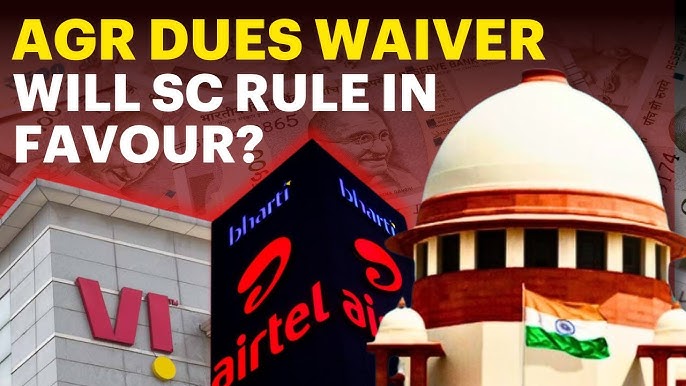
COURTKUTCHEHRY SPECIAL ON SC VODAFONE AGR’s VERDICT OPENS DOORS FOR AIRTEL & TATA
AGR Dues: After Vodafone Idea Relief, Can Airtel and Tata Follow Legal Route for Similar Benefits?
Supreme Court Ruling Opens Door for Equal Treatment in Telecom Sector
Airtel, Tata Explore Legal and Policy Options to Ease AGR Burden
By Our Legal Reporter
New Delhi: January 23, 2026:
The Adjusted Gross Revenue (AGR) dispute has been one of the most contentious issues in India’s telecom sector, burdening operators with massive dues that include licence fees, penalties, and interest. Recently, Vodafone Idea (Vi) received a 10-year moratorium on its AGR dues, following a Supreme Court ruling and government intervention. This relief has sparked debate on whether other telecom companies like Bharti Airtel and Tata Teleservices can pursue similar legal or policy routes to ease their financial stress.
Also Read: HG Infra Engineering Stock Crashes After CBI, ACB Raids Over Corruption Allegations
Background: Vodafone Idea’s Relief
- Vodafone Idea was granted a 10-year moratorium on its AGR dues, amounting to nearly ₹87,000 crore.
- The Supreme Court recognized Vodafone Idea as a special case, partly because of its large customer base and the government’s 49% equity stake.
- The relief allows Vi to pay dues between 2031 and 2041, giving it breathing space to raise funds and invest in its network.
How Airtel and Tata Could Seek Similar Relief
1. Legal Route via Supreme Court
- Airtel and Tata could file petitions in the Supreme Court, arguing that equal treatment is necessary to maintain a level playing field.
- They may invoke the principle of parity and non-discrimination, stressing that relief to one operator should extend to others.
- However, the Court has previously dismissed pleas for waiver of interest and penalties, stating that relief is a matter of government policy, not judicial intervention.
2. Negotiations with DoT
- Telecom operators could approach the Department of Telecommunications (DoT) directly, seeking policy-based relief like Vodafone Idea.
- Joint representations by Airtel and Tata are already being considered, highlighting that without relief, they face competitive disadvantage.
Also Read: Supreme Court Rules NCLT Cannot Decide Trademark Ownership During Insolvency
3. Government Equity and Special Considerations
- Vodafone Idea’s relief was partly justified by the government’s equity stake.
- Airtel and Tata may need to explore strategic partnerships or equity arrangements with the government to strengthen their case.
Expert Opinions
- Legal Analysts: Stress that while courts may not grant waivers, they can direct the government to ensure parity.
- Industry Experts: Warn that unequal treatment could distort competition and harm sector stability.
- Economists: Argue that relief for all operators is necessary to sustain India’s telecom ecosystem, which is vital for digital growth.
Broader Context of AGR Dispute
The AGR issue dates to the late 1990s, revolving around the definition of telecom operators’ gross revenues for licence fee calculations. The Supreme Court’s 2019 ruling upheld the government’s definition, leading to massive dues for operators.
- Vodafone Idea: ₹87,695 crore dues.
- Airtel: Around ₹43,980 crore dues.
- Tata Teleservices: Significant liabilities, though smaller compared to Airtel and Vi.
Practical Scenarios
Also Read: Karnataka High Court Lifts Ban on Bike Taxis, Orders State to Issue Permits
- Case 1: Airtel files a petition in Supreme Court, arguing parity with Vodafone Idea. The Court may direct DoT to consider relief but avoid direct intervention.
- Case 2: Tata Teleservices joins Airtel in negotiations with DoT, seeking a moratorium like Vi.
- Case 3: Government frames a sector-wide policy to restructure AGR dues, ensuring equal treatment for all operators.
Challenges Ahead
- Judicial Limitations: Courts have already clarified that relief is a matter of government policy.
- Government Equity Factor: Without government stake, Airtel and Tata may struggle to justify special treatment.
- Financial Stress: Continued AGR liabilities could impact investment in 5G and digital infrastructure.
Conclusion
The Supreme Court’s recognition of Vodafone Idea as a special case has opened the door for policy-based relief in AGR dues. While Airtel and Tata cannot rely solely on judicial intervention, they can pursue legal petitions, joint negotiations with DoT, and strategic partnerships to seek similar benefits.
Also Read: Delhi High Court Slams Newslaundry Journalist for Indecent Language Against TV Today Content
Ultimately, the government may need to frame a uniform policy to ensure parity across the telecom sector, preventing competitive distortions and safeguarding India’s digital future.
Suggested Keywords for Faster Searches
- AGR dues Supreme Court ruling Vodafone Idea
- Airtel AGR relief legal route India
- Tata Teleservices AGR dues case
- Telecom AGR moratorium Supreme Court India
- Vodafone Idea AGR dues 10-year relief
- Bharti Airtel AGR liabilities India
- Tata AGR dues Supreme Court petition
- AGR dispute telecom sector India
- DoT AGR policy relief telecom operators
- Telecom AGR issue Supreme Court judgment
Also Read: Madhya Pradesh High Court Allows DNA Test of Child to Prove Wife’s Adultery