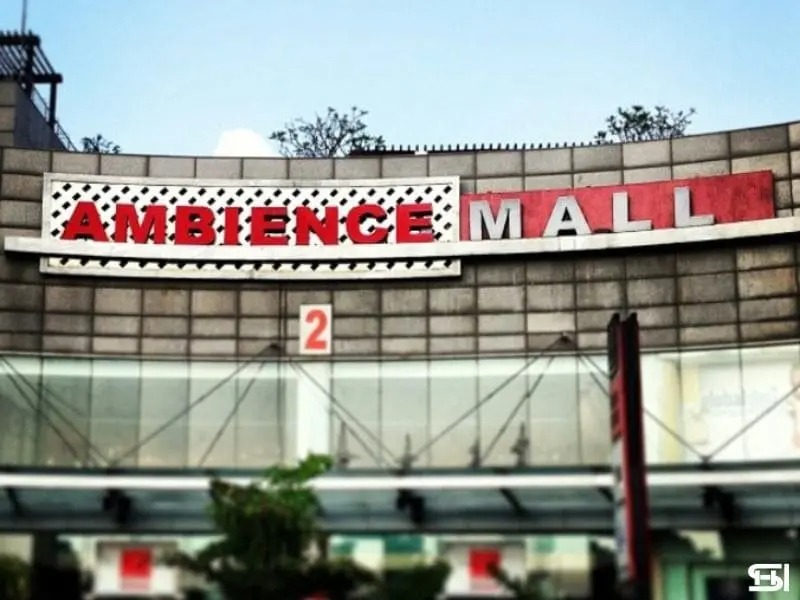
COURTKUTCHEHRY SPECIAL ON SC AMBIENCE MALL VERDICT BRINGS CLARITY ON LAND DE-LICENSING ISSUE IN GURUGRAM
Supreme Court Clears Ambience Mall Land Dispute, Relief for 58 Haryana Real Estate Projects
Apex Court Sets Aside High Court’s CBI Probe Order
Judgment Validates De-Licensing Process, Stabilizes Real Estate Sector
By Our Legal Reporter
New Delhi: January 23, 2026:
The Supreme Court of India has delivered a landmark judgment in the Ambience Mall case, bringing clarity to a long-standing legal dispute over land de-licensing in Gurugram. The apex court set aside a 2020 Punjab and Haryana High Court order that had quashed government approvals and directed a CBI investigation into alleged irregularities.
Also Read: HG Infra Engineering Stock Crashes After CBI, ACB Raids Over Corruption Allegations
By upholding the legality of the de-licensing process, the Supreme Court has not only provided relief to Ambience Developers but also extended a lifeline to 58 other real estate projects across Haryana, which were facing uncertainty due to similar challenges. This ruling is expected to reshape the regulatory landscape for real estate development in the state.
Crux of the Legal Dispute
- The dispute centered around 18.98 acres of land originally licensed for the Ambience Lagoon Island Residential Complex in Gurugram.
- Allegations were made that portions of this land were illegally converted for commercial use, leading to the construction of the swanky Ambience Mall.
- Homebuyers and petitioners argued that land earmarked for residential purposes was diverted, violating planning norms.
- In 2020, the Punjab and Haryana High Court quashed the Town and Country Planning Department’s orders (2001 and 2010) that had de-licensed parts of the land and ordered a CBI probe into the matter.
- The Haryana government and Ambience Developers challenged this ruling in the Supreme Court.
Supreme Court’s Reasoning
The apex court, led by a bench of Justices J.B. Pardiwala and Manoj Misra, provided detailed reasoning:
Also Read: Supreme Court Rules NCLT Cannot Decide Trademark Ownership During Insolvency
- High Court’s Reliance on Unverified Claims
- The Supreme Court criticized the High Court for basing its decision on unverified and inconclusive material.
- It held that directing a CBI probe without concrete evidence was unwarranted.
- Legality of De-Licensing Process
- The Court upheld the Town and Country Planning Department’s approvals, noting that the de-licensing orders were lawful.
- It emphasized that the government had the authority to reclassify land use under established procedures.
- Delay in Petitions
- The Court observed that petitioners had filed challenges after significant delays, undermining the credibility of their claims.
- Preservation of Approvals
- While allegations of misrepresentation may still be examined separately, the Court confirmed that the original approvals stand valid.
Also Read: Karnataka High Court Lifts Ban on Bike Taxis, Orders State to Issue Permits
Impact on Other Real Estate Projects
The ruling has far-reaching consequences:
- Relief for 58 Projects: The judgment provides relief to 58 real estate projects across Haryana where land de-licensing had been undertaken. These projects were under threat due to the High Court’s earlier order.
- Investor Confidence: By validating the de-licensing process, the Supreme Court has restored investor confidence in Haryana’s real estate sector.
- Regulatory Clarity: Developers now have greater clarity on the legality of land conversions, reducing litigation risks.
- Sector Stability: The ruling prevents disruption in ongoing projects, ensuring stability in the housing and commercial real estate markets.
Expert Opinions
- Legal Analysts: Say the judgment reinforces the principle that courts must rely on verified evidence before ordering criminal probes.
- Real Estate Experts: Highlight that the ruling will boost confidence among developers and homebuyers, as approvals are now secure.
- Policy Analysts: Stress that the case underscores the need for transparent and timely communication in land-use decisions.
Broader Context
The Ambience Mall case is emblematic of larger challenges in India’s real estate sector:
- Land-Use Disputes: Conversion of land from residential to commercial use often sparks controversy.
- Regulatory Delays: Long delays in approvals and litigation create uncertainty for developers and buyers.
- Judicial Oversight: Courts play a critical role in balancing development with legality and fairness.
The Supreme Court’s ruling aligns with its broader approach of ensuring that development projects are not derailed by inconclusive allegations, while still allowing scrutiny of genuine misrepresentation.
Practical Examples
Also Read: Delhi High Court Slams Newslaundry Journalist for Indecent Language Against TV Today Content
- Case 1: A Gurugram housing project facing litigation over de-licensing now gains relief, as approvals stand valid.
- Case 2: Commercial complexes in Faridabad and Sonipat, which had similar land-use conversions, are protected from cancellation.
- Case 3: Investors in Haryana’s real estate sector can proceed with confidence, knowing that the Supreme Court has upheld the legality of de-licensing.
Challenges Ahead
- Transparency: Authorities must ensure that future de-licensing decisions are transparent to avoid disputes.
- Monitoring: Allegations of misrepresentation must still be investigated to maintain accountability.
- Public Trust: Governments must balance development with public trust, ensuring that homebuyers are not disadvantaged.
Conclusion
The Supreme Court’s ruling in the Ambience Mall case marks a turning point for Haryana’s real estate sector. By setting aside the High Court’s order and upholding the legality of land de-licensing, the apex court has provided relief to developers, investors, and homebuyers alike.
This judgment not only resolves a long-standing dispute but also stabilizes the future of 58 real estate projects across Haryana, ensuring that development continues without unnecessary disruption. It reinforces the principle that judicial interventions must be based on verified evidence, while also safeguarding the integrity of regulatory processes.
Also Read: Madhya Pradesh High Court Allows DNA Test of Child to Prove Wife’s Adultery
Suggested Keywords for Faster Searches
- Supreme Court Ambience Mall case Haryana
- Ambience Mall Gurugram land dispute judgment
- Haryana real estate projects Supreme Court ruling
- De-licensing of land Ambience Developers case
- Supreme Court sets aside CBI probe Ambience Mall
- Ambience Lagoon Island residential complex case
- Gurugram Ambience Mall land conversion dispute
- Supreme Court relief for Haryana real estate projects
- Punjab Haryana High Court Ambience Mall order
- Apex court ruling Ambience Mall impact
Also Read: Delhi High Court: Hypertension Cannot Be Dismissed as Lifestyle Disorder to Deny Disability Pension