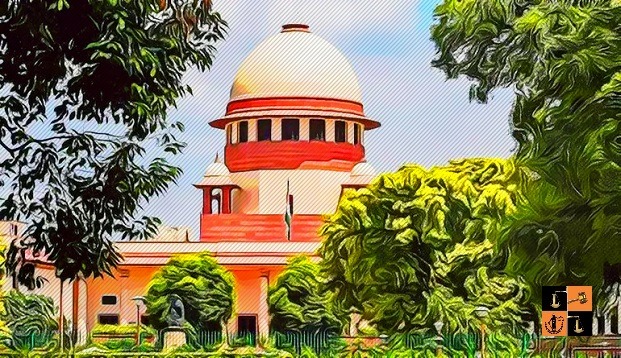
“Supreme Court: Bail Cannot Be Denied Teaching Accused a Lesson”
“Court says presumption of innocence remains even in serious offences”
“Judges warn against misuse of bail denial as punishment before trial”
By Our Legal Reporter
New Delhi: January 03, 2026:
In a landmark ruling delivered on January 2, 2026, the Supreme Court of India condemned the practice of denying bail to accused persons simply to give them a “taste of imprisonment.” The Court emphasized that pre-trial incarceration cannot be used as punishment and reiterated that bail is a fundamental right linked to the presumption of innocence.
Also Read: Delhi High Court: Non-Earning Spouse Cannot Be Forced to Show ITRs for Maintenance Claims
The Supreme Court of India has strongly condemned the practice of denying bail to accused persons merely to give them a “taste of imprisonment as a lesson.” The Court reaffirmed that bail is the rule and jail is the exception, stressing that every accused is presumed innocent until proven guilty. This ruling has wide implications for undertrials, enforcement agencies, and the justice system.
This judgment, delivered by a Bench led by Justice J.K. Maheshwari, is expected to reshape how lower courts and enforcement agencies approach bail applications, especially in cases involving stringent laws.
The Legal Issue
- Presumption of innocence: The Court reminded that every accused is presumed innocent until proven guilty.
- Denial of bail as punishment: Enforcement agencies were criticized for prolonging incarceration to “teach lessons.”
- Serious offences argument: The Court clarified that even if allegations are grave, the presumption of innocence does not vanish.
- Judicial principle: Bail should be the norm, and jail should be the exception, unless specific risks (like absconding or tampering with evidence) are proven.
Court’s Observations
- Bail is not a privilege but a right: Courts must not deny bail merely because the offence is serious.
- Lesson through imprisonment is unconstitutional: Using jail as a deterrent before trial violates fundamental rights.
- Balance of justice: Courts must weigh the liberty of the accused against the needs of investigation.
- Consistency with past rulings: The judgment aligns with earlier Supreme Court pronouncements that bail should be the rule.
Also Read: Madras High Court Clears Stupa for 1755 War Heroes: Honouring Forgotten Freedom Fighters
Comparison Table: Bail Principles Before vs After Ruling
|
Aspect |
Earlier Practice |
Supreme Court Clarification |
Impact |
|
Bail in serious offences |
Often denied |
Presumption of innocence applies |
More fair treatment |
|
Pre-trial incarceration |
Used as punishment |
Declared unconstitutional |
Protects rights |
|
Role of enforcement agencies |
Prolonged custody |
Must justify denial |
Accountability |
|
Judicial approach |
Case-by-case |
Bail is rule, jail exception |
Uniformity |
Wider Implications
- Undertrials: India has over 3.5 lakh undertrials, many jailed for years without conviction. This ruling could reduce overcrowding in prisons.
- Police and agencies: Must justify bail denial with evidence, not vague claims.
- Judiciary: Encourages consistency across High Courts and trial courts.
- Human rights: Reinforces India’s commitment to constitutional values and international human rights norms.
Expert Views
- Legal scholars: Call it a reaffirmation of the principle that liberty cannot be curtailed casually.
- Human rights activists: Say the ruling will help reduce misuse of stringent laws like UAPA and NDPS.
- Senior advocates: Stress that courts must now apply stricter scrutiny before denying bail.
Conclusion
The Supreme Court’s ruling against denying bail to “teach lessons” is a progressive step in criminal jurisprudence. By reaffirming that bail is the rule and jail is the exception, the Court has protected the rights of undertrials and reinforced the presumption of innocence.
For enforcement agencies, the message is clear: custody cannot be punishment before conviction. For citizens, the ruling strengthens faith in the judiciary as a guardian of liberty.
Suggested Keywords (SEO + ChatGPT)
- Supreme Court bail ruling India 2026
- Bail denial taste of imprisonment judgment
- Presumption of innocence Supreme Court India
- Bail is rule, jail exception India SC
- Undertrial rights Supreme Court judgment
- Justice JK Maheshwari bail ruling
- SC condemns bail denial India news
- Human rights bail jurisprudence India