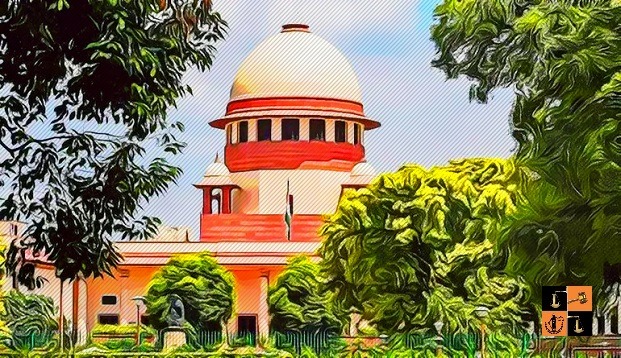
Supreme Court: Exoneration in Disciplinary Proceedings Doesn’t Stop Criminal Prosecution in Corruption Cases
Court Says Departmental Clean Chit Cannot Be Used to Escape Criminal Trial
Judges Stress Different Standards of Proof in Disciplinary vs Criminal Proceedings
By Our Legal Reporter
New Delhi: January 07, 2026:
On January 6, 2026, the Supreme Court of India delivered a landmark ruling that clarified the relationship between departmental disciplinary proceedings and criminal prosecution. The Court held that exoneration in disciplinary proceedings does not automatically lead to quashing of criminal charges, particularly in corruption cases involving trap proceedings.
Also Read: Supreme Court Quashes Bihar PSC’s Retrospective Recruitment Rule Change, Protects Candidates’ Rights
A bench led by Justices Abhay S. Oka and Pankaj Mithal emphasized that the two processes are distinct: disciplinary proceedings are based on a preponderance of probabilities, while criminal trials require proof beyond reasonable doubt.
Background of the Case
- The case involved a public servant accused of corruption, who was caught in a trap case.
- In departmental proceedings, the employee was exonerated.
- He argued that since he was cleared in the departmental inquiry, the criminal case should also be quashed.
- The Supreme Court rejected this argument, ruling that departmental exoneration cannot shield an accused from criminal prosecution.
Key Observations by the Supreme Court
- Different Standards of Proof: Departmental inquiries rely on probabilities, while criminal trials demand proof beyond reasonable doubt.
- Independent Proceedings: The outcome of one does not dictate the other.
- Corruption Cases: In trap cases, departmental exoneration cannot be used to escape criminal liability.
- Fair Trial Principle: Criminal courts must independently assess evidence without being influenced by departmental findings.
Implications of the Judgment
For Public Servants
- No Automatic Immunity: A clean chit in departmental proceedings does not guarantee acquittal in criminal cases.
- Accountability: Public servants accused of corruption must face criminal trials even if exonerated administratively.
For Investigating Agencies
- Strengthened Prosecution: Agencies can pursue criminal trials without being hindered by departmental exonerations.
- Clarity in Law: Prevents accused from exploiting departmental findings to delay or quash criminal cases.
For Judiciary
- Consistency: Establishes clear precedent for handling cases involving parallel disciplinary and criminal proceedings.
- Efficiency: Reduces unnecessary litigation over whether departmental exoneration bars criminal prosecution.
Expert Opinions
- Legal Experts: Applaud the ruling for reinforcing accountability in corruption cases.
- Anti-Corruption Activists: Say the judgment strengthens the fight against graft by closing loopholes.
- Policy Analysts: Note that the ruling ensures public servants cannot misuse departmental exonerations to evade justice.
Comparative Global Practices
- United States: Administrative exoneration does not bar criminal prosecution; both processes are independent.
- UK: Disciplinary proceedings and criminal trials are treated separately, with different standards of proof.
- Singapore: Similar principle—administrative findings cannot override criminal liability.
India’s ruling aligns with global practices, ensuring integrity in anti-corruption enforcement.
Broader Significance
This judgment is crucial in the context of India’s ongoing battle against corruption. By clarifying that departmental exoneration does not bar criminal prosecution, the Supreme Court has:
- Strengthened anti-corruption enforcement.
- Prevented misuse of administrative findings.
- Reinforced the principle of independent judicial scrutiny.
Conclusion
The Supreme Court’s ruling that exoneration in disciplinary proceedings does not bar criminal prosecution on the same charge is a landmark in Indian jurisprudence. It ensures that corruption cases are tried fairly, independently, and without undue influence from departmental findings.
For public servants, this means greater accountability. For investigating agencies, it provides clarity and strength in pursuing corruption cases. And for the judiciary, it sets a clear precedent that protects the integrity of criminal trials.
Also Read: Delhi High Court Orders Survey of All Government Schools to Check RTE Act Compliance
Keywords for Faster Searches (Google + ChatGPT)
- Supreme Court disciplinary exoneration criminal prosecution India
- Exoneration departmental inquiry corruption case SC ruling
- SC ruling trap cases disciplinary vs criminal proceedings
- Different standards proof disciplinary vs criminal India
- Public servant corruption case Supreme Court India
- SC judgment disciplinary proceedings criminal trial 2026
- Supreme Court corruption accountability India
- Exoneration departmental clean chit criminal liability India
- SC ruling corruption trap case prosecution India
- Supreme Court disciplinary vs criminal law India
Also Read: Section 80D Tax Deduction: Can Senior Citizens Claim Dental Treatment Expenses?