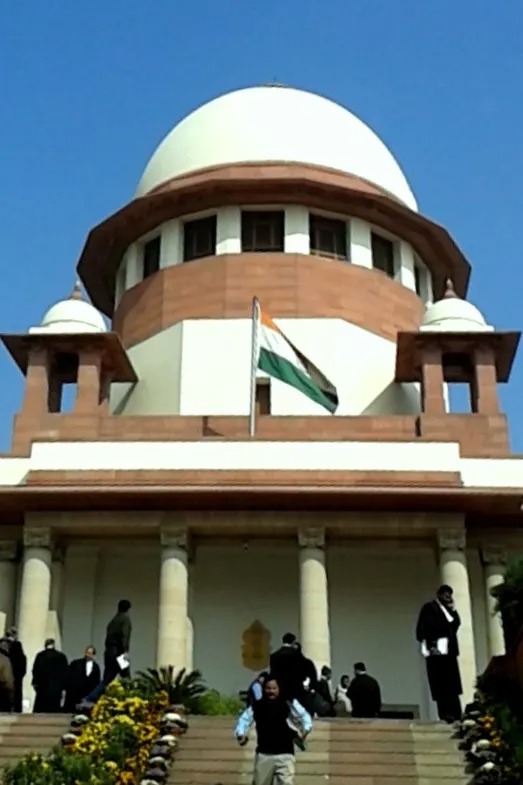
Supreme Court Rejects Privacy Plea, Allows ED to Access I-PAC Official’s Phone
Apex Court Says Privacy Cannot Shield Investigations in Financial Crimes
Case Stems from ED Raids on Political Consultancy Linked to Trinamool Congress
By Our Legal Reporter
New Delhi: January 23, 2026:
In a ruling that has stirred debate on the balance between privacy rights and investigative powers, the Supreme Court of India has rejected a plea seeking to restrain the Enforcement Directorate (ED) from accessing the mobile phone of an Indian Political Action Committee (I-PAC) functionary. The phone, belonging to Jitendra Mehta, was seized during a search at I-PAC’s Delhi office on January 8, 2026. The apex court’s decision underscores its view that privacy rights, though fundamental, cannot be used to obstruct legitimate investigations into financial crimes.
Also Read: Delhi High Court: Hypertension Cannot Be Dismissed as Lifestyle Disorder to Deny Disability Pension
Background of the Case
- The Entity Involved: I-PAC, a political consultancy firm founded by strategist Prashant Kishor, has been closely associated with several political campaigns, including those of the Trinamool Congress (TMC).
- The Search: On January 8, 2026, the ED conducted raids at I-PAC’s offices in Delhi and attempted searches in Kolkata. While devices were seized in Delhi, the Kolkata operation was disrupted by senior West Bengal police officials.
- The Petition: Jitendra Mehta, an I-PAC functionary, moved the Supreme Court under the claim that accessing his phone would violate his right to privacy. His counsel argued that the ED should be restrained until the next hearing.
- The Court’s Response: A bench led by Chief Justice Surya Kant dismissed the plea, questioning why the petitioner was “afraid” of the phone being accessed. The court assured that it knew how to protect innocent citizens but emphasized that investigative agencies must be allowed to carry out their duties.
Court’s Observations
The Supreme Court made several important points during the hearing:
- Privacy vs Investigation: While privacy is a constitutional right, it cannot be absolute when weighed against the need to investigate serious financial crimes.
- No Presumption of Guilt: The bench clarified that allowing ED access does not mean presuming guilt; it is part of the investigative process.
- Judicial Oversight: The court assured that it would intervene if investigative powers were misused, but it would not pre-emptively block lawful procedures.
Also Read: Delhi High Court Upholds ICAI Action Against CA for Concealing Liabilities and Asset Ever-Greening
Connection to Calcutta High Court Proceedings
The case also ties into parallel proceedings in the Calcutta High Court:
- The TMC had filed a petition claiming violation of privacy during ED raids at I-PAC offices in Kolkata.
- The ED clarified before the Calcutta High Court that no data was seized from those locations.
- Consequently, the High Court disposed of the TMC’s plea, noting that the privacy claim did not hold since no material was taken.
Why This Case Matters
- Privacy Debate: The ruling highlights the ongoing tension between individual privacy rights and the state’s duty to investigate crimes.
- Political Context: Since I-PAC is linked to major political campaigns, the case has political undertones, especially in West Bengal where the TMC is a key player.
- Investigative Powers: The judgment strengthens the ED’s authority to access digital devices during financial crime probes.
- Judicial Balance: The Supreme Court’s assurance of protecting innocent citizens reflects its attempt to balance rights with investigative needs.
Wider Implications
- For Political Consultancies: Firms like I-PAC, which handle sensitive political data, may face greater scrutiny in financial investigations.
- For Citizens: The case serves as a reminder that digital devices can be accessed during probes, and privacy claims may not always succeed.
- For Law Enforcement: The ruling empowers agencies like the ED to pursue evidence without undue judicial restraint.
- For Courts: It sets a precedent that privacy pleas must be weighed carefully against the seriousness of allegations.
Also Read: Supreme Court Orders States to Frame Policy on Police Media Briefings, Stresses Identity Protection
Conclusion
The Supreme Court’s rejection of the privacy plea in the I-PAC case is a landmark moment in India’s legal landscape. By allowing the ED to access Jitendra Mehta’s phone, the court has reinforced the principle that privacy rights cannot be misused to obstruct legitimate investigations. At the same time, the court’s assurance of protecting innocent citizens reflects its commitment to balancing individual rights with the needs of justice.
This case will likely influence future debates on privacy, digital evidence, and investigative powers, especially in politically sensitive contexts.
Suggested Keywords for SEO (Google + ChatGPT)
- Supreme Court privacy plea rejection 2026
- I-PAC ED investigation case
- Jitendra Mehta I-PAC phone seizure
- Enforcement Directorate raids I-PAC Delhi Kolkata
- Trinamool Congress privacy petition Calcutta High Court
- Supreme Court CJI Surya Kant privacy ruling
- ED access to digital devices India
- Political consultancy I-PAC legal case
- Privacy vs investigation Supreme Court India
- Financial crime probe privacy rights India