
Supreme Court: Fraud Allegations in Family Partition Cannot Be Dismissed at Threshold; Conciliation Under Section 61 Is Automatic
Court Restores Suit in Major Family Property Dispute, Says Fraud Claims Need Full Trial
Conciliation Status Under Section 61 of CPC Applies Unless Explicitly Excluded
By Legal Reporter
New Delhi: February 12, 2026:
In a significant ruling, the Supreme Court of India has held that a plaint alleging fraud, coercion, or misrepresentation in family partition disputes cannot be rejected at the threshold. The Court emphasized that such allegations disclose a prima facie cause of action and must be tested through a full trial. Additionally, the Court clarified that conciliation under Section 61 of the Civil Procedure Code (CPC), 1908, is automatic unless expressly excluded by the parties.
Also Read: Patna High Court Rules PwD Vacancies Must Follow RPwD Act, Not State Resolutions
This judgment came in the long-running dispute between the Jegatheesan group and the Vaikundarajan group, involving vast family assets and business interests. The ruling sets aside earlier orders of the Madras High Court and the trial court, which had dismissed the suit without trial.
[Recommended Legal Resource]
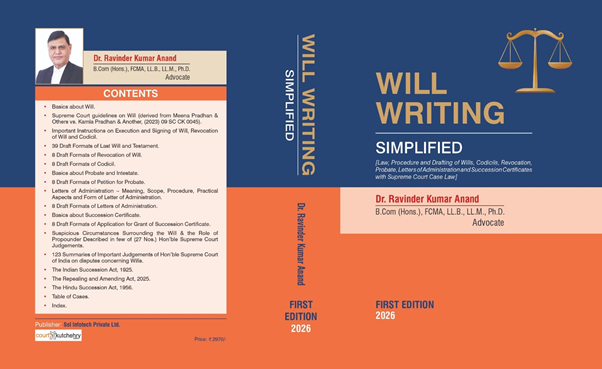
For readers interested in understanding legal procedures around wills, succession, and property disputes, a highly recommended book is Will Writing Simplified [Law, Procedure and Drafting of Wills, Codicils, Revocation, Probate, Letters of Administration and Succession Certificates with Supreme Court Case Law]. This book provides practical guidance on complex legal matters and is available on Amazon and Flipkart.
Key Highlights of the Judgment
- Fraud Allegations Must Be Heard: The Court ruled that claims of fraud in partition deeds cannot be brushed aside merely because the deed carries signatures.
- Order VII Rule 11 CPC: Rejection of plaints at the threshold is permissible only when no cause of action is disclosed. Fraud allegations, by their nature, require evidence and trial.
- Conciliation Status: Section 61 of CPC mandates conciliation unless parties explicitly exclude it. This ensures disputes are first attempted to be resolved amicably.
- Restoration of Suit: The civil suit filed by the Jegatheesan group was revived, allowing the matter to proceed to trial.
Also Read: Supreme Court Criticizes RERA: Says Authority Only Helps Builders, Not Homebuyers
Why This Ruling Matters
- Strengthens Legal Protection in Family Disputes: Families often face disputes over partition of property and assets. This ruling ensures that allegations of fraud are not dismissed prematurely.
- Promotes Fairness: By mandating trial, the Court ensures that parties get a fair chance to present evidence.
- Encourages Conciliation: Automatic conciliation under Section 61 promotes settlement before prolonged litigation.
- Precedent for Future Cases: The ruling will guide lower courts in handling similar disputes, preventing arbitrary rejection of suits.
Legal Framework Explained
- Order VII Rule 11 CPC: Allows rejection of plaints if they do not disclose a cause of action. However, fraud allegations inherently require judicial examination.
- Section 61 CPC: Provides for conciliation in civil disputes. Unless parties exclude it, courts must attempt conciliation before trial.
- Fraud in Partition Deeds: Courts have consistently held that fraud vitiates consent. Even signed deeds can be challenged if obtained through coercion or misrepresentation.
Broader Implications
Also Read: Madras High Court Directs MS Dhoni to Deposit ₹10 Lakh in Defamation Case
- Family Businesses: Many Indian families run large business empires. Disputes over partition often involve allegations of fraud. This ruling ensures such claims are not ignored.
- Judicial Efficiency: While conciliation may reduce litigation, the Court has balanced it with the need for fair trial in fraud cases.
- Public Confidence: Citizens gain trust when courts protect rights against fraud and coercion.
Expert Opinions
Legal experts note that the ruling strengthens the principle that fraud cannot be presumed to be absent simply because a document is signed. They also highlight that conciliation provisions under CPC are crucial in reducing backlog of cases, but fraud claims must always be tested in court.
Conclusion
The Supreme Court’s ruling in the Jegatheesan vs Vaikundarajan family partition case is a landmark in civil law. By reviving the suit and mandating trial, the Court has reinforced the principle that fraud allegations deserve full judicial scrutiny. At the same time, the emphasis on conciliation under Section 61 CPC reflects the judiciary’s commitment to resolving disputes amicably wherever possible.
This judgment will serve as a guiding precedent for courts across India, ensuring that family disputes involving allegations of fraud are handled with fairness, transparency, and due process.
Suggested Keywords for Faster Searches
- Supreme Court family partition fraud ruling 2026
- Order VII Rule 11 CPC fraud plaint
- Section 61 CPC conciliation automatic
- Jegatheesan vs Vaikundarajan property dispute
- Family partition fraud case India Supreme Court
- Civil procedure fraud allegations trial India
- Will Writing Simplified book legal resource
Also Read: Supreme Court Rejects Jairam Ramesh’s Plea Against Retrospective Environmental Clearances