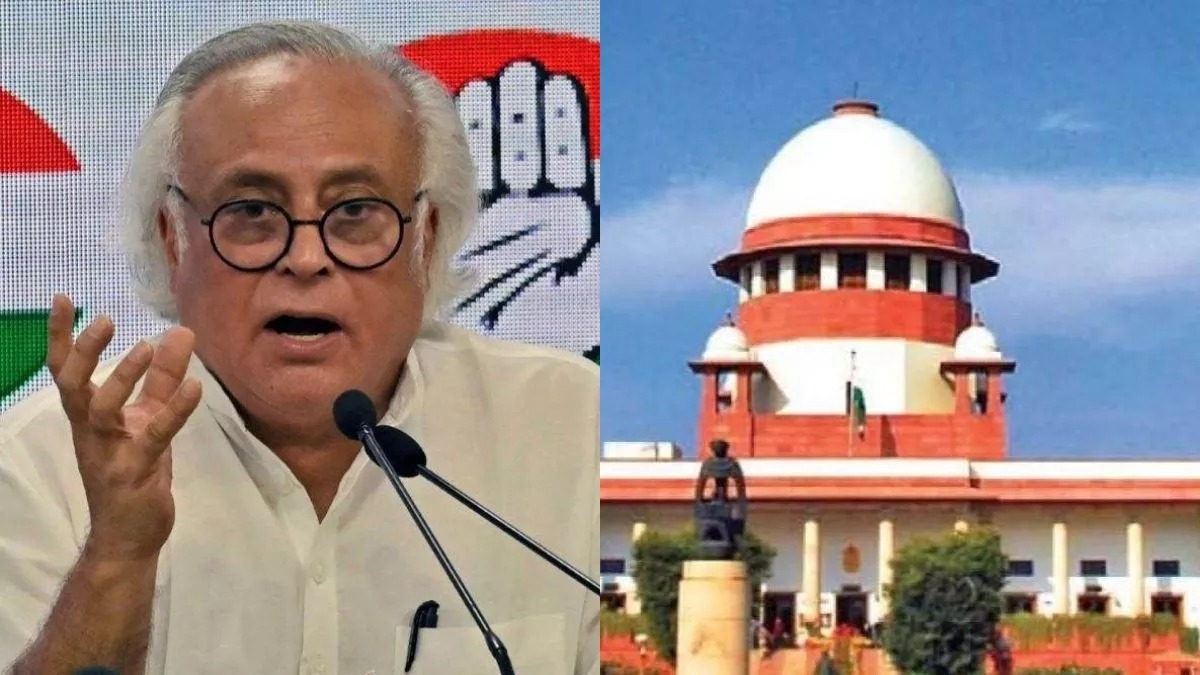
Supreme Court Rejects Jairam Ramesh’s Plea Against Retrospective Environmental Clearances
Bench says writ petition cannot substitute for review petition
Court cautions against using litigation for media publicity
By Legal Reporter
New Delhi: February 12, 2026:
The Supreme Court of India has refused to entertain a petition filed by Congress leader and Rajya Sabha MP Jairam Ramesh challenging the grant of retrospective environmental clearances (ECs) to projects. The bench, comprising Chief Justice Surya Kant and Justice Joymalya Bagchi, observed that the plea appeared to be aimed more at attracting public attention than addressing a genuine legal grievance. The Court stressed that the proper remedy would have been a review petition against its earlier judgment, not a writ petition.
Also Read: Supreme Court Declines Plea to Publish Opposition Leader’s Dissent on CIC Appointments
[Suggested Legal Resource]
Legal professionals, public and students alike will benefit from Will Writing Simplified, which covers procedure and case law in detail.
📘 Buy Will Writing Simplified online:
BUY HERE🔹 Amazon
BUY HERE🔹 Flipkart
Background of the Case
- Petitioner: Jairam Ramesh, senior Congress leader and environmental activist.
- Issue raised: Challenge to the Union Government’s practice of granting ex-post facto environmental clearances to projects that had already commenced without prior approval.
- Earlier ruling: In November 2025, a larger bench of the Supreme Court upheld the validity of retrospective clearances, reversing an earlier judgment that had struck them down.
- Current plea: Ramesh filed a writ petition seeking to reopen the issue, arguing that retrospective clearances undermine environmental safeguards.
Court’s Observations
The bench made several pointed remarks:
- Improper remedy: The Court noted that the petitioner was indirectly seeking a review of its November 2025 judgment through a writ petition, which is not legally maintainable.
- Media publicity: CJI Surya Kant remarked, “All this is just for media publicity.”
- Exemplary costs warning: The Court warned that filing such petitions could attract exemplary costs for misuse of judicial process.
- Withdrawal of plea: Faced with the Court’s disinclination, Ramesh’s counsel sought permission to withdraw the petition, which the bench allowed with liberty to pursue remedies in accordance with law.
Why the Court Rejected the Plea
- Legal procedure: A writ petition cannot be used to challenge or review a Supreme Court judgment.
- Judicial discipline: Allowing such petitions would undermine the finality of judgments and open the floodgates for repeated challenges.
- Publicity concerns: The Court expressed concern that high-profile petitions may sometimes be filed more for media attention than substantive legal grounds.
Wider Legal Context
- Environmental clearances: Under Indian law, projects with potential environmental impact must obtain prior clearance. However, the government has occasionally granted ex-post facto approvals to projects that began operations without clearance.
- Judicial debate: Critics argue retrospective clearances weaken environmental safeguards, while supporters claim they prevent disruption of ongoing projects and balance development needs.
- Vanashakti case: In 2025, the Supreme Court upheld the Union Government’s Office Memorandums allowing retrospective clearances, setting the stage for Ramesh’s challenge.
Also Read: Supreme Court Orders Stipend Parity for Foreign Medical Graduates at AMU: Equal Pay for Equal Work
Implications of the Ruling
- For environmental activists: The judgment limits avenues to challenge retrospective clearances, reinforcing the need to pursue review petitions rather than writs.
- For government projects: Provides legal certainty to projects that received retrospective approvals.
- For judiciary: Reaffirms the principle of judicial discipline and discourages misuse of writ jurisdiction.
Conclusion
The Supreme Court’s dismissal of Jairam Ramesh’s plea underscores the importance of following proper legal procedures. By cautioning against using writ petitions for publicity or indirect review, the Court has reinforced judicial discipline and the finality of its judgments. The ruling also highlights the continuing tension between environmental protection and developmental imperatives in India.
GEO Keywords
- Supreme Court Jairam Ramesh environmental clearance case
- Retrospective environmental clearances India judgment
- SC dismisses writ petition environmental law
- Vanashakti case Supreme Court 2025
- Ex-post facto environmental clearance India
- Jairam Ramesh plea Supreme Court February 2026
- Environmental law litigation India Supreme Court
- SC remarks media publicity Jairam Ramesh