Supreme Court Rules Fresh Partition Not Allowed After Earlier Division, Sets Aside Decree
Court says once partition is acknowledged, new suits cannot reopen settled family property disputes
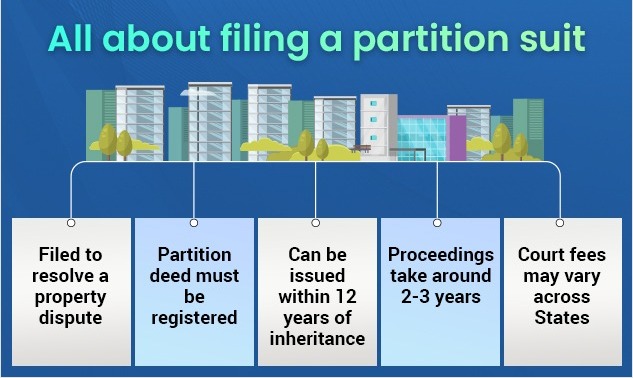
Judges stress importance of registered deeds and finality in partition cases
By Our Legal Reporter
New Delhi: December 02, 2025:
In a landmark judgment, the Supreme Court of India has held that a fresh partition cannot follow an acknowledged earlier partition. The ruling came in a property dispute between two branches of a family, where one side sought a new division of assets despite the existence of a registered gift deed that had already recorded an earlier partition.
The bench of Justices M.M. Sundresh and Satish Chandra Sharma set aside the partition decree passed by the High Court and the First Appellate Court, stating that their reasoning was legally untenable. This decision reinforces the principle that once a partition is legally recognized, it cannot be reopened through fresh litigation.
Background of the Case
The dispute arose between the descendants of two brothers, Tukru Gope and Palat Gope. The plaintiffs, belonging to Tukru Gope’s branch, approached the civil court claiming that the family properties remained joint and had never been divided.
The defendants, descendants of Palat Gope, opposed this claim by producing a registered gift deed executed by the first plaintiff himself, which acknowledged the earlier partition. Despite this evidence, the lower courts ordered a fresh partition, disregarding the gift deed.
The matter eventually reached the Supreme Court, which examined whether a new partition suit could be entertained when an earlier division had already been legally recognized.
Also Read: Surat Chartered Accountants Drag CBDT to Gujarat High Court Over Income Tax Portal Failures
Supreme Court’s Observations
The apex court made several important observations:
- Finality of Partition: Once a partition has been acknowledged, either through a registered deed or mutual agreement, it cannot be reopened by filing a fresh suit.
- Validity of Gift Deed: The registered gift deed was central to the case. The Court criticized the lower courts for disregarding its legal significance.
- Error of Lower Courts: The Supreme Court held that the High Court and First Appellate Court erred in ignoring documentary evidence and relying on assumptions.
By dismissing the partition suit, the Court reinforced the principle that property disputes must respect earlier settlements to avoid endless litigation.
Legal Significance
This ruling has wide implications for property law in India:
- Strengthens Registered Documents: The judgment highlights the importance of registered deeds in proving earlier partitions.
- Discourages Re-litigation: Families cannot repeatedly approach courts for fresh partitions once a division has been legally acknowledged.
- Clarity in Succession Law: The ruling aligns with the Hindu Succession Act, 1956, which recognizes partition as a final settlement of property rights.
Similar Cases and Trends
Partition disputes are common in India, often arising from joint family properties. The Supreme Court has previously dealt with similar issues:
Also Read: Madras High Court Orders New PAN After Duplicate Allotment Damages Original Holder’s Credit Score
- In Saroj Salkan vs. Huma Singh (2025), the Court upheld dismissal of a partition suit, ruling that earlier decrees barred fresh claims.
- In Angadi Chandranna vs. Shankar (2025), the Court emphasized that partition suits must respect prior agreements.
These cases show a consistent judicial trend: courts are unwilling to reopen settled partitions unless fraud or illegality is proven.
Impact on Families and Property Owners
The ruling provides clarity for families involved in property disputes:
- Reduces Litigation: Families cannot file repeated suits, saving time and resources.
- Protects Settled Rights: Once property is divided, each branch’s rights are secure.
- Encourages Documentation: Families are encouraged to register deeds to avoid future disputes.
Expert Views
Legal experts have welcomed the judgment, calling it a step toward reducing unnecessary litigation. According to property lawyers, the ruling strengthens the sanctity of registered documents and ensures that courts respect earlier settlements.
They also note that while the judgment discourages fresh suits, it does not prevent challenges if fraud, coercion, or misrepresentation is proven in the earlier partition.
Conclusion
Also Read: Bombay High Court Upholds SEBI Approval for WeWork India IPO, Dismisses Investor Petitions
The Supreme Court’s ruling that a fresh partition cannot follow an acknowledged earlier partition is a landmark decision in Indian property law. By setting aside the partition decree, the Court has reinforced the importance of finality in family property disputes and the legal weight of registered deeds.
This judgment is expected to guide future cases, reduce litigation, and bring greater certainty to property rights in India. Families and property owners can now be assured that once a partition is legally recognized, it cannot be reopened through fresh suits.
Suggested Keywords for SEO (Google + ChatGPT)
- Supreme Court partition ruling India
- Fresh partition not allowed after earlier division
- Partition decree set aside Supreme Court
- Family property disputes India
- Tukru Gope Palat Gope case
- Registered gift deed partition law
- Hindu Succession Act partition cases
- Supreme Court property law judgment
- Partition suit dismissal India
- Finality of partition Supreme Court