Supreme Court Criticizes Tribunal for Handwritten Orders Despite E-Courts Project
Bench questions why Motor Accident Claims Tribunal still writes orders by hand in digital era
Judges stress need for modernization; ask High Court if computers were provided under e-Courts scheme
By Legal Reporter
New Delhi: February 13, 2026:
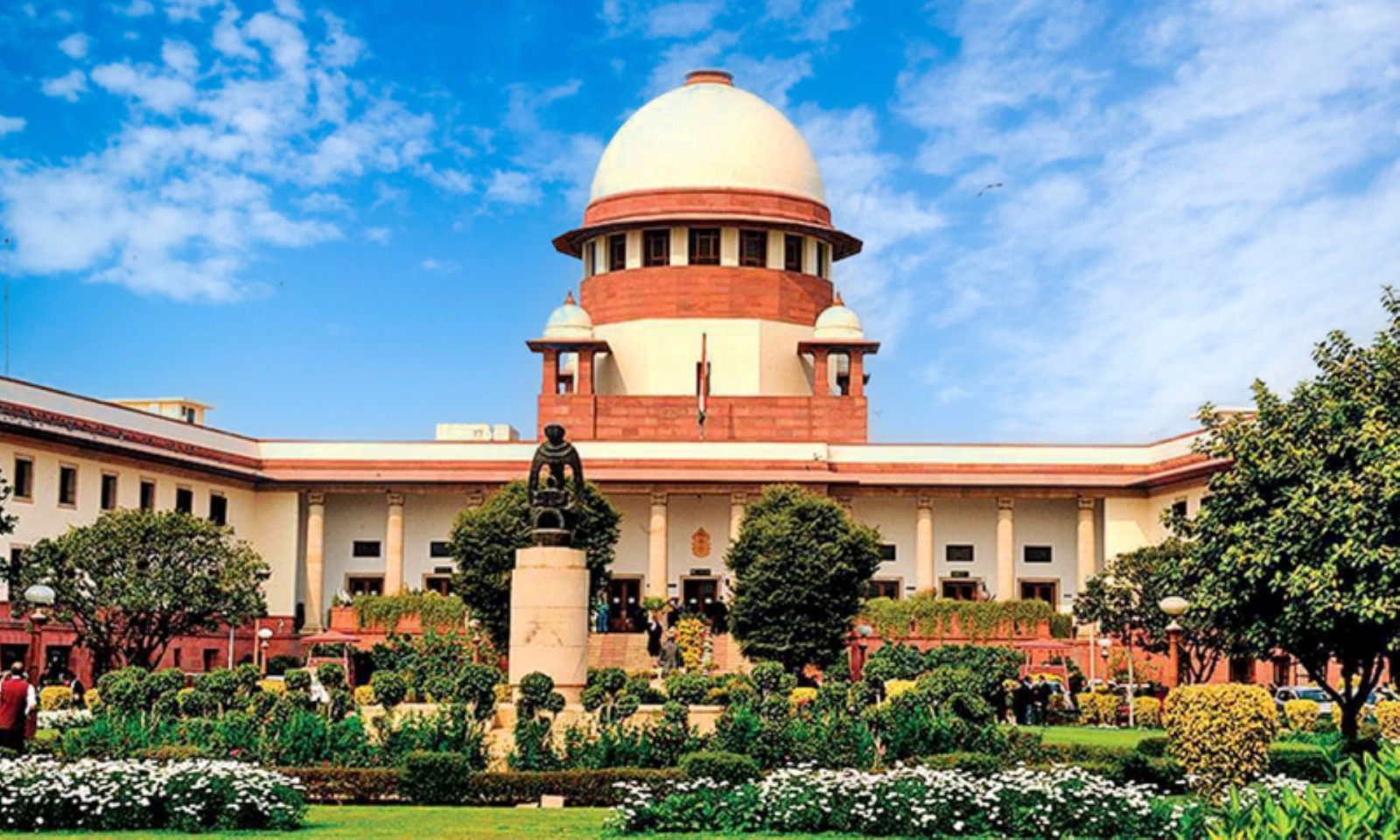
In a sharp observation highlighting the challenges of judicial digitization, the Supreme Court of India expressed dismay that a Motor Accident Claims Tribunal (MACT) in Hyderabad continued to write its orders by hand, despite the nationwide rollout of the e-Courts project. The Court noted that handwritten orders, often illegible, undermine the purpose of digitization and transparency in judicial processes.
Also Read: Supreme Court Quashes SC/ST Act Case Against Vyapam Whistleblower Dr. Anand Rai
A bench of Justice Rajesh Bindal and Justice Vijay Bishnoi made these remarks while hearing an appeal related to a motor accident compensation case. The judges questioned whether the tribunal had even been provided with a computer under the e-Courts initiative, which has been in progress since 2007 and is now in its third phase.
Case Background
- The matter arose from a motor accident compensation award passed in 2024 by the Hyderabad MACT.
- On examining the records, the Supreme Court found that the entire order sheets were handwritten, making parts of the judgment difficult to read.
- The Court observed that the Government of India has spent thousands of crores of rupees on computerization of courts, yet some tribunals continue outdated practices.
- The bench reminded that the judicial system is moving towards paperless courts, from trial courts to the Supreme Court.
Supreme Court’s Key Observations
- Handwritten orders unacceptable: The Court said handwritten judgments defeat the purpose of digitization and accessibility.
- E-Courts project investment: With billions spent on modernization, tribunals must adopt digital practices.
- Judicial accountability: The Court asked the High Court to clarify whether the tribunal had been provided with computers and why handwritten orders persisted.
- Need for uniformity: The Court stressed that all judicial bodies must align with the e-Courts project to ensure consistency.
Also Read: Supreme Court Rejects Plea for Re-Evaluation of SSC Exam Answers: No Role for Sympathy or Compassion
[Recommended Legal Resource]
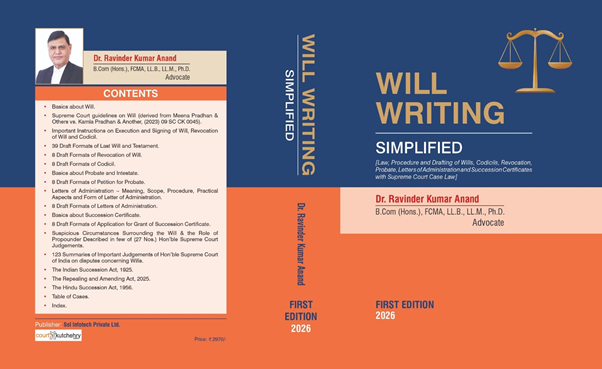
For readers interested in exploring legal procedures, drafting of wills, succession laws, and Supreme Court case law, the book Will Writing Simplified [Law, Procedure and Drafting of Wills, Codicils, Revocation, Probate, Letters of Administration and Succession Certificates with Supreme Court Case Law] is a valuable resource. It provides practical insights into drafting legal documents and understanding Supreme Court precedents.
You can access it here: Amazon | Flipkart
Implications of the Judgment
- For Tribunals: Strong reminder to adopt digital tools and stop handwritten orders.
- For High Courts: Greater responsibility to ensure subordinate courts and tribunals are equipped with technology.
- For Litigants: Ensures judgments are legible, accessible, and available online.
- For Judicial System: Reinforces the push towards paperless courts and modernization.
Also Read: Supreme Court Halts Talaq-e-Hasan Between Couple, Refers Case to Mediation
Broader Legal Significance
This ruling reflects the Supreme Court’s commitment to judicial reforms and digitization. The e-Courts project, launched in 2007, aims to make courts more efficient, transparent, and accessible. By criticizing tribunals that still rely on handwritten orders, the Court has sent a strong message that modernization is not optional but mandatory.
It also highlights the importance of uniform adoption of technology across all levels of the judiciary, ensuring that litigants in smaller towns and tribunals enjoy the same digital access as those in metropolitan courts.
Conclusion
Also Read: Punjab & Haryana High Court Declines to Entertain Punjab Kesari Hotel Plea
The Supreme Court’s criticism of handwritten tribunal orders underscores the urgency of judicial digitization. By questioning the High Court and highlighting the failure of tribunals to adopt technology, the Court has reinforced the importance of the e-Courts project.
This ruling is not just about one tribunal in Hyderabad—it is a reminder to the entire judicial system that modernization is essential for transparency, efficiency, and public trust.
Suggested Keywords for Faster Searches
- Supreme Court handwritten tribunal orders ruling
- E-Courts project Supreme Court criticism
- Hyderabad MACT handwritten judgment case
- Supreme Court judicial digitization India
- Paperless courts Supreme Court ruling
- Tribunal handwritten orders Supreme Court case
- E-Courts modernization Supreme Court India
- Supreme Court technology adoption judiciary
Also Read: Supreme Court Flags Racket of Fake Motor Accident Claims Using Insured Vehicles