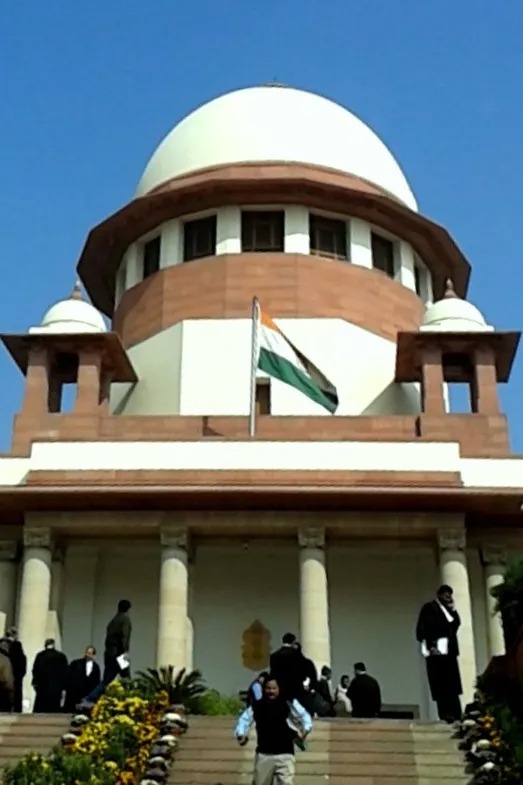
Supreme Court: All High Courts Are Equal, No Practice of Transferring Matters to One Court
Apex Court Rejects Consolidation of GST Petitions in a Single High Court
Ruling Reinforces Federal Judicial Balance
By Legal Reporter
New Delhi: February 18, 2026:
In a significant pronouncement, the Supreme Court of India has clarified that all High Courts are equal in status and that the practice of transferring matters from multiple High Courts to a single High Court cannot be encouraged. The ruling came during hearings on petitions filed by turf clubs seeking consolidation of cases challenging the levy of Goods and Services Tax (GST) on horse racing and actionable claims. The apex court emphasized that litigants must respect the jurisdiction of the High Courts where cases are filed, and consolidation should not undermine the federal judicial structure.
Background of the Case
- Turf clubs across India challenged the GST levy on horse racing and actionable claims.
- Petitioners sought transfer of all pending cases from different High Courts to one High Court for uniformity.
- Senior Advocate Arvind P. Datar argued that consolidation would ensure consistency in rulings.
- The Supreme Court bench, led by Chief Justice Surya Kant along with Justices B.V. Nagarathna and Joymalya Bagchi, rejected the plea.
Court’s Observations
The Supreme Court made several important points:
- Equality of High Courts: All High Courts are constitutionally equal; none can be treated as superior.
- No Forum Shopping: Litigants cannot bypass jurisdiction by seeking consolidation in one High Court.
- Federal Balance: The judicial system must respect the federal structure, where High Courts serve as independent constitutional courts.
- Transfer Powers: While Article 139A of the Constitution allows transfer of cases to the Supreme Court, it does not permit consolidation in one High Court.
Legal Significance
This ruling has wide implications:
Also Read: IRDAI Tightens Rules on Health Insurance Claim Rejections Over Pre-Existing Diseases
- Prevents Forum Shopping: Litigants cannot choose a “favourable” High Court by consolidating cases.
- Strengthens Federalism: Reinforces the equal status of High Courts across states.
- Judicial Consistency: While uniformity is desirable, it must be achieved through Supreme Court rulings, not consolidation in one High Court.
Reactions from Legal Experts
- Constitutional scholars welcomed the ruling, saying it protects the dignity of High Courts.
- Tax lawyers noted that while consolidation could reduce conflicting judgments, the Supreme Court’s stance ensures fairness.
- Critics argued that multiple High Court rulings may create temporary inconsistencies, but most agreed that the apex court can resolve such conflicts.
Broader Implications
The ruling is expected to influence future petitions involving pan-India issues:
- Litigants must file cases in relevant jurisdictions instead of seeking consolidation.
- The Supreme Court may play a greater role in harmonizing conflicting High Court judgments.
- The decision strengthens judicial federalism, ensuring that High Courts remain independent constitutional authorities.
Why Awareness Matters
For litigants, this ruling is a reminder that jurisdictional boundaries must be respected. For legal professionals and students, it provides a valuable case study in constitutional law, federalism, and judicial process.
Also Read: Hyderabad Biryani Probe Uncovers ₹70,000 Crore Tax Evasion Across India
[📘 Legal professionals and students alike will benefit from Will Writing Simplified, which covers procedure and case law in detail.]
🔹 Buy online: Amazon | Flipkart
Conclusion
The Supreme Court’s declaration that all High Courts are equal and that matters cannot be transferred from multiple High Courts to one reinforces the principle of judicial federalism. By rejecting consolidation, the apex court has ensured that litigants respect jurisdictional boundaries and that High Courts continue to function as independent constitutional courts. This ruling will shape future litigation strategies and strengthen the balance of India’s judicial system.
Suggested Keywords for SEO & Faster Searches
Also Read: ED Issues Biggest-Ever Attachment Order Worth ₹10,000 Crore in PACL Ponzi Scam
- Supreme Court all High Courts equal ruling
- Transfer of cases High Courts India
- GST petitions horse racing Supreme Court
- Article 139A transfer powers Supreme Court
- Judicial federalism India Supreme Court ruling
- Forum shopping High Courts India
- Constitutional law High Courts equality India
- Supreme Court GST horse racing case
- Will Writing Simplified book
- Judicial independence High Courts India
Also Read: CESTAT Rules Service Tax Penalty under Section 78 Unsustainable When Liability Was Unclear