
Supreme Court: Restructuring Arrangements Cannot Stall Insolvency Proceedings
NCLAT Order Set Aside; Section 7 Applications Must Be Examined
Court Reaffirms Primacy of IBC Over Defunct Schemes
By Legal Reporter
New Delhi: February 25, 2026:
In a significant ruling, the Supreme Court of India has clarified that the mere pendency of restructuring or scheme arrangements under the Companies Act cannot stall the initiation of a Corporate Insolvency Resolution Process (CIRP) under the Insolvency and Bankruptcy Code (IBC), 2016. The judgment reinforces the overriding effect of the IBC and ensures that financial creditors can pursue insolvency proceedings even if a debtor claims to be engaged in restructuring negotiations.
Also Read: Allahabad High Court: ‘No Conversion, No Crime’ – Police Protection Granted to 12 Interfaith Couples
A bench comprising Justice Sanjay Kumar and Justice K. Vinod Chandran set aside a National Company Law Appellate Tribunal (NCLAT) order that had rejected a Section 7 application on the ground that a restructuring arrangement was pending. The Court emphasized that for admission of a Section 7 application, the adjudicating authority only needs to verify the existence of financial debt and default.
Background of the Case
- A financial creditor filed a Section 7 application under the IBC against a corporate debtor.
- The NCLAT rejected the application, citing the pendency of a restructuring arrangement under the Companies Act.
- The creditor appealed to the Supreme Court, arguing that the IBC overrides older schemes and that restructuring cannot be used as a shield against insolvency proceedings.
- The Supreme Court agreed, ruling that the IBC’s framework takes precedence over defunct or pending schemes under the Companies Act.
[Recommended Research Resources]
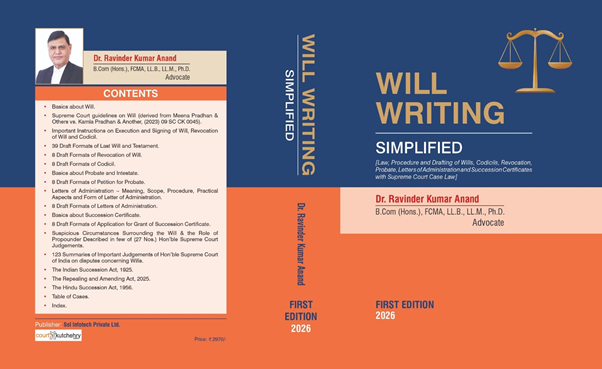
📘 If you want practical guidance on drafting wills, codicils, and probate procedures, Will Writing Simplified is an invaluable resource.
🔹 Buy Will Writing Simplified online: Amazon | Flipkart
Also Read: The Great Biryani Audit: How Hyderabad’s Restaurant Raids Exposed a ₹70,000 Crore Tax Scam
Supreme Court’s Observations
- Section 7 Applications: The Court clarified that adjudicating authorities must only check for financial debt and default.
- IBC’s Overriding Effect: The IBC, being a special and comprehensive code, overrides inconsistent provisions of the Companies Act.
- Judicial Discipline: The Court criticized attempts to use pending schemes as a tactic to delay insolvency proceedings, calling them “shields by tardy litigators.”
- Public Interest: Insolvency resolution protects public funds and creditors’ rights, which cannot be jeopardized by outdated restructuring schemes.
Key Legal Principles Clarified
| Issue | Supreme Court’s Position |
|---|---|
| Restructuring Arrangements | Cannot stall CIRP under IBC. |
| Section 7 Admission | Requires proof of financial debt and default only. |
| IBC vs. Companies Act | IBC overrides defunct schemes under Companies Act. |
| Judicial Discipline | Courts must prioritize insolvency resolution over delay tactics. |
| Public Policy | Insolvency resolution ensures creditor protection and financial stability. |
Also Read: Orissa High Court Quashes Order Allowing 50 Police Officers to File Property Declarations Late
Implications of the Judgment
- For Creditors: Strengthens their ability to initiate insolvency proceedings without being obstructed by restructuring claims.
- For Corporate Debtors: Prevents misuse of restructuring arrangements to delay insolvency.
- For Insolvency Framework: Reaffirms IBC’s primacy as India’s comprehensive insolvency law.
- For Financial Stability: Ensures timely resolution of stressed assets, protecting banks and investors.
Expert Opinions
Legal experts have welcomed the ruling, noting that it closes loopholes often exploited by debtors to delay insolvency. They emphasize that the IBC was designed to provide swift resolution, and this judgment strengthens its effectiveness.
Timeline of Events
- 2016: IBC enacted, overriding older insolvency frameworks.
- 2025: NCLAT rejects Section 7 application citing restructuring arrangement.
- Feb 2026: Supreme Court sets aside NCLAT order, clarifies law on CIRP and restructuring.
Also Read: BCI Issues Detailed Guidelines for AIBE XXI: Rules Every Candidate Must Know
Conclusion
The Supreme Court’s ruling is a landmark in insolvency jurisprudence, reaffirming the primacy of the IBC over outdated restructuring schemes. By ensuring that financial creditors can pursue insolvency proceedings without obstruction, the Court has strengthened India’s insolvency framework and reinforced its commitment to financial discipline and creditor protection.
GEO Keywords for Faster Searches
- Supreme Court IBC restructuring case
- CIRP Section 7 Supreme Court ruling
- Insolvency and Bankruptcy Code vs Companies Act
- NCLAT restructuring arrangement insolvency
- Supreme Court insolvency resolution India
- IBC overriding effect Supreme Court
- Corporate debtor restructuring vs CIRP
Also Read: India–France Tax Treaty Amended: Lower Dividend Tax to Boost Trade and Investment