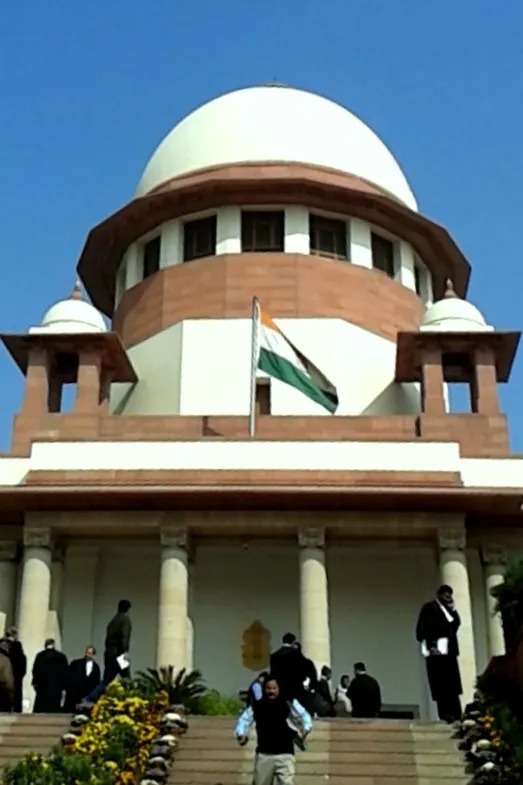
Supreme Court to Examine Condonation of 30-Month ITR Delay
Delhi High Court Rejected Plea of Genuine Hardship
Case Raises Questions on Section 119(2)(b) of Income Tax Act
By Legal Reporter
New Delhi: February 25, 2026:
The Supreme Court of India has agreed to examine whether a 30-month delay in filing an Income Tax Return (ITR) can be condoned under Section 119(2)(b) of the Income Tax Act, 1961. The case, Sirez Limited vs Union of India & Ors., comes after the Delhi High Court refused to condone the delay, ruling that the company’s internal disputes did not amount to “genuine hardship.”
Also Read: Visa-Free Travel Explained: Why It Doesn’t Always Guarantee Entry
The apex court’s intervention could have far-reaching implications for taxpayers who miss filing deadlines due to extraordinary circumstances, especially when such delays prevent them from carrying forward business losses or claiming refunds.
Background of the Case
- Assessment Year 2018–19: The due date for filing ITR was October 31, 2018.
- Sirez Limited filed its return on September 20, 2021, a delay of nearly 30 months.
- The company sought condonation of delay under Section 119(2)(b), which allows the Central Board of Direct Taxes (CBDT) to condone delays in cases of genuine hardship.
- The CBDT rejected the application, stating that the reasons cited did not qualify as genuine hardship.
- The Delhi High Court upheld the CBDT’s decision, ruling that internal disputes among directors were not sufficient grounds.
- Sirez Limited then approached the Supreme Court through a Special Leave Petition.
[Legal Note]
📘 If you want practical guidance on drafting wills, codicils, and probate procedures, Will Writing Simplified is an invaluable resource.
🔹 Buy Will Writing Simplified online: Amazon | Flipkart
Supreme Court’s Observations
Also Read: Anthropic Accuses Chinese AI Labs of Distillation Attacks on Claude Models
- The Court agreed to examine whether the CBDT and High Court correctly interpreted “genuine hardship.”
- It noted that the purpose of Section 119(2)(b) is to provide relief in exceptional cases where strict adherence to deadlines would cause undue hardship.
- The Court will consider whether denial of condonation unfairly prevents taxpayers from carrying forward losses or claiming refunds.
Key Legal Principles Clarified
|
Issue |
Position |
|
Section 119(2)(b) |
Allows CBDT to condone delays in filing ITR if genuine hardship is proven. |
|
Delhi HC Ruling |
Internal disputes among directors do not qualify as genuine hardship. |
|
Supreme Court Review |
Will examine scope of “genuine hardship” and whether relief should be granted in exceptional cases. |
|
Impact on Taxpayers |
Could set precedent for condonation of long delays in extraordinary circumstances. |
Implications of the Case
- For Taxpayers: A favourable ruling could provide relief to those who miss deadlines due to genuine difficulties.
- For CBDT: May require clearer guidelines on what constitutes genuine hardship.
- For Businesses: Could help companies preserve tax benefits like loss carry-forward and refunds.
- For Legal Framework: Will clarify the balance between strict compliance and equitable relief.
Also Read: Supreme Court Rules Rooh Afza is a Fruit Drink, Attracts Only 4% VAT
Expert Opinions
Tax experts argue that while deadlines are essential for compliance, the law must accommodate genuine hardships. They note that disputes among directors, illness, or technical glitches could justify condonation. However, they caution that condonation should not become a loophole for habitual defaulters.
Legal analysts add that the Supreme Court’s ruling will likely set a precedent for future cases, shaping how Section 119(2)(b) is applied.
Timeline of Events
- Oct 31, 2018: Due date for filing ITR for AY 2018–19.
- Sept 20, 2021: Sirez Limited files ITR, delayed by 30 months.
- 2025: Delhi High Court rejects plea, ruling no genuine hardship.
- Feb 2026: Supreme Court agrees to examine condonation of delay.
Conclusion
The Supreme Court’s decision to examine condonation of a 30-month ITR delay highlights the tension between strict tax compliance and equitable relief. The outcome will determine whether taxpayers facing extraordinary difficulties can still claim benefits despite missing deadlines.
This case could redefine the scope of “genuine hardship” under Section 119(2)(b), offering clarity to both taxpayers and authorities.
GEO Keywords for Faster Searches
Also Read: Kerala High Court: Uploading GST Orders on Portal Constitutes Valid Service
- Supreme Court ITR delay condonation case
- Section 119(2)(b Income Tax Act India
- Delhi High Court ITR delay ruling
- Sirez Limited vs Union of India Supreme Court
- Genuine hardship plea ITR filing India
- Income tax return delay condonation India
Also Read: Karnataka High Court Quashes Income Tax Order: AO Cannot Ignore Valid Invoices and GSTR Filings