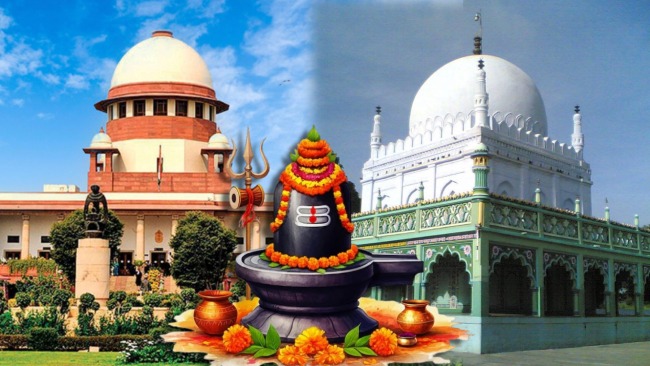
Supreme Court Declines Plea Against Pujas at Ladle Mashaq Dargah in Kalaburagi
Bench says Article 32 cannot be invoked; directs parties to approach Waqf Tribunal and High Court
Historic shrine linked to both Sufi and Hindu saints’ remains a shared place of worship despite disputes
By Legal Reporter
New Delhi: February 13, 2026:
The Supreme Court of India has refused to entertain a petition seeking to restrain Hindu pujas at the Hazrat Ladle Mashaq Dargah in Aland town of Kalaburagi district, Karnataka. The plea, filed by Khaleel Ansari, secretary of the managing committee of the Dargah, argued that the property had already been declared a Waqf property and therefore religious practices inconsistent with Islamic traditions should not be permitted.
Also Read: Supreme Court Quashes SC/ST Act Case Against Vyapam Whistleblower Dr. Anand Rai
A bench of Justices Dipankar Datta and Satish Chandra Sharma dismissed the petition, observing that Article 32 of the Constitution could not be invoked in this matter and that disputes over property rights must be decided by the Waqf Tribunal and the Karnataka High Court.
Case Background
- The shrine is historically significant, associated with a 14th-century Sufi saint and the 15th-century Hindu saint Raghava Chaitanya, whose samadhi and Shivalinga are located within the premises.
- Over the years, the site has been a shared place of worship for both communities.
- Disputes intensified in 2022, leading to communal tensions in the region.
- The petitioner argued that allowing pujas violated the Waqf declaration, but the Court noted that such issues fall under the jurisdiction of the Waqf Tribunal.
Supreme Court’s Key Observations
Also Read: Supreme Court Rejects Plea for Re-Evaluation of SSC Exam Answers: No Role for Sympathy or Compassion
- Article 32 not applicable: The Court held that fundamental rights petitions under Article 32 cannot be used to resolve property disputes.
- Jurisdiction of Waqf Tribunal: Since the property has been declared a Waqf, disputes must be adjudicated by the Tribunal.
- Shared heritage: The Court acknowledged the shrine’s unique history as a site of worship for both Hindus and Muslims.
- Dismissal of plea: The petition was dismissed as withdrawn, leaving the matter to be pursued in appropriate forums.
Implications of the Judgment
- For Religious Communities: Reinforces the need to respect judicial processes rather than escalate disputes through direct petitions.
- For Legal Jurisdiction: Clarifies that property disputes involving Waqf declarations must be handled by specialized tribunals.
- For Social Harmony: Encourages communities to recognize the shared heritage of such sites and avoid confrontation.
- For Governance: Highlights the importance of balancing religious rights with legal frameworks.
Broader Legal Significance
This ruling reflects the judiciary’s cautious approach in matters involving religious practices and property disputes. By directing parties to the Waqf Tribunal and High Court, the Supreme Court has reinforced the principle of institutional jurisdiction.
Also Read: Supreme Court Halts Talaq-e-Hasan Between Couple, Refers Case to Mediation
It also underscores the importance of constitutional boundaries, ensuring that Article 32 petitions are not misused for issues that require statutory adjudication.
[Recommended Legal Resource]
For readers interested in exploring legal procedures, property disputes, and case law, the book Will Writing Simplified [Law, Procedure and Drafting of Wills, Codicils, Revocation, Probate, Letters of Administration and Succession Certificates with Supreme Court Case Law] is a valuable resource. It provides practical insights into drafting legal documents and understanding Supreme Court precedents.
You can access it here: Amazon | Flipkart
Conclusion
The Supreme Court’s refusal to entertain the plea against pujas at the Ladle Mashaq Dargah highlights the delicate balance between religious practices, property rights, and judicial jurisdiction. By directing the matter to the Waqf Tribunal and High Court, the Court has ensured that disputes are resolved within the proper legal framework.
This decision also serves as a reminder of the shrine’s shared cultural and religious heritage, urging communities to uphold peace and respect traditions while pursuing legal remedies.
Also Read: Punjab & Haryana High Court Declines to Entertain Punjab Kesari Hotel Plea
Suggested Keywords for Faster Searches
- Supreme Court Ladle Mashaq Dargah ruling
- Kalaburagi Dargah puja plea dismissed
- Article 32 petition Supreme Court Karnataka
- Waqf Tribunal Ladle Mashaq Dargah case
- Shared shrine Hindu Muslim worship India
- Supreme Court religious property disputes
- Ladle Mashaq Dargah Mahashivratri puja case
- Karnataka Dargah Supreme Court decision
Also Read: Supreme Court Flags Racket of Fake Motor Accident Claims Using Insured Vehicles