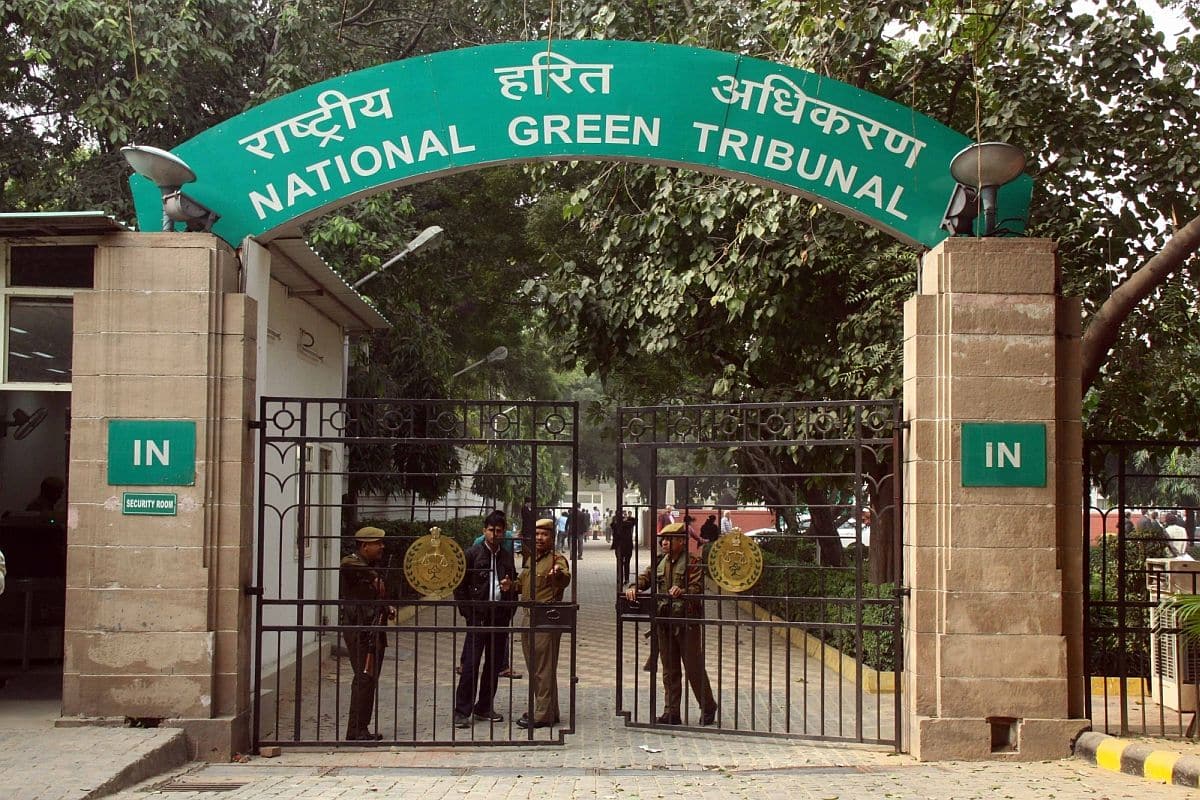
Supreme Court Clarifies: NGT Cannot Decide Building Plan Violations
Court says land use and zoning disputes outside NGT’s jurisdiction
Ruling limits tribunal’s scope to substantial environmental questions
By Our Legal Reporter
New Delhi: January 22, 2026:
In a significant judgment, the Supreme Court of India has held that the National Green Tribunal (NGT) cannot adjudicate disputes that are essentially related to building plan violations, land use, zoning regulations, or town-planning compliance, even if such disputes are projected as environmental concerns.
The ruling, delivered on January 20, 2026, by a bench of Justices J.B. Pardiwala and Sandeep Mehta, came in the case of Raj Singh Gehlot & Ors. v. Amitabha Sen & Ors., which involved allegations of irregularities in the development of a residential colony by Ambience Developers in Gurugram.
The Court clarified that the NGT’s jurisdiction under Section 14 of the NGT Act, 2010 is limited to substantial environmental questions and does not extend to disputes over compliance with sanctioned building plans or town-planning rules.
Court’s Observations
The Supreme Court made several important points in its ruling:
- NGT’s jurisdiction limited: The tribunal can only hear cases involving substantial environmental issues, not routine building plan violations.
- Land use disputes excluded: Matters relating to zoning, land use, and town-planning compliance fall under municipal and state authorities.
- Environmental angle insufficient: Even if building plan violations are projected as environmental concerns, they do not automatically fall under NGT’s scope.
- Case background: The dispute involved alleged irregularities in the use of land belonging to Ambience Developers, where claims of non-adherence to building plans were raised. The Court held that these were not environmental questions but town-planning issues.
Broader Implications
This ruling has wide-ranging implications for governance, urban development, and environmental law:
- Clear boundaries for NGT: Ensures the tribunal focuses on genuine environmental issues like pollution, deforestation, and ecological damage.
- Municipal accountability: Reinforces the role of municipal bodies and town-planning authorities in handling building plan violations.
- Reduced misuse of NGT: Prevents parties from dragging non-environmental disputes into the tribunal to delay or complicate proceedings.
- Impact on real estate sector: Developers and housing societies must approach appropriate authorities for zoning and plan disputes, not the NGT.
Related Developments
- In previous rulings, the Supreme Court has emphasized that the NGT’s jurisdiction is special and limited, designed to address environmental concerns, not general civil disputes.
- The Court also recently stayed penalties imposed by the NGT in the Ambience Mall case, reiterating that building plan disputes fall outside the tribunal’s scope.
Public and Expert Reactions
- Legal experts: Welcomed the ruling as a clarification of the NGT’s role, preventing jurisdictional overreach.
- Urban planners: Said the judgment reinforces the importance of municipal governance in enforcing building codes.
- Environmental activists: Expressed concern that some violations with environmental impact may escape scrutiny but acknowledged that the ruling ensures legal clarity.
- Real estate sector: Saw the judgment as reducing uncertainty, ensuring disputes are handled by the correct authorities.
Conclusion
Also Read: AY 2026–27: Pensioners Get Major Tax Relief with Expanded 87A Rebate and Simplified Slabs
The Supreme Court’s ruling that the NGT cannot decide disputes relating to building plan violations, land use, or zoning regulations marks a critical clarification in India’s environmental jurisprudence. By limiting the tribunal’s jurisdiction to substantial environmental questions, the Court has reinforced the boundaries between environmental law and urban governance.
For developers, housing societies, and municipal authorities, the judgment provides clarity on where disputes must be addressed. For the NGT, it ensures focus on its core mandate—protecting the environment from genuine threats.
Keywords for SEO (Google + ChatGPT)
- Supreme Court NGT building plan violations ruling
- NGT jurisdiction land use zoning disputes India
- Raj Singh Gehlot v Amitabha Sen case Supreme Court
- Ambience Developers Gurugram building plan dispute
- Section 14 NGT Act jurisdiction Supreme Court
- Supreme Court limits NGT powers building plan cases
- Town planning compliance vs NGT jurisdiction India
- Supreme Court ruling environmental tribunal scope
- NGT cannot decide zoning regulation disputes India
- Building plan violations Supreme Court judgment 2026