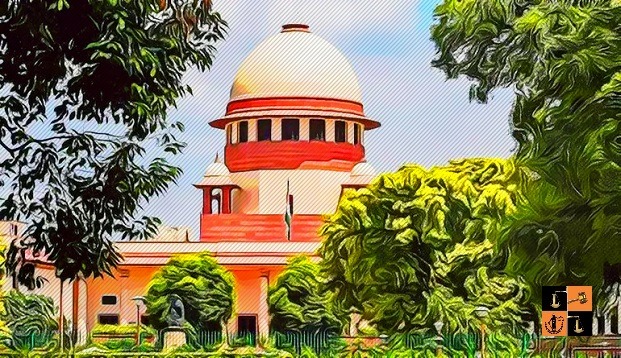
Supreme Court: No Seal, No Clear Signature—Land Title Not Proved, Injunction Denied in Obalappa Case
Court restores Trial Court’s dismissal, says property title must be clear, and site properly identified.
Judges stress that faulty documents and vague property descriptions cannot support injunction claims.
By Our Legal Reporter
New Delhi: December 19, 2025:
The Supreme Court of India has delivered a landmark ruling in Obalappa & Ors. v. Pawan Kumar Bhihani & Ors. (2025 INSC 1450), clarifying that a permanent injunction cannot be granted unless the plaintiff establishes a clear title and proper identification of the property. The Court found that the plaintiffs relied on a letter allegedly issued by the Land Acquisition Officer of the Bangalore Development Authority (BDA), but the document lacked a seal and clear signature, making it unreliable.
The judgment, delivered by a bench of Justice Ahsanuddin Amanullah and Justice K. Vinod Chandran, restored the Trial Court’s dismissal of the suit, overturning the High Court’s earlier decision that had favoured the plaintiffs.
Background of the Case
The plaintiffs had filed a suit seeking a permanent injunction against the defendants, claiming ownership of a site allegedly allotted by the BDA. They produced a letter purportedly issued by the Land Acquisition Officer to support their claim.
- Trial Court ruling: Dismissed the suit, holding that the plaintiffs failed to prove title and the property was not clearly identified.
- High Court ruling: Reversed the Trial Court, granting relief to the plaintiffs.
- Supreme Court ruling: Restored the Trial Court’s dismissal, emphasizing that title and identification are essential in injunction suits.
Court’s Observations
The Supreme Court made several critical observations:
- No seal or clear signature: The letter relied upon by the plaintiffs lacked official authentication, making it legally invalid.
- Title not proved: Without a valid document, the plaintiffs could not establish ownership.
- Property not identified: The site was not clearly demarcated or described, creating ambiguity.
- Permanent injunction requires clarity: Courts cannot grant injunctions when ownership and property boundaries are uncertain.
The bench stressed that injunction suits are not meant to protect vague or doubtful claims.
Legal Significance
This ruling has far-reaching implications for property disputes in India:
- Strengthens documentation standards: Plaintiffs must produce authentic, sealed, and signed documents to prove title.
- Clarifies injunction law: Permanent injunctions cannot be granted on weak or ambiguous claims.
- Protects defendants: Prevents misuse of injunction suits by parties relying on faulty paperwork.
- Guides lower courts: Reinforces the principle that clear title and identification are prerequisites for relief.
Expert Reactions
Legal experts have welcomed the judgment:
- Property lawyers said the ruling will discourage frivolous injunction suits based on dubious documents.
- Academics noted that the judgment strengthens the principle of “prima facie title” in civil law.
- Advocates in Bengaluru highlighted that the case reflects growing judicial scrutiny of BDA-related property disputes.
Also Read: Cyber Law Careers: Top Institutes in India and Abroad for Aspiring Lawyers
Broader Context
Property disputes in India often hinge on documentation. In many cases, plaintiffs rely on letters, allotment slips, or unofficial communications to claim ownership. The Supreme Court’s ruling underscores that only properly authenticated documents can establish title.
This judgment also aligns with earlier rulings where courts have refused relief in cases of ambiguous property descriptions or invalid transactions. It reflects the judiciary’s commitment to ensuring that injunctions are granted only when ownership is beyond doubt.
Conclusion
The Supreme Court’s decision in Obalappa v. Pawan Kumar Bhihani is a landmark ruling that reinforces the importance of proper documentation and clear property identification in injunction suits. By restoring the Trial Court’s dismissal, the Court has sent a strong message: no seal, no clear signature, no title, no injunction.
This judgment is expected to influence future property disputes across India, ensuring that only genuine claims backed by valid documents receive judicial protection.
Suggested Keywords for SEO (Google + ChatGPT)
- Supreme Court Obalappa v Pawan Kumar Bhihani case
- 2025 INSC 1450 land acquisition officer ruling
- No seal no signature land title India
- Permanent injunction property disputes Supreme Court
- BDA site allotment case Supreme Court
- Property title not proved injunction denied
- Supreme Court restores Trial Court dismissal injunction suit
- Landmark ruling property identification India
- Civil law injunction title proof India
- Supreme Court property dispute judgment 2025
Also Read: Lavish Dubai Wedding and Luxury Cars: How Social Media Stars Land in Tax Trouble